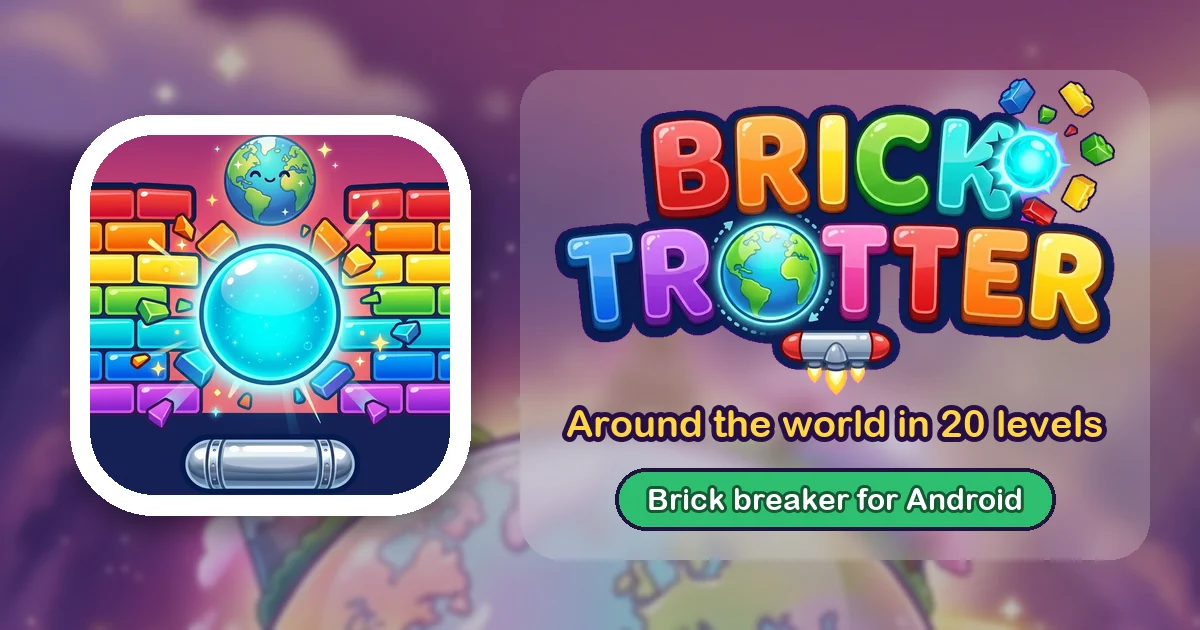
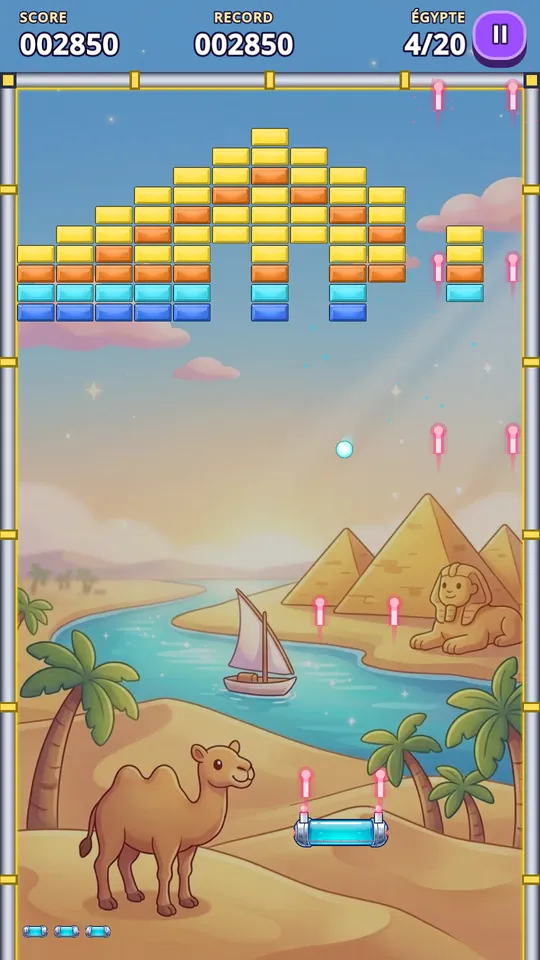
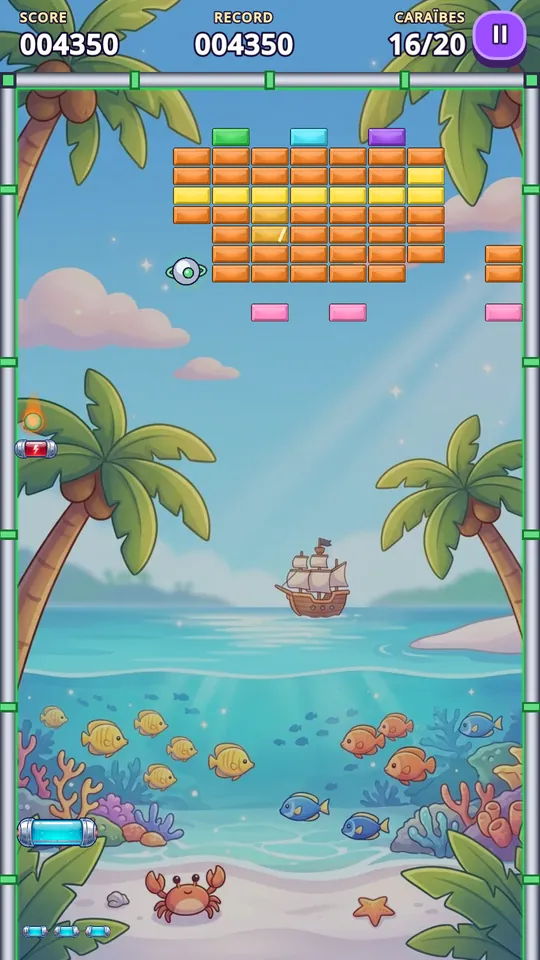
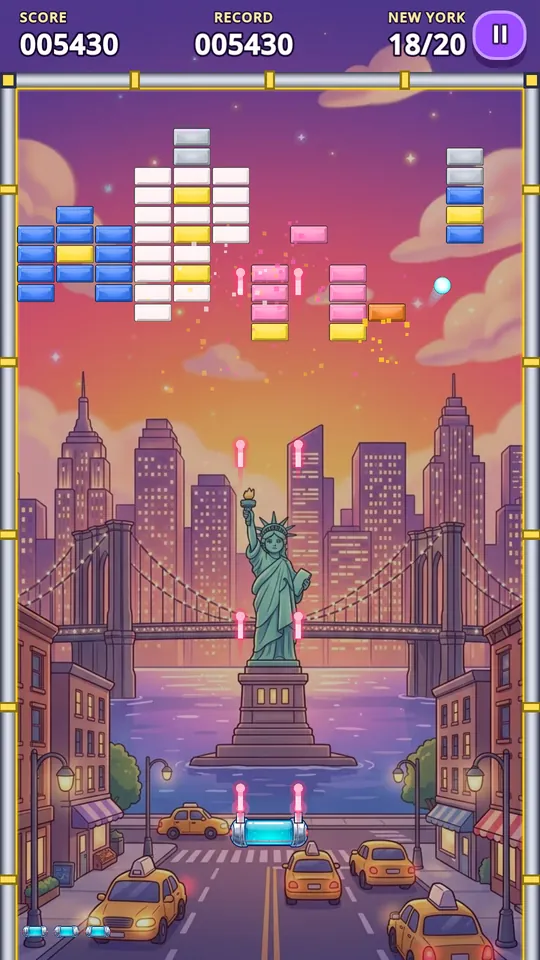
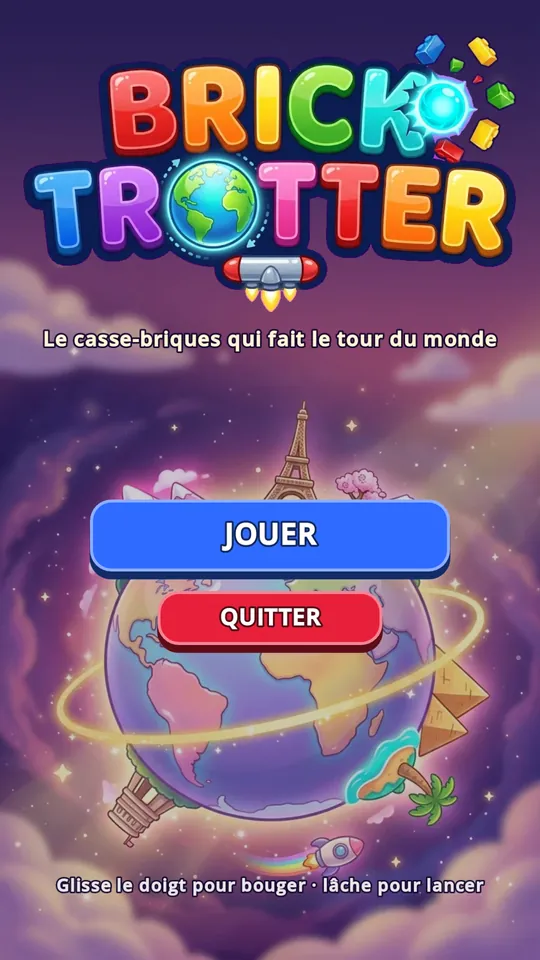
I wanted a game like the old ones: a brick breaker in the spirit of the 1980s arcade classics, but with today's very colourful graphics. That's how Brick Trotter was born, an Android game that travels around the world in 20 levels, from Paris to outer space. I built it in a few days with Godot, art generated with Gemini and Claude Code (Opus 5.5) as my copilot. These are real screenshots of the game.
The game
Slide your finger to move the ship, release to launch the ball. Every level is a place in the world, with its own landscape, and the bricks draw something from that place: the Eiffel Tower in Paris, a mask in Venice, a giraffe in the savanna, the Taj Mahal in India, the moai on Easter Island, a toucan in the Amazon, skyscrapers in New York, a rocket in space.
- 20 destinations: Paris, Venice, Santorini, Egypt, the savanna, India, China, Tokyo, Australia, Hawaii, Easter Island, Patagonia, Machu Picchu, the Amazon, Rio, the Caribbean, Mexico, New York, Iceland and outer space.
- 8 power-ups, with icons instead of letters so they make sense in any language: laser, a fireball that goes through everything, triple ball, bigger ship, sticky ball, slow motion, extra life and secret warp.
- Musical combos: every brick you break without touching the ship again plays a higher note and scores more points.
- 6 languages picked automatically from the phone (Spanish, English, French, Portuguese, German and Italian), and your game is saved exactly where you left it.
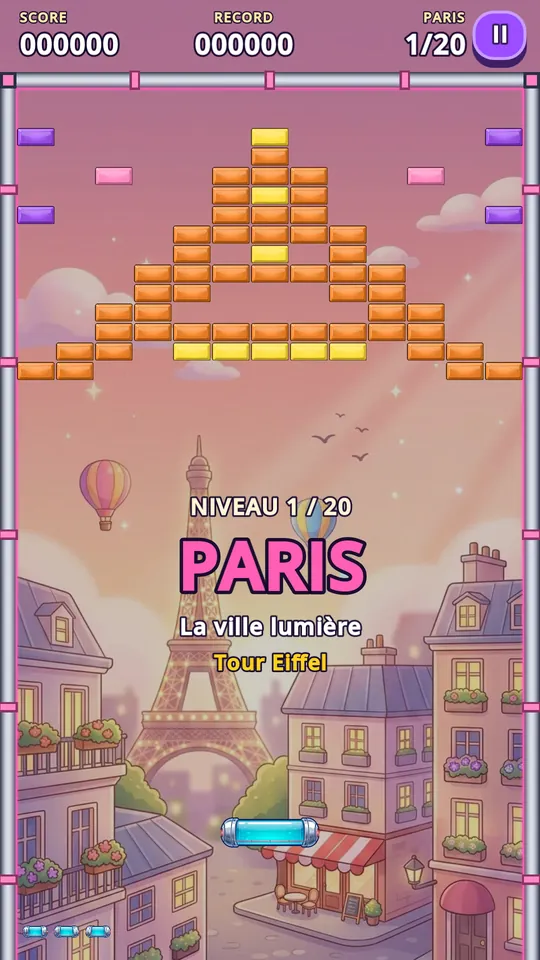
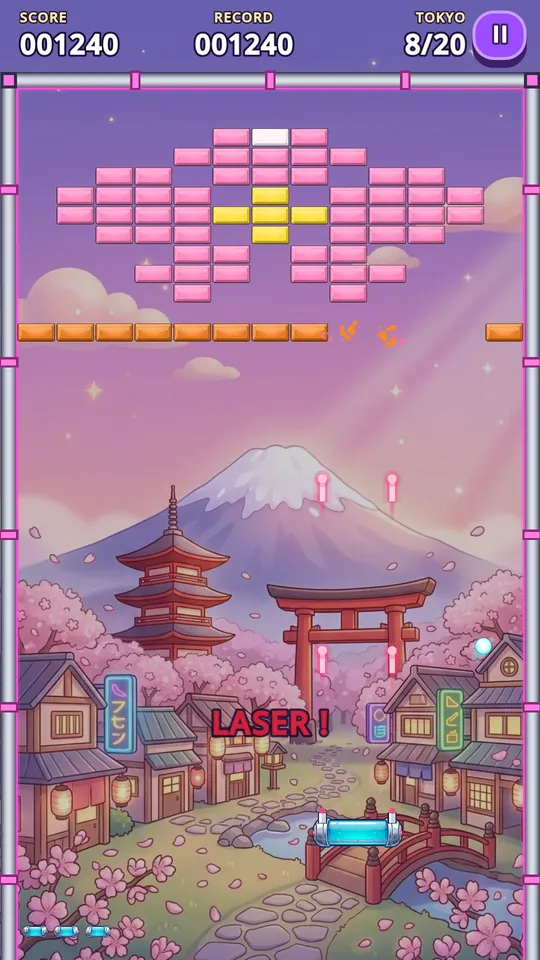
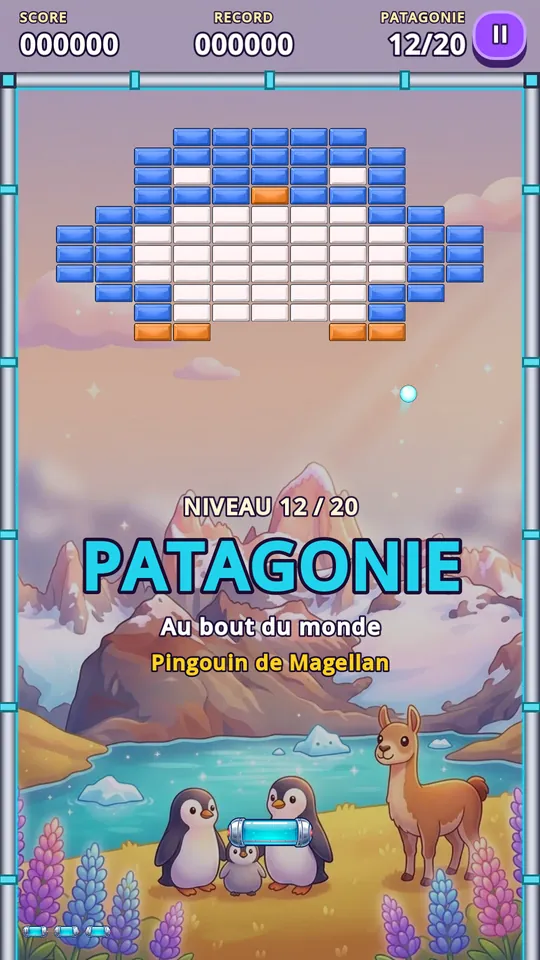
Harder and harder
The ball speeds up from one level to the next, the ship gets smaller and power-ups become rarer. From level 4, drones fly into the ball's path. From level 16, the bricks move down little by little, with a red warning line. Silver bricks take several hits and gold ones can't be broken.
A grand finale
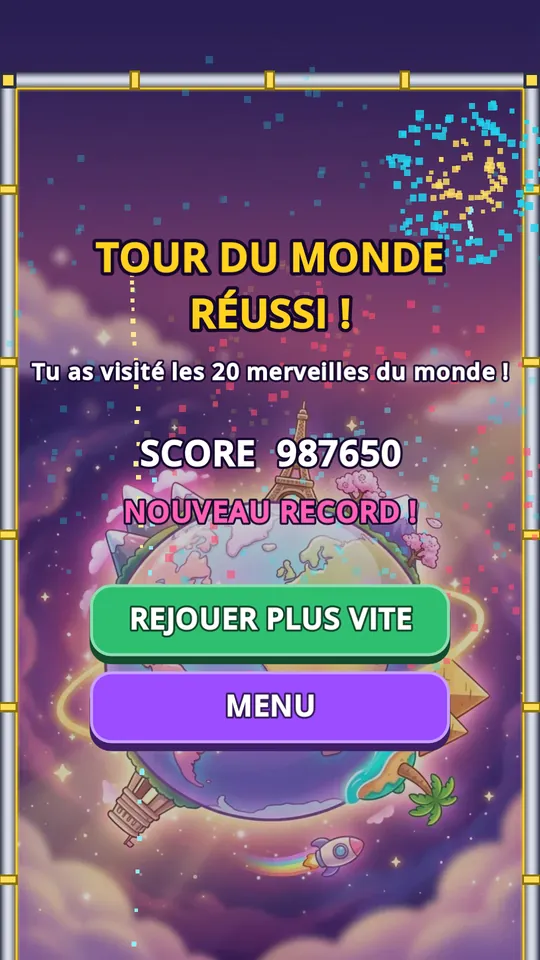
When you finish all 20 levels, the ship takes off, the globe appears with the 20 postcards of the places you visited, confetti rains down, fireworks go off and the score counts up to the total. Then you can play again, faster.
Art made with Gemini
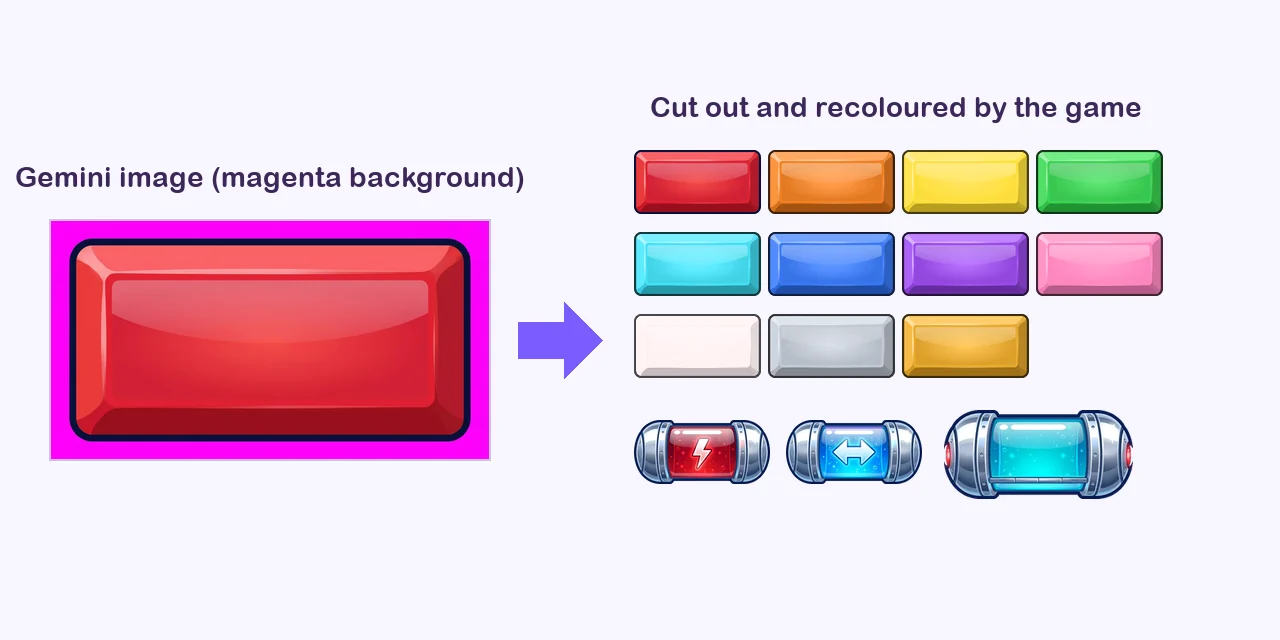
The 21 backgrounds (the 20 places and the start screen), the logo, the icon, the chrome ship, the 3D bricks and the capsules were all generated with Gemini, from prompts we wrote with Claude. A trick I learned: never ask for a "transparent background", because Gemini draws a fake grey-and-white checkerboard. I ask for a flat magenta background instead, and a tool in the project removes it on its own: it fills in from the edges and stops at the drawing's dark outline. Only the red brick needs generating: the other 10 colours are recoloured automatically, so they all share the same depth.
Two backgrounds were redone before release: New York and Australia showed famous buildings and a famous rock whose image is protected for commercial use. On the Google Play listing, the AI-generated assets are declared as such.
Sounds synthesised in code
There isn't a single external audio file. A small synthesiser written into the game makes every sound: FM synthesis for the crystal bricks and the gold bell, filters, echo and stereo reverb for a smooth spaceship style. It also generates the ambient music, a 16-second loop of four chords, and the ship's engine, which rises in pitch when you move fast.
Claude Code (Opus 5.5) as copilot
Claude Code wrote the code in GDScript, prepared the images and, above all, tested the game: an autopilot plays all 20 levels in a row, headless and sped up, and flags the levels that drag on or get stuck. That's how we fixed a ball looping between gold bricks, last bricks that were hard to reach (they now blink and the ball gently steers towards them) and a Mexico level that was too closed. The 1080 × 1920 Google Play screenshots are also generated by the game itself.
The tech stack
- Engine: Godot 4.7, with all the code in GDScript, Godot's own language (for Rania I used C#).
- Android: "Compatibility" renderer, compatible with more than 18,000 phone and tablet models from Android 7, an APK of about 33 MB and a signed AAB bundle for Google Play.
- Privacy: no internet, no ads and no data collected; the only permission is vibration.
Where to play it?
Brick Trotter has been in closed testing on Google Play since October 18, 2026: Google requires 14 days of testing with at least 12 testers before release, planned for November. If you'd like to try it sooner, get in touch.
It's the same approach as Rania, the platform game my daughter came up with, and WindRush, my windsurf and kitesurf game. It's also a good example of when a native app makes sense, as I explain in mobile app or web app?. For your own projects, see my custom software development service.
Got an app, platform or game project?
Let's talk: I'll propose the architecture, the timeline and a clear price.
Get my free quoteMessage me on WhatsApp