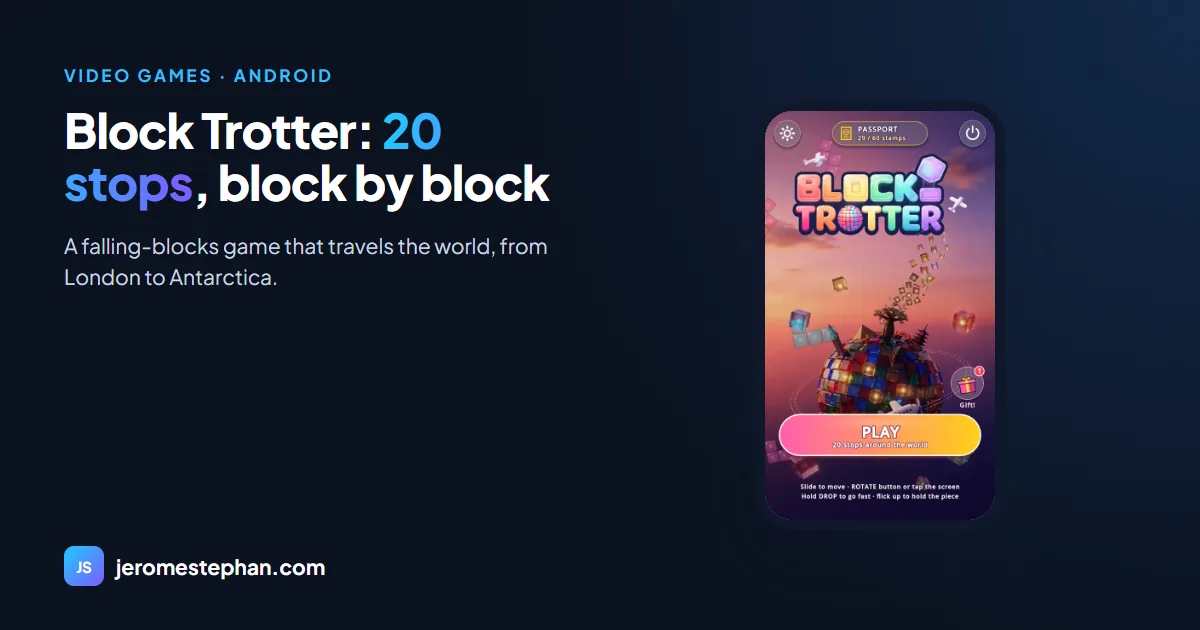
After the brick breaker Brick Trotter and the shoot 'em up Chrono Trotter, the family was missing its third classic: the falling-blocks game. Block Trotter is an Android game where every line you clear flies a little plane to the next stop, across 20 stops, from London to Antarctica. I started it on November 21, 2026 with Godot, art generated with Gemini and Claude Code as my copilot. Two days later it was already in closed testing on Google Play. Every screenshot comes from the real game.
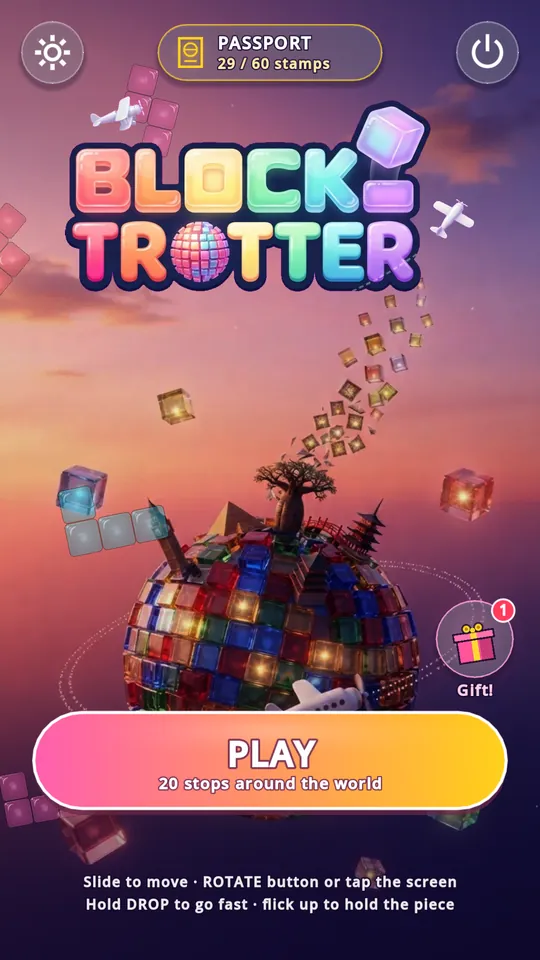
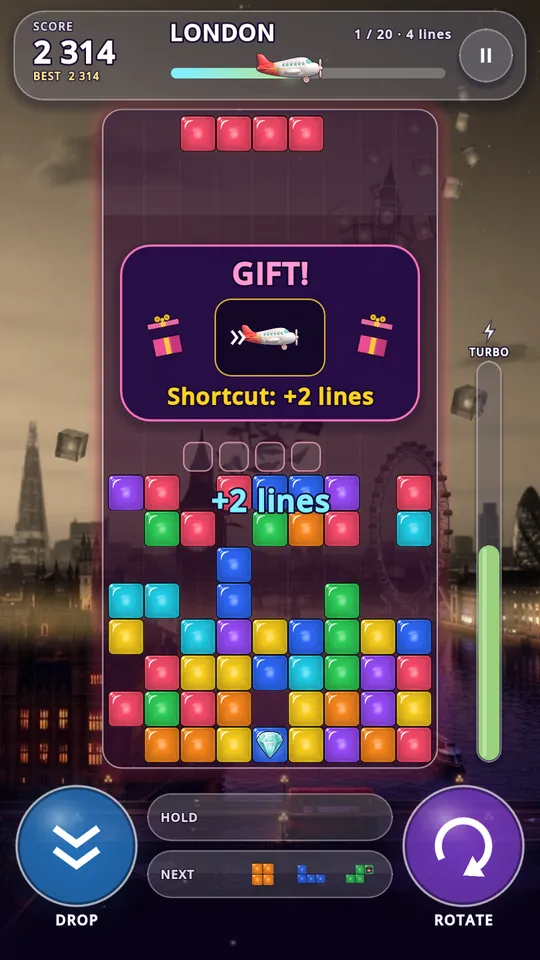
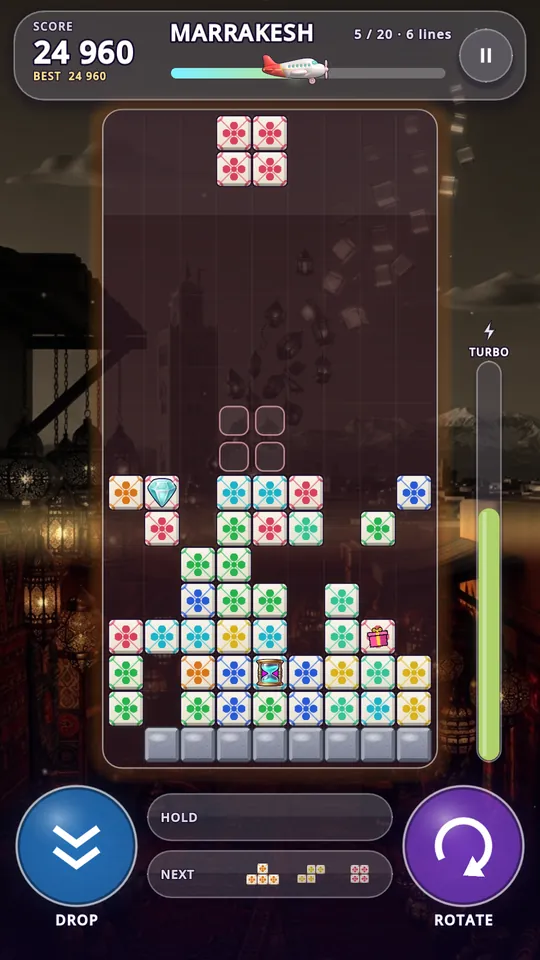
The game
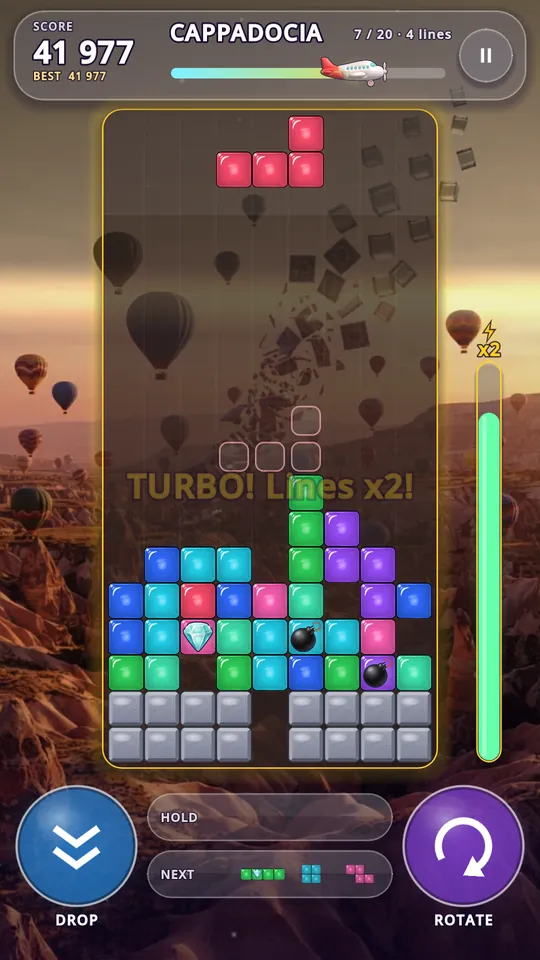
Pieces fall, you clear lines and the plane moves along the route drawn at the top of the screen. When it lands, you move on to the next stop. It is played with one hand: slide to move, tap the screen or the ROTATE button to rotate, hold DROP to go fast and flick up to put a piece in the hold box.
- 20 stops: London, Amsterdam, Lisbon, Barcelona, Marrakesh, Istanbul, Cappadocia, Dubai, Madagascar, the Maldives, the Himalayas, Bali, Ha Long Bay, Kyoto, Alaska, the Rockies, San Francisco, the Grand Canyon, Havana and Antarctica.
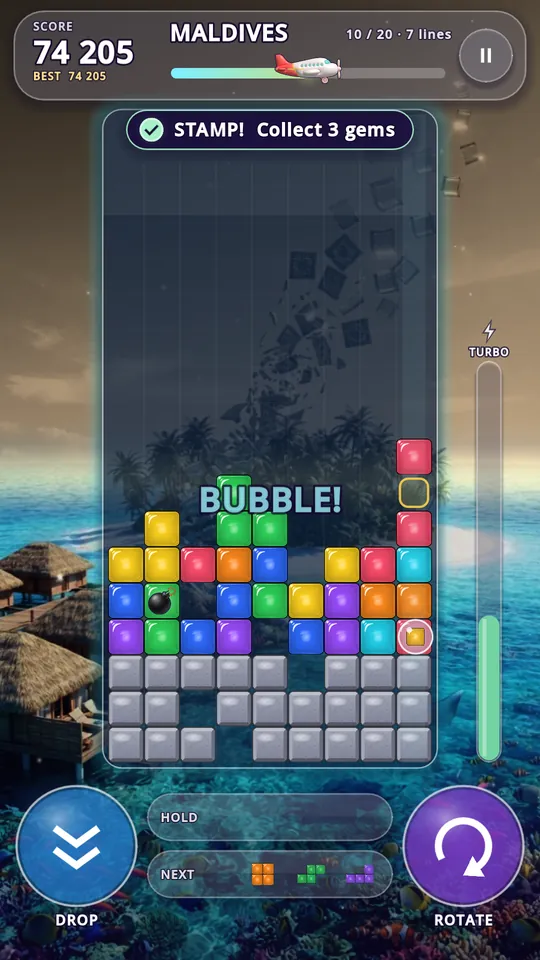
- 4 power-ups hidden in the cubes: the gem gives extra points, the bomb also clears the neighbouring lines, the hourglass slows the fall for 15 seconds and the star turns the next piece into a magic single cube, to plug a hole.
- A fair draw: the same piece never comes three times in a row, and the long bar always comes back.
- 6 languages, picked automatically from the phone (English, Spanish, French, Portuguese, German and Italian), and your game is saved: you continue from the stop where you left off.
Harder and harder
At each stop the pieces fall about 10% faster and you need more lines: 8 in London, 22 in Antarctica. The trip also brings new difficulties, announced on arrival:
- Marrakesh: rows of stone at the bottom from the start.
- Istanbul: surprise pieces, made of 3 or 5 cubes.
- Cappadocia: gusts of wind. An arrow warns you, then the piece is pushed.
- Dubai: a sandstorm that hides the landing shadow and the upcoming pieces. At other stops it is fog or a blizzard.
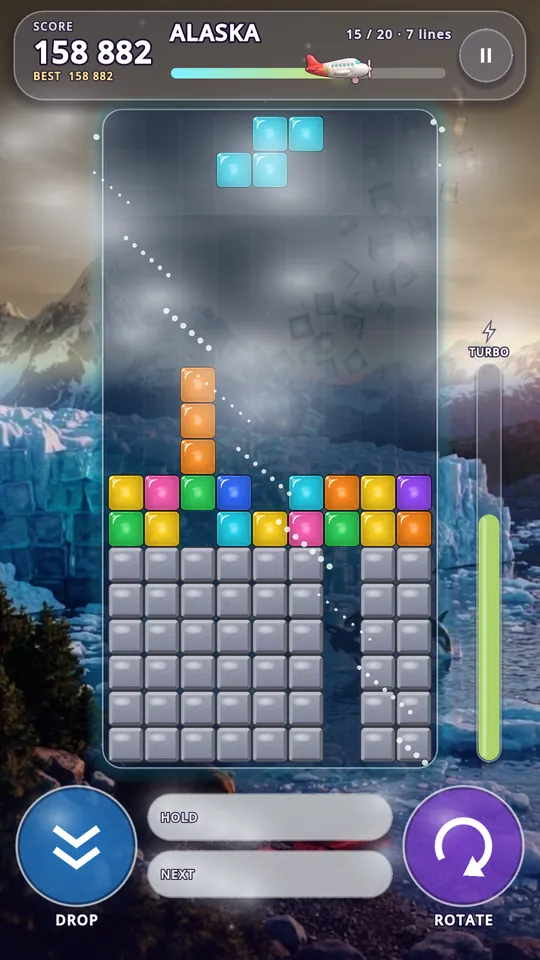
- Madagascar: the ground rises, and a row of stone pushes the whole stack up.
- The Himalayas: avalanches, with everything falling faster for a few seconds.
Gifts, turbo and a passport
Version 1.2 added several reasons to come back and play:
- Gift cube: clear its line and a wheel spins, giving a 2-line shortcut, 2 magic bubbles, a full turbo, a points jackpot or an hourglass.
- Daily gift: a different one every day, bigger and bigger over 7 days in a row. Miss a day and the streak restarts at 1.
- Turbo: every line fills a gauge. When it is full, every line counts double for 10 seconds.
- Magic bubble: it rises up the column you pick, passes through the cubes from below and fills the first hole.
- A postcard to reveal: each stop starts in sepia, like an old postcard, and the colour rises with every line.
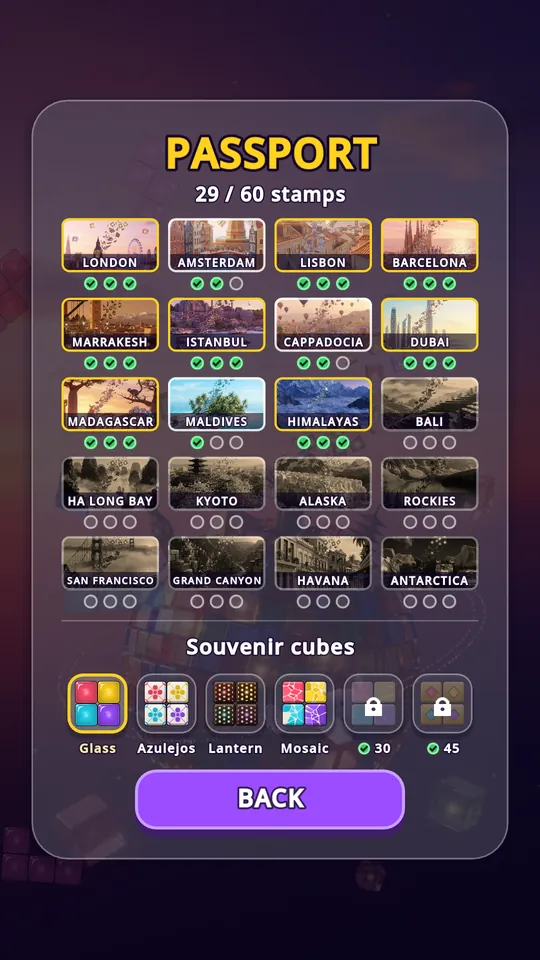
- Passport: 3 challenges per stop (clear a double, make a combo, finish without the hold box or in under 2 minutes), which makes 60 stamps. Stamps unlock 5 souvenir cubes: azulejos, lantern, mosaic, ice and gold.
A grand finale
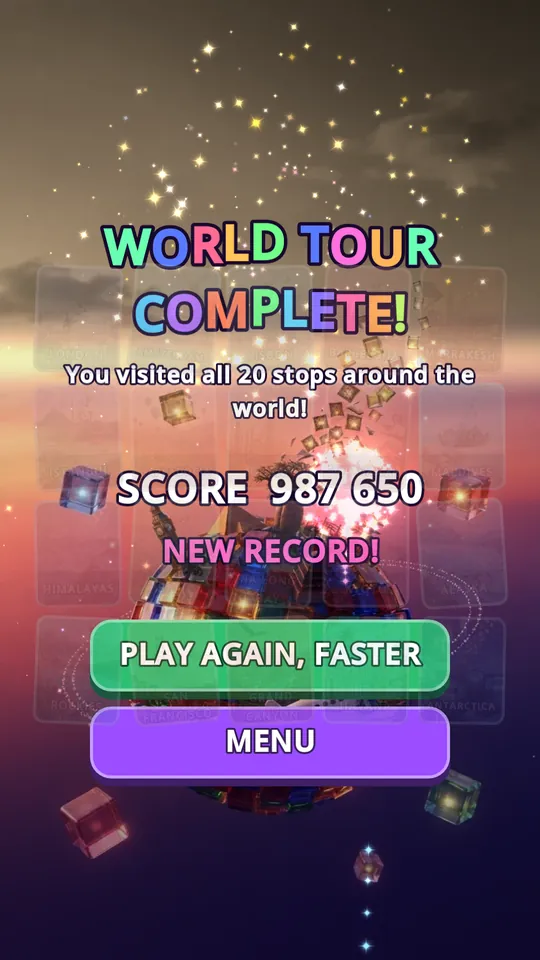
After Antarctica come the fireworks, the 20 postcards of the trip and the "Play again, faster" button, for another world tour with the pieces falling faster still.
Art by Gemini: a world made of cubes
The 29 images in the game (the 20 landscapes, the title screen, the cube, the logo, the icon, the 4 power-ups and the plane) were generated with Gemini, from prompts written with Claude. They all share one idea: soft 3D dioramas of clay and glossy glass, where part of the scenery is built from glass cubes and a few glowing cubes float up into the sky, as if the city were being assembled block by block.
Three things that worked well:
- A first prompt that sets the style, the London one. Then, in the same conversation, a "same style, same composition" sentence and a single line per place. That way the 21 backgrounds share the same style.
- Composing for the board: the board covers the middle of the screen, so I asked for the landmarks at the bottom and along the edges, a calm middle and the sky at the top.
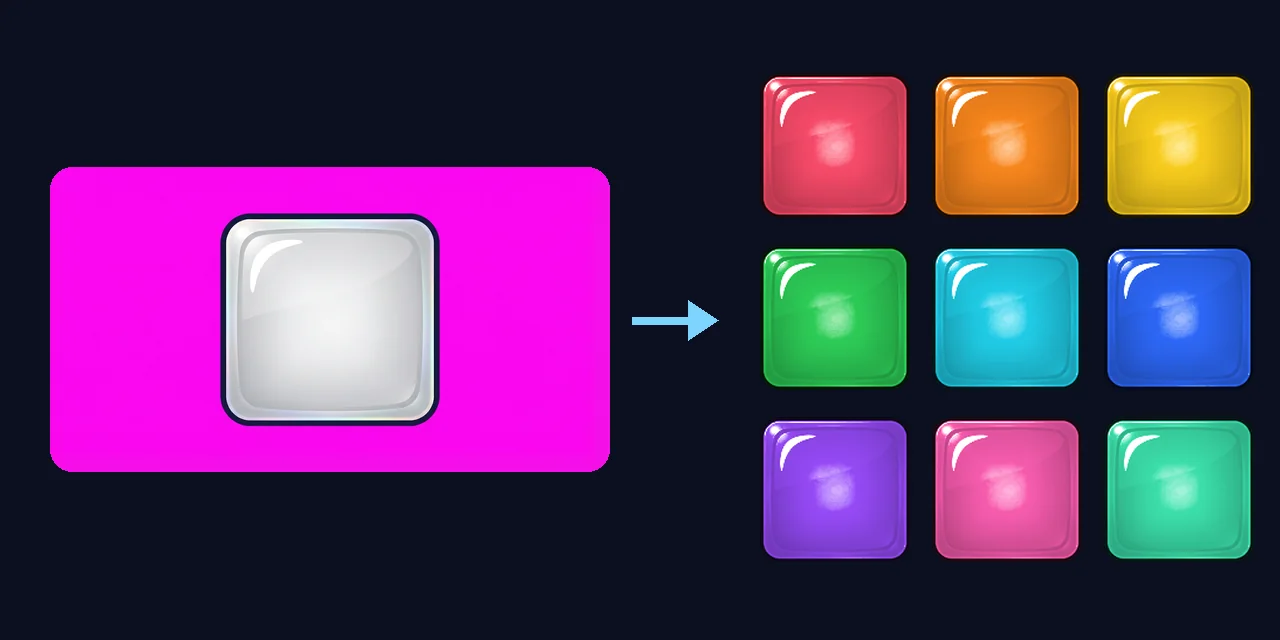
- A white cube: the game tints it by itself, with each stop's palette. And never "transparent background": a flat magenta background, which a tool in the project removes.
The game ran from day one without a single image: it drew placeholder cubes, a sky and a plane, and each Gemini image replaced its placeholder as it arrived. The souvenir cubes of the passport, on the other hand, are drawn by code.
Sound made by code
There are no recordings and no sound libraries. A synthesiser written in the project produces the 23 audio files: 22 small, round, crystal-clear sounds (move, rotate, clear a line, the bomb, the wind) and a looping travel tune.
Tested by an autopilot
Claude Code wrote the code in GDScript, about 7,000 lines, along with a test mode: an autopilot plays the 20 stops in a row, headless and sped up, and another test simulates finger gestures. The same mode takes the Google Play screenshots, at 1080 × 1920 and in every language. The screenshots in the Spanish version of this article were produced that way, with a single command.
The Google Play listing
The project carries its own release kit: the listing texts in 6 languages with their lengths checked, the icon, the banner, 8 screenshots and the privacy page. One precaution: the listing never uses the name of the genre's classic, because it is a registered trademark and Google Play can remove apps that use other people's trademarks. I cover the rest in the Google Play store listing of a game.
The tech stack
- Engine: Godot 4.7, code in GDScript, "Compatibility" renderer and a 720 × 1280 portrait layout.
- Android: an APK of about 33 MB for testing and an AAB bundle for Google Play.
- Privacy: no internet, no ads, no purchases and no data collected. The only permission is vibration.
Where to play it?
Block Trotter is in closed testing on Google Play. Before release, Google asks recent personal accounts for a closed test with at least 12 testers for 14 days: I explain it in publishing on Google Play: the 12 testers, 14 days rule. If you have an Android phone and would like to try it, you can sign up below.
It is the third game in the Trotter family. Brick Trotter is already published on Google Play, and the full method is in making an Android game with Godot. For your own projects, see my custom software service.
Want to try Block Trotter before everyone else?
I'm looking for beta testers with an Android phone. Leave me the email of your Google account (the one you use on the Play Store): I'll add you to the testers list and send you the link to install the game for free from Google Play.
Your email is only used to sign you up for testing, nothing else.Got an app, platform or game project?
Let's talk: I'll propose the architecture, the timeline and a clear price.
Get my free quoteMessage me on WhatsApp