
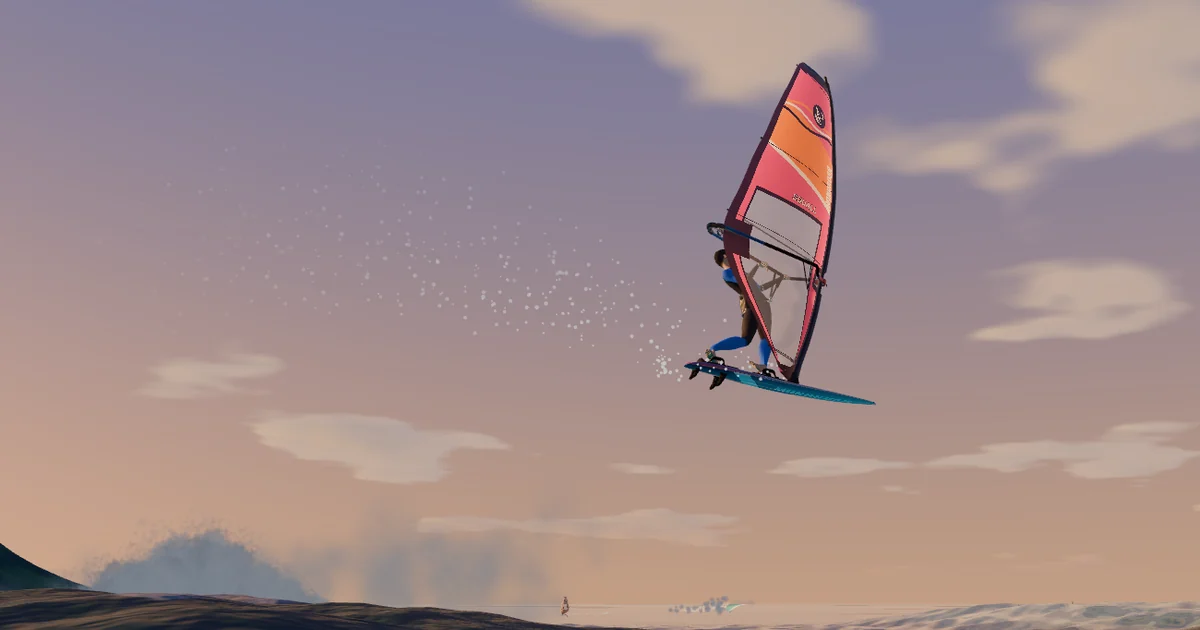
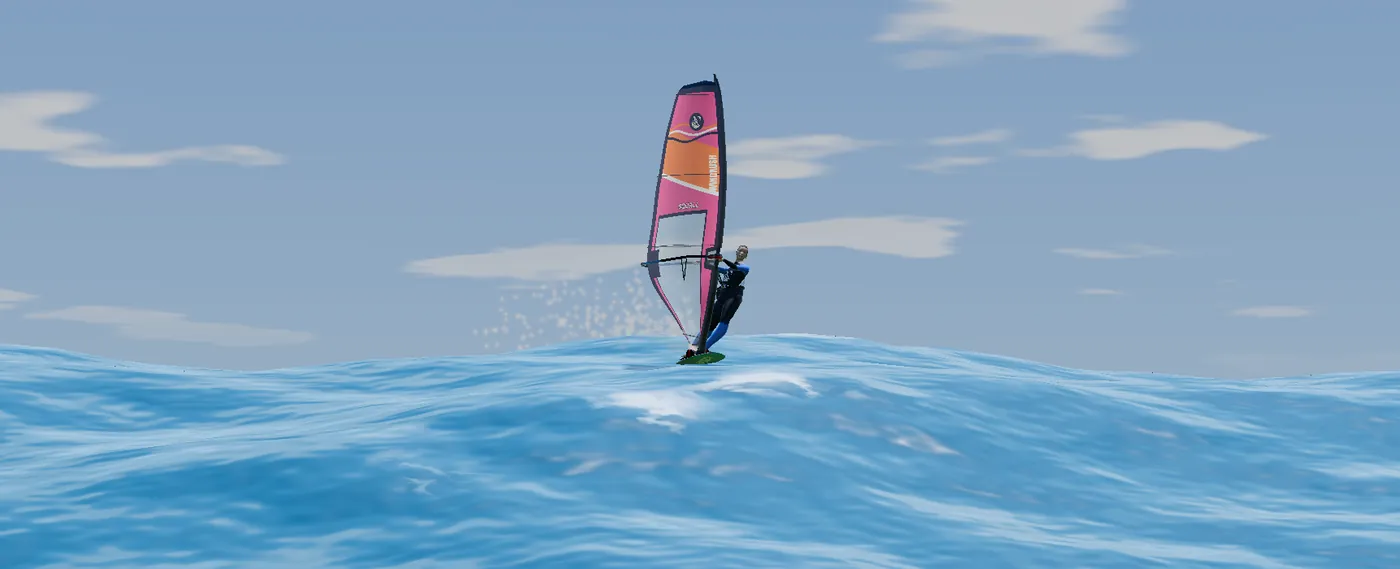
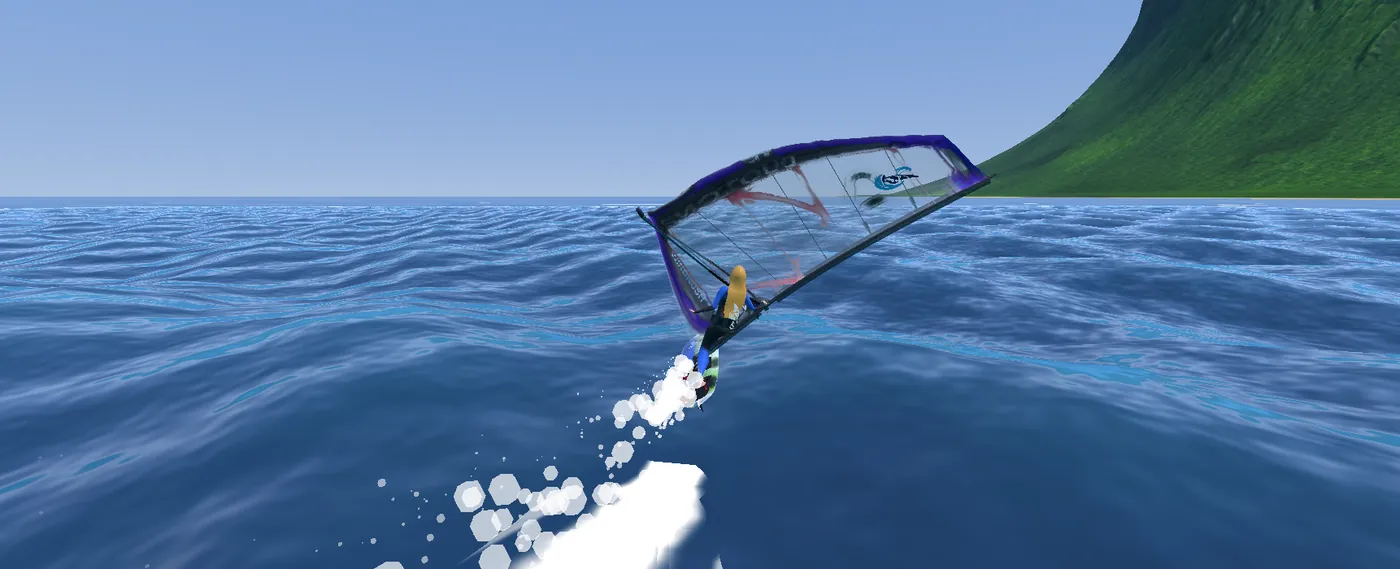
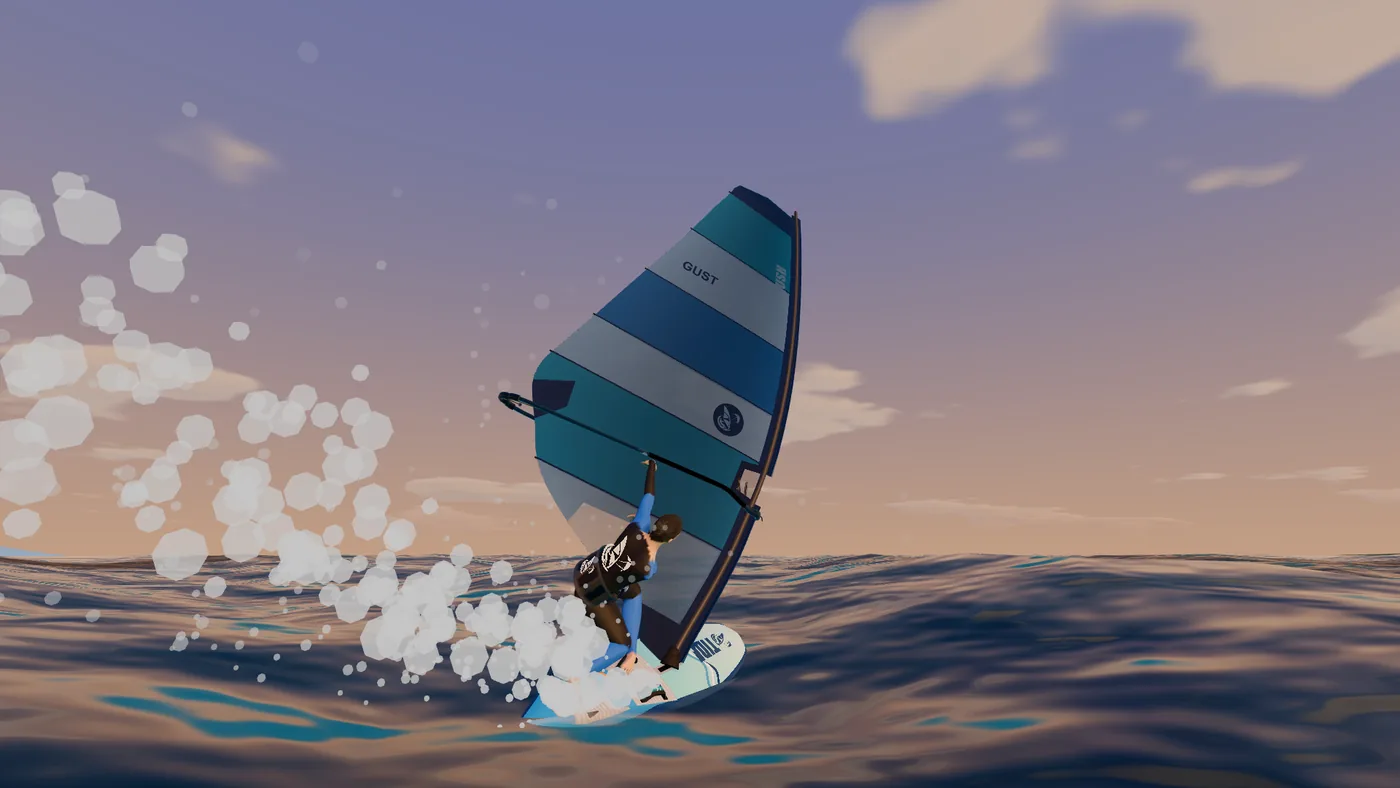
Eleven disciplines, six dream spots, a six-chapter career and rivals that sail with exactly the same physics as you. WindRush is the windsurf and kitesurf game I always wanted to play. I live in Pucón, Chile, between the lake and the volcano, I windsurf and kite, and I'm building it for Windows PC with Godot and Claude Code. It's still in development: every image in this article is a real screenshot of the current build.
The game at a glance
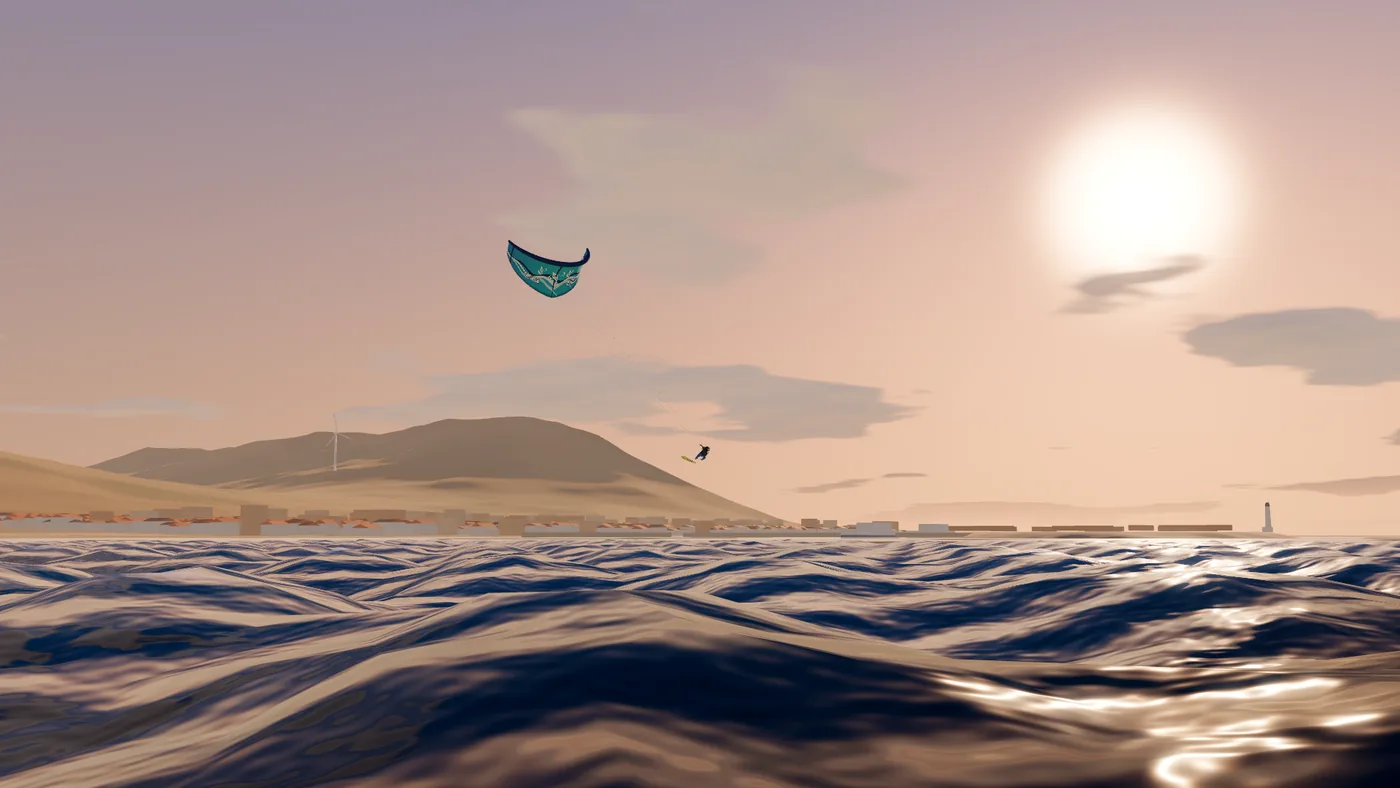
The disciplines. Windsurf: Slalom, Waves, Freestyle, Freeride, Speed, Foil and Foil Race. Kitesurf: Kitesurf (jumps, loops and grabs) and Kite Race. Wingfoil: Wing and Wing Race. Each one has its own gear and its own challenges with medals.
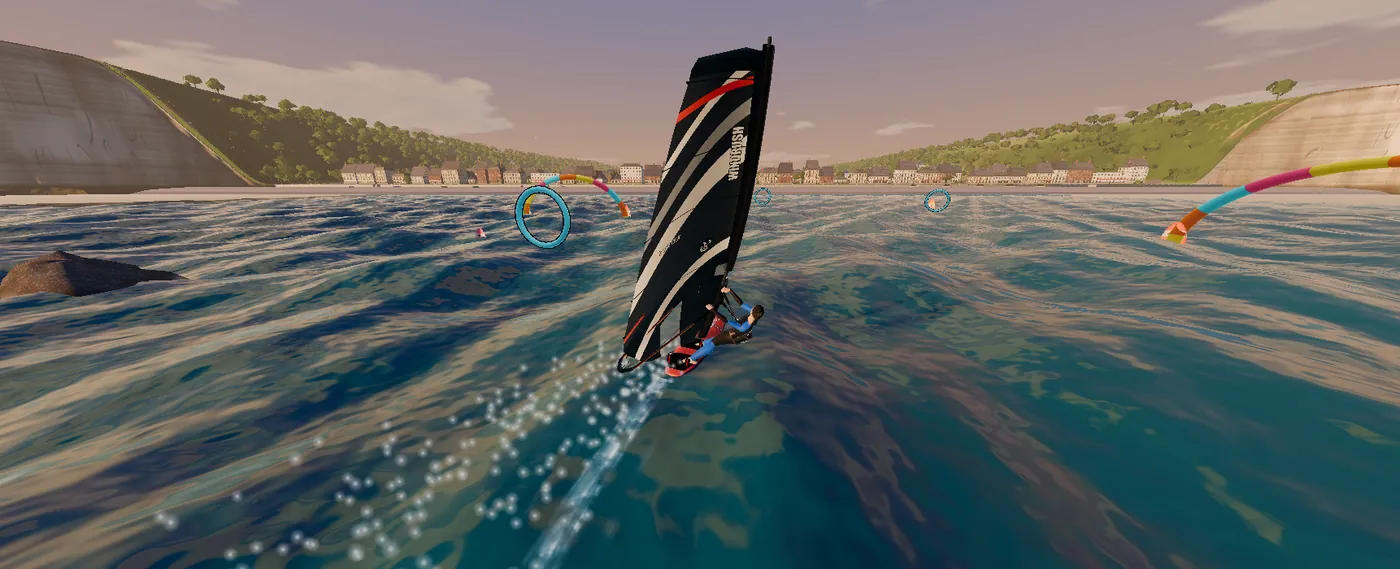
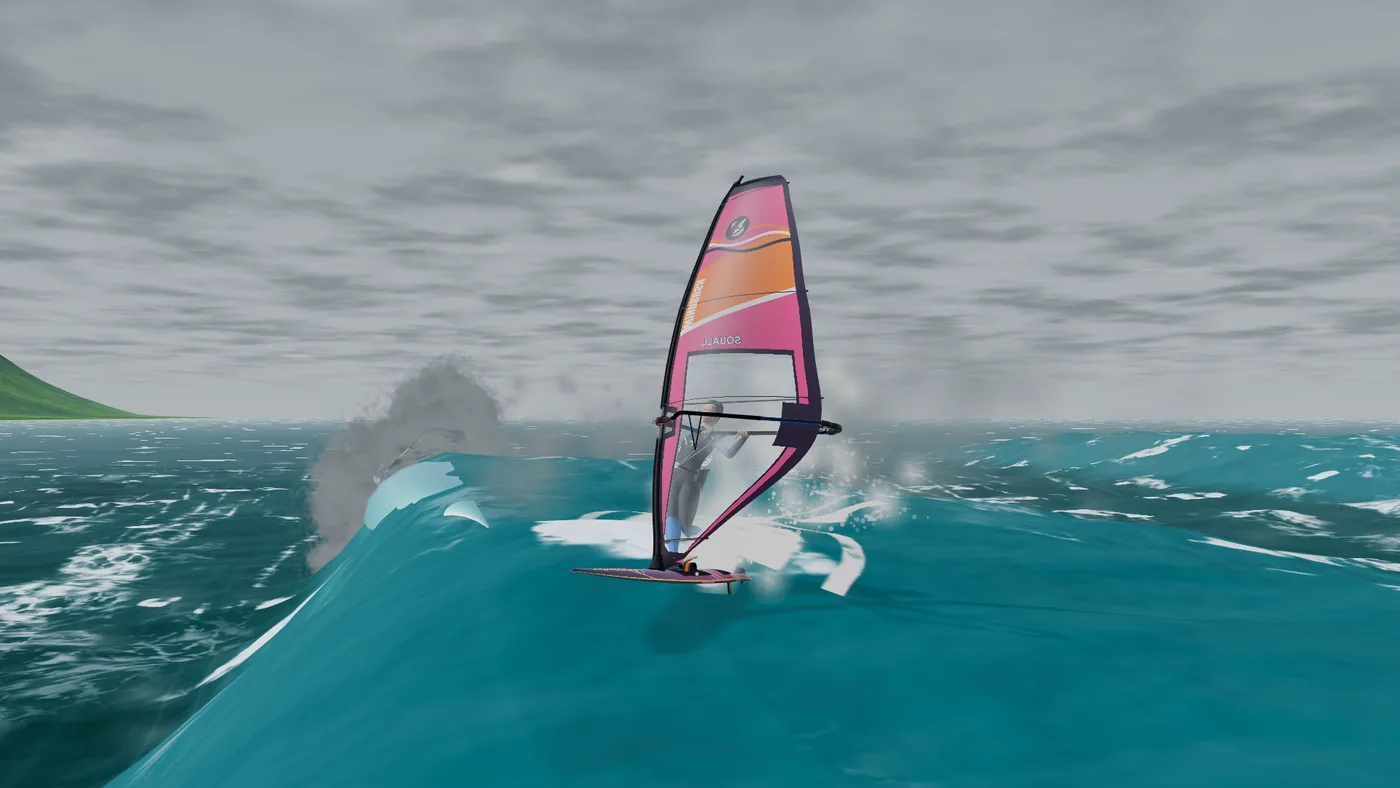
The spots. Ho'okipa in Hawaii, the legendary wave; Étretat in Normandy, with its white cliffs, arch and needle; Tarifa, Europe's wind capital, with the Poniente or the Levante; Jericoacoara and its dunes, and Lagoa do Paraíso and its turquoise lagoon, in Brazil; and the Plage du Rouet in La Palme, in the south of France, for 500 m speed records in the Tramontane. Every spot can be played in sun or storm, in the morning, at noon or at sunset.
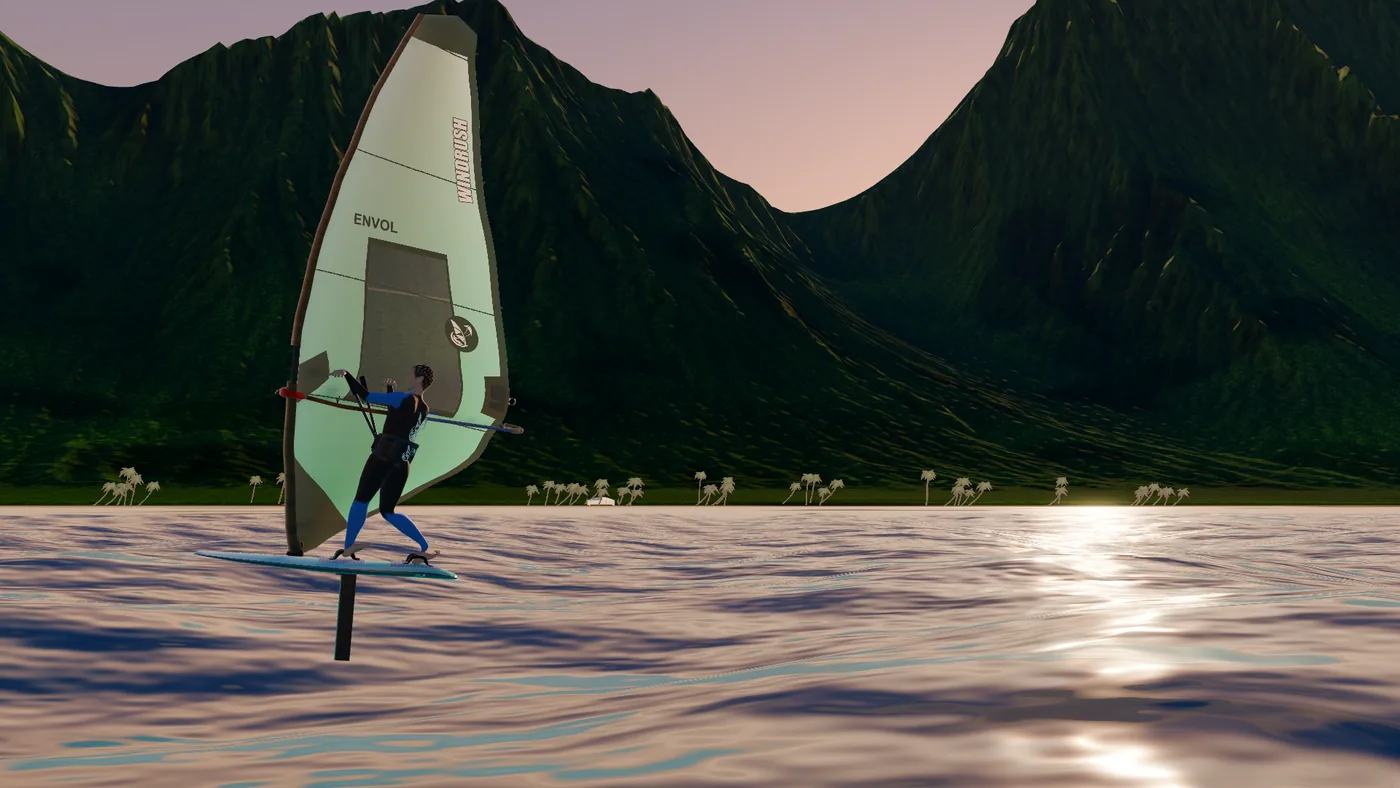
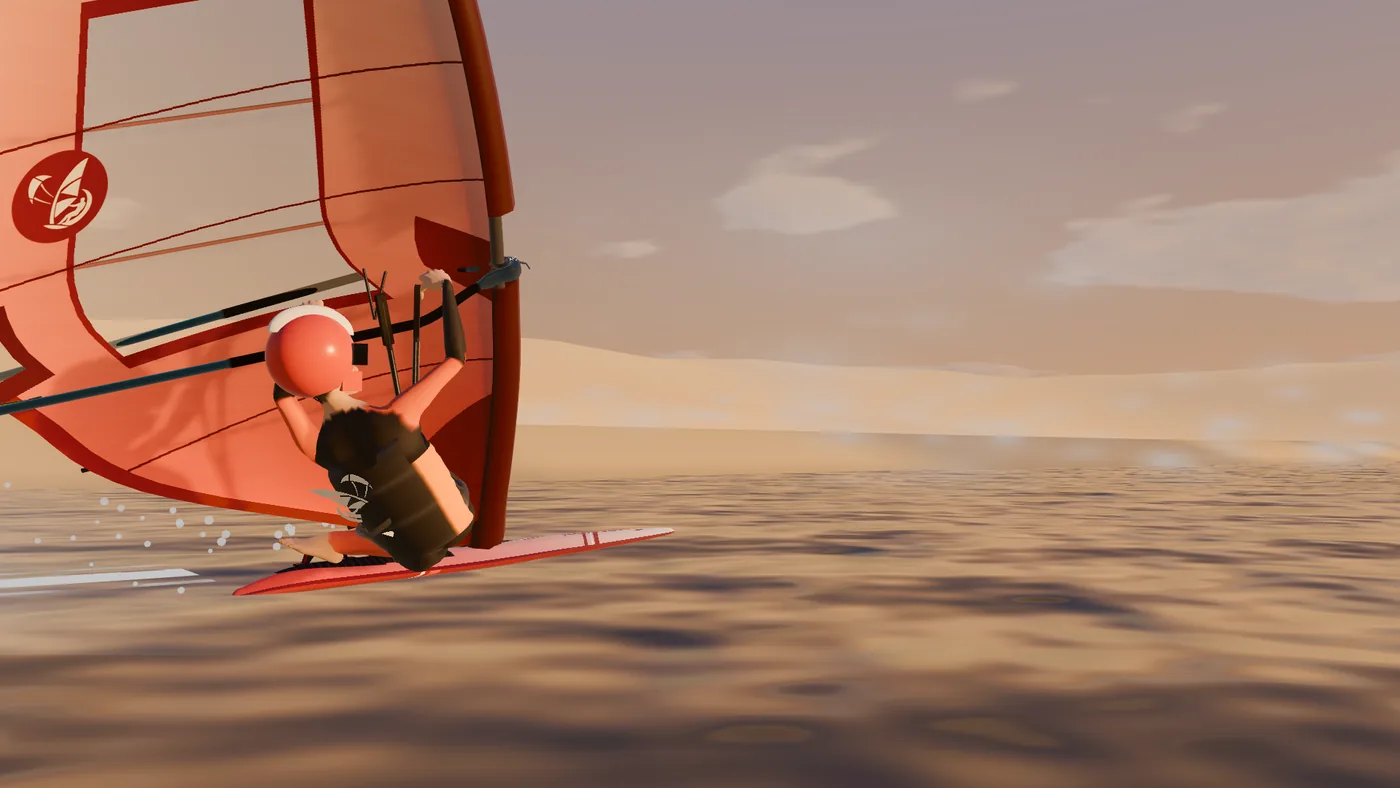
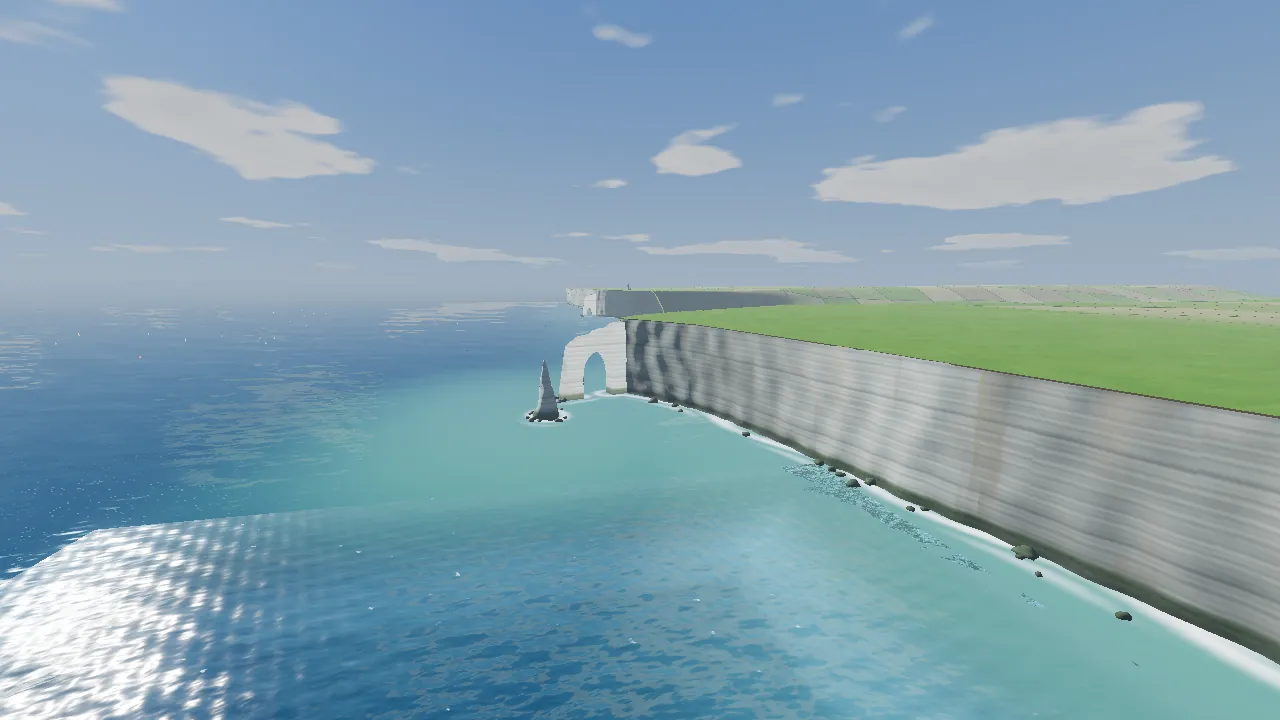
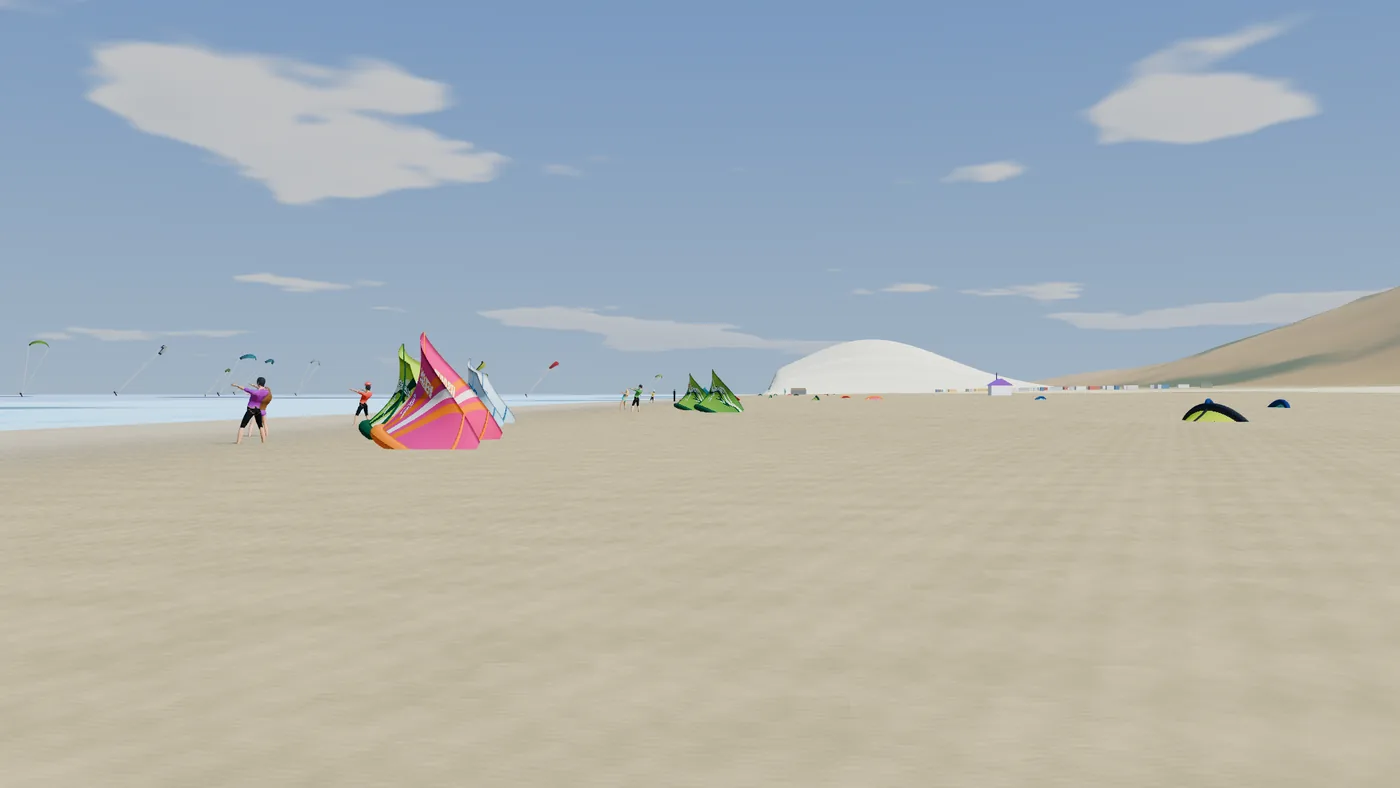
A real game, not just a demo
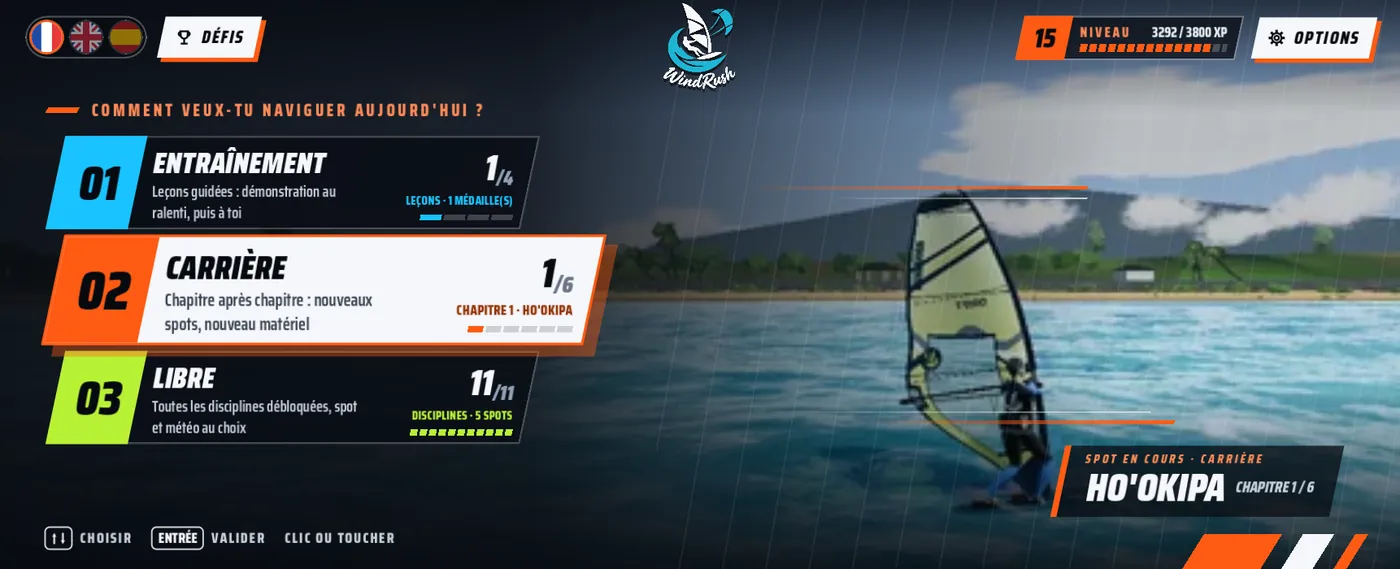
Three entries at the start: Training, Career and Free. Learn, progress, then ride the way you like.
Training: learn the moves
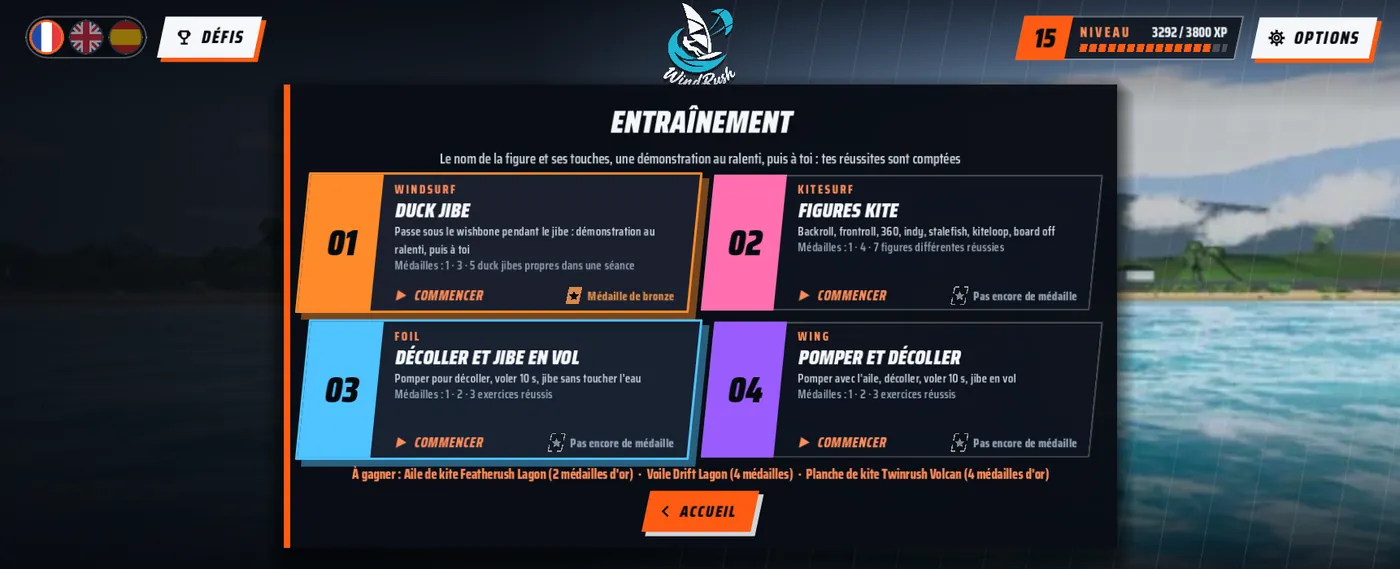
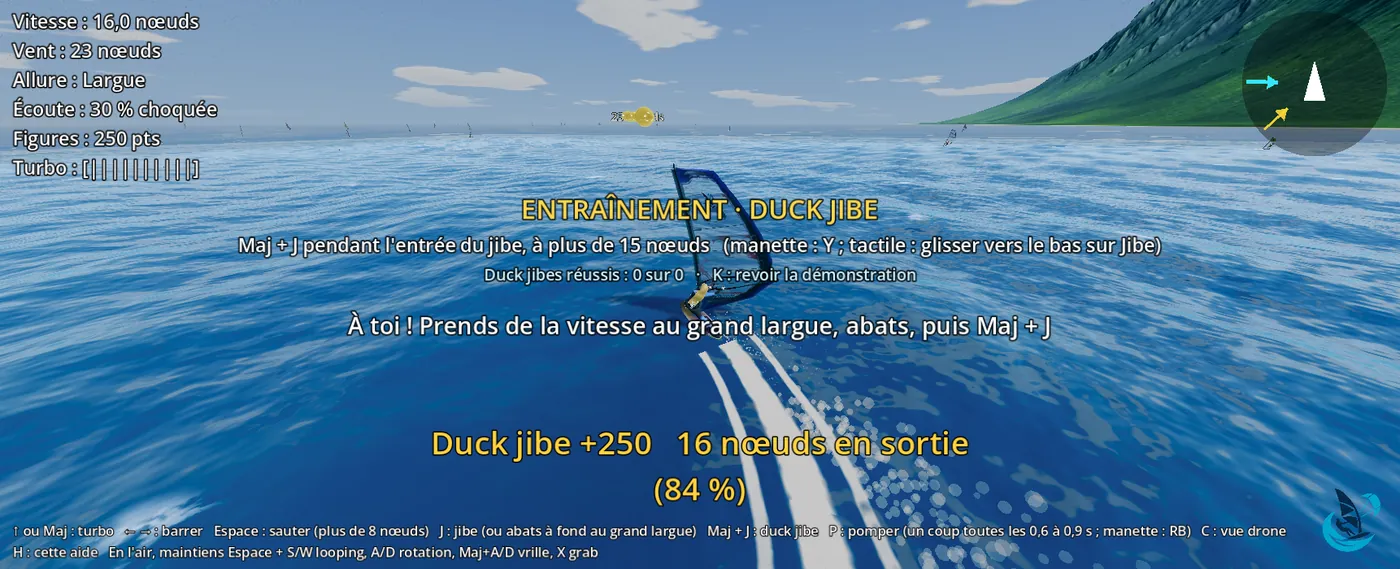
Four guided lessons: the duck jibe in windsurf, kite tricks (backroll, frontroll, kiteloop, board off and grabs), taking off and jibing on the foil, pumping and taking off with the wing. For each move, a slow-motion demo with the steps on screen, then it's your turn. Each lesson awards a bronze, silver or gold medal, and medals unlock exclusive gear colourways. Two keys let you replay the demo or move on, and everything also works with a gamepad.
Career: six chapters, one per spot
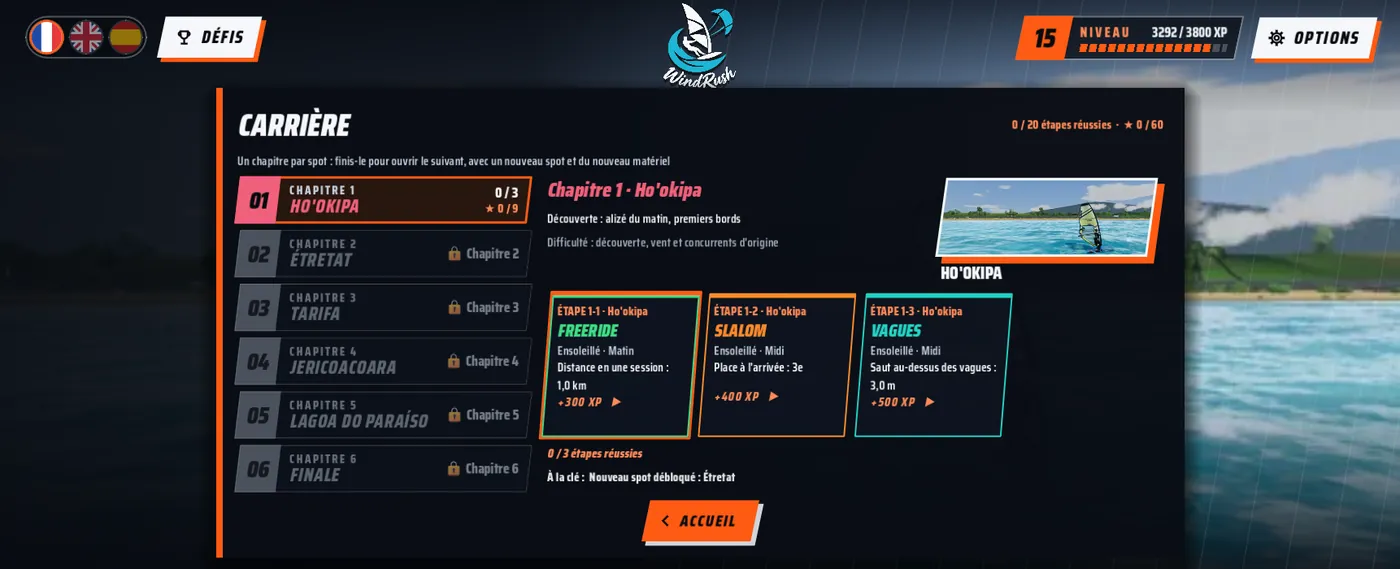
The career takes you around the world: Ho'okipa, Étretat, Tarifa, Jericoacoara, Lagoa do Paraíso, then a final. Each chapter has several stages (a race, a wave session, a freeride distance) that you can play in any order. A stage is worth up to 3 stars: one for the goal, three for gold. Finishing a chapter opens the next one, with a new spot, new disciplines, new gear and new colourways. And the difficulty rises with every chapter: a bit more wind, faster rivals, more chop from chapter 3 and less steering help from chapter 4. The smallest and the biggest sails only arrive in chapter 5.
Free: ride your way
Every unlocked discipline, with spot, weather and time of day of your choice, a male or female rider, and a daily challenge to give you a goal.
Real races
The races follow the formats of real competitions:
- Kite Race, in the Formula Kite format: upwind start, windward mark, leeward gate, then a reach to the finish.
- Foil Race, the iQFOiL slalom sprint: downwind, with three jibe marks.
- Wing Race, a Surf-Slalom in the GWA format, with a pumping zone marked by yellow buoys: the wind drops there and you have to pump the wing to stay on the foil.
- Slalom in windsurf: out and back along the coast around a jibe mark or, as an option, the PWA format, downwind with four jibe marks.
Most important: the rivals are not extras sliding along a rail. They sail with the same physics as the player, each with their own gear, aim for the marks, zigzag upwind when the mark is into the wind, and avoid the rocks and the other riders. They steal each other's wind, bump into each other and get angry when you hit them. Flying start with a countdown, a penalty for jumping the gun, live positions, slow motion at the finish and a replay of the best moments.
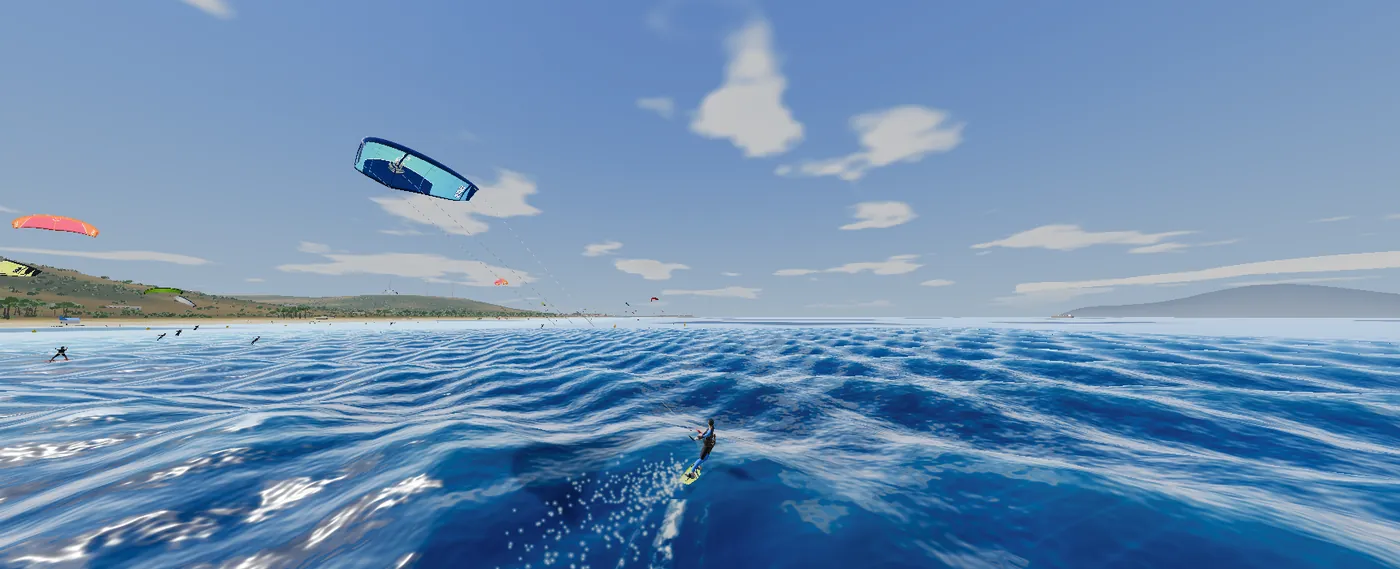
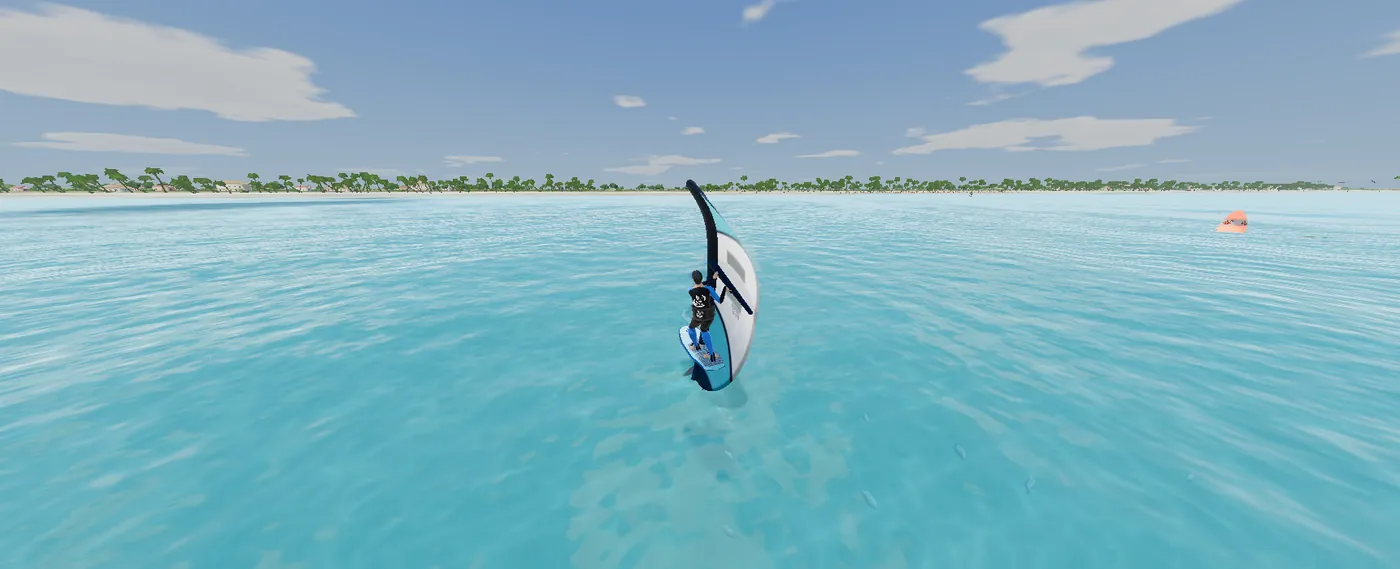
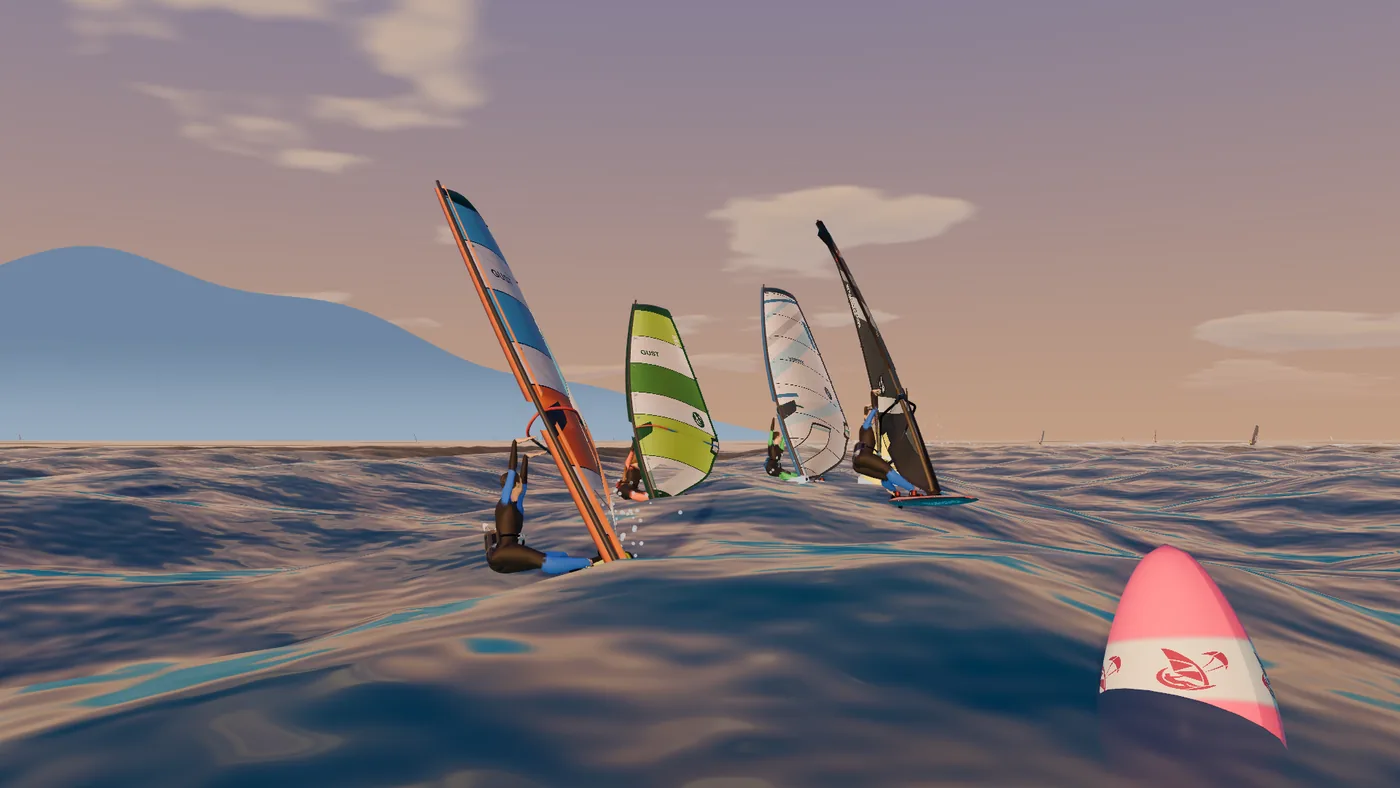
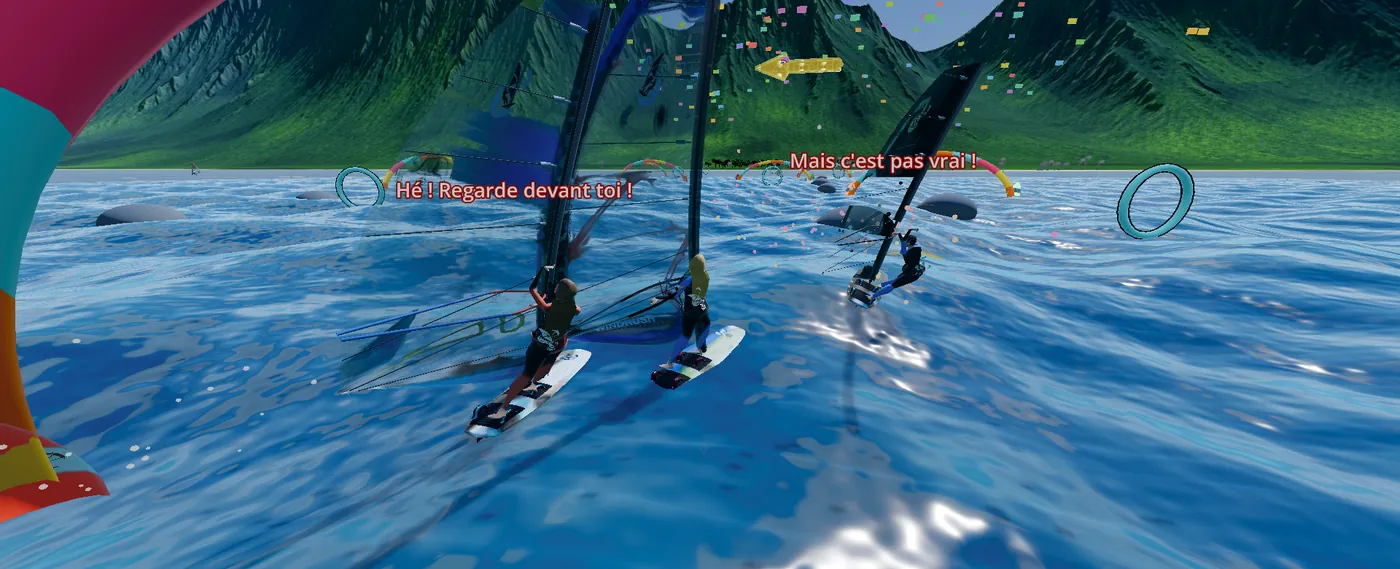
Realism first
I sail, so I wanted it to feel right. The HUD shows what a windsurfer actually watches on the water: speed in knots, wind strength, point of sail and how much the sheet is trimmed or eased. You head up, bear away, pump to get planing, and jumps only work above 8 knots.
- Broken waves knock you off balance. Hitting the whitewater of a wave that just broke head-on slows you down and shakes the rider; a big wall of foam taken straight on means a wipeout. At an angle, or jumping over it, you get through.
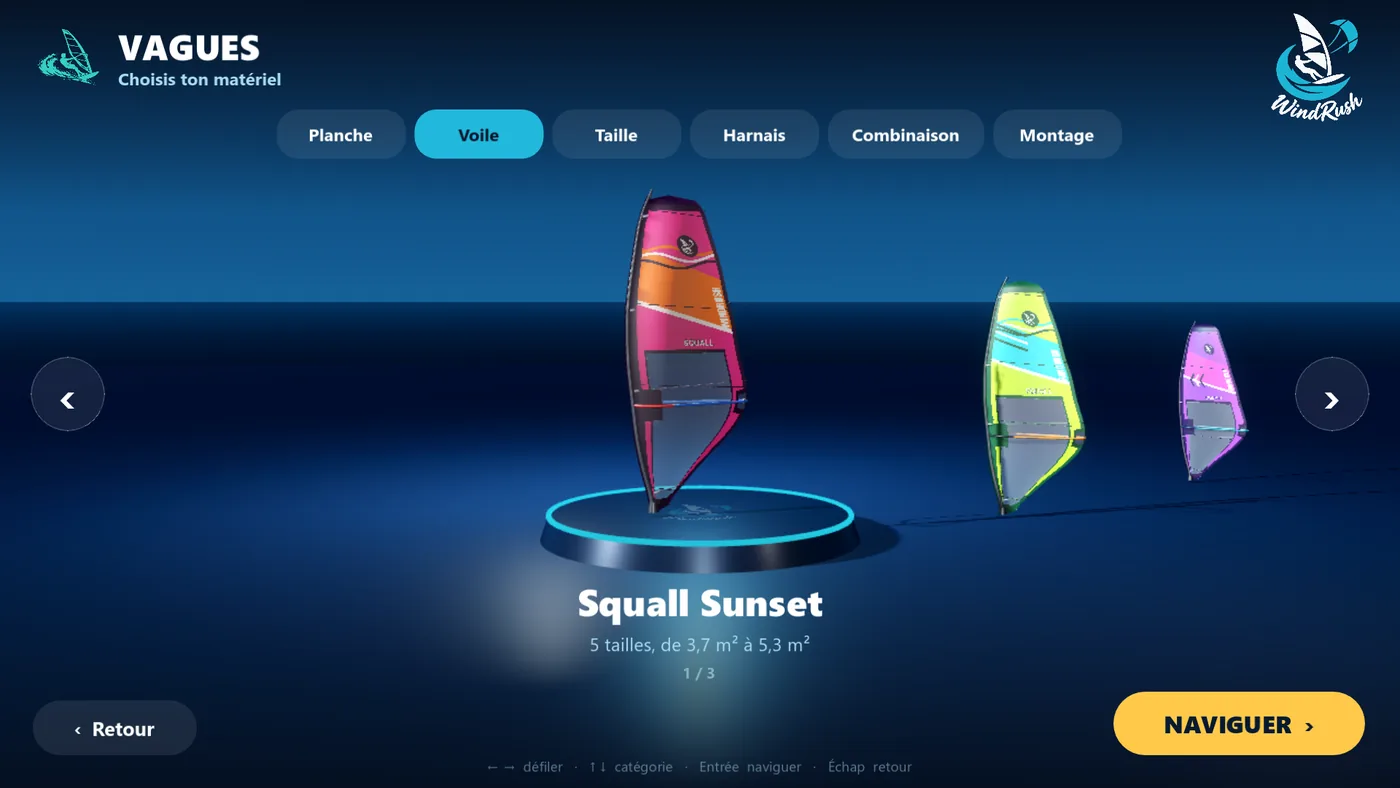
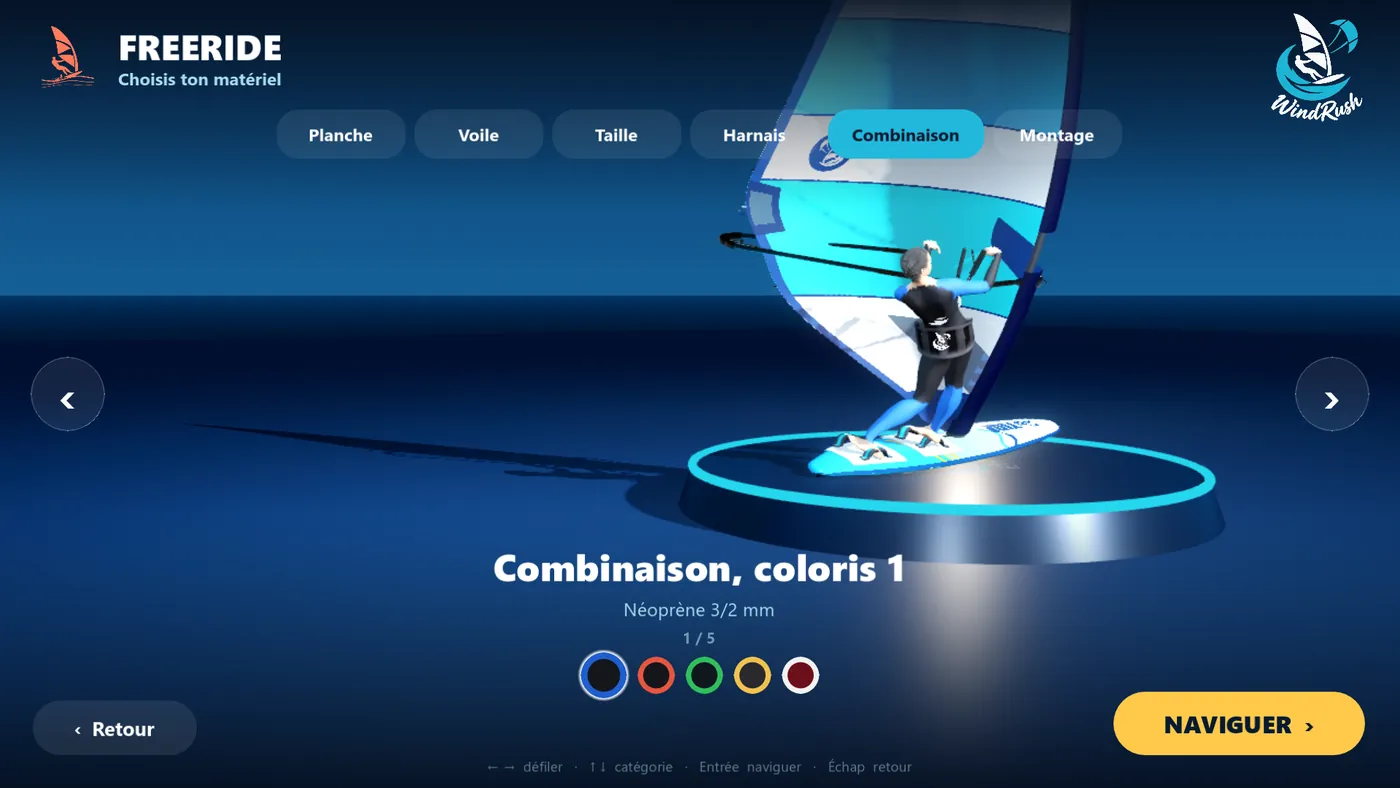
- Gear depends on the spot and the weather. Board, sail, size, harness and wetsuit: you choose like on the beach. So do the other riders: wave boards and sails at Ho'okipa, more wave sails when the Levante blows in Tarifa, smaller sails as the wind picks up.
- Feet in the straps. The rider's feet sit in the footstraps to the centimetre, even when the board slams through the chop, and freestyle boards have their three straps.
- Proper stances. Straight arms, a solid core, and board, rider and rig leaning together through the jibe (about 26° at 13 knots, 40° at 20 knots), not to mention the duck jibe, where the rider ducks under the boom.
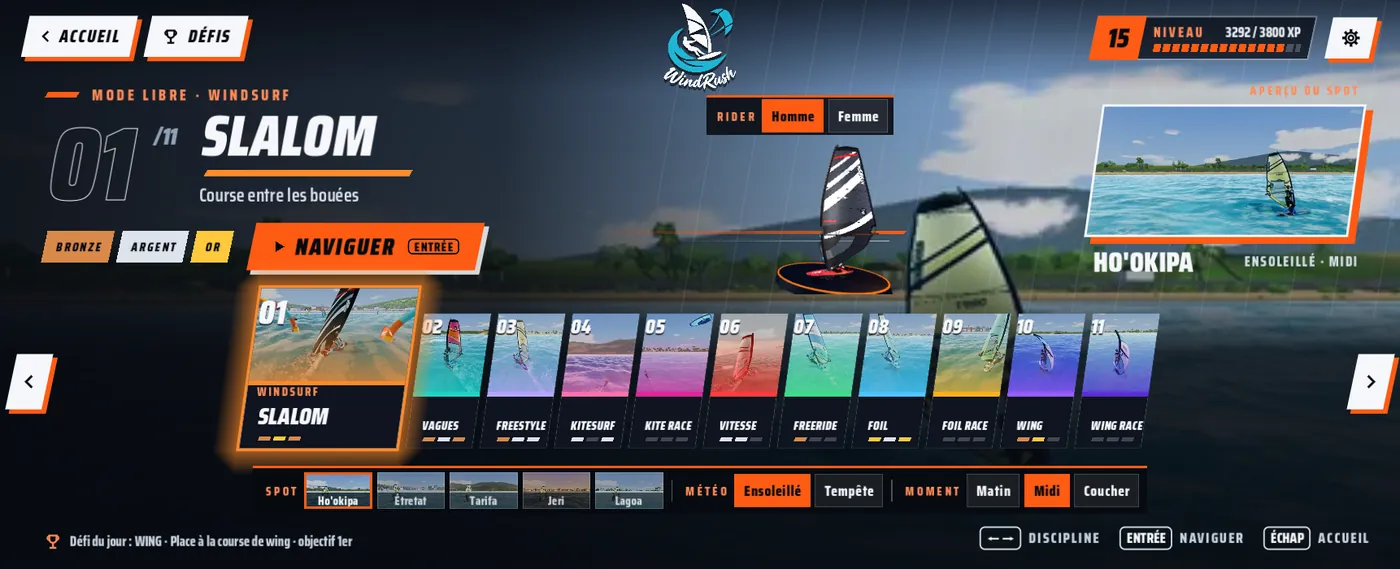
A console racing game menu
The menu was completely redone in the spirit of console racing games. In the background, a full-screen photo of the spot, which changes with the chosen weather and time of day (grey in a storm, pink in the morning, orange at sunset). Slanted panels, speed lines and a row of eleven cards you scroll through like picking your car: each card shows a real image from the game, with its medals. Top right, a photo preview of the spot; in the middle, the 3D rider on a podium. Everything works with mouse, keyboard or gamepad.
Behind the scenes: Godot, C# and Claude Code
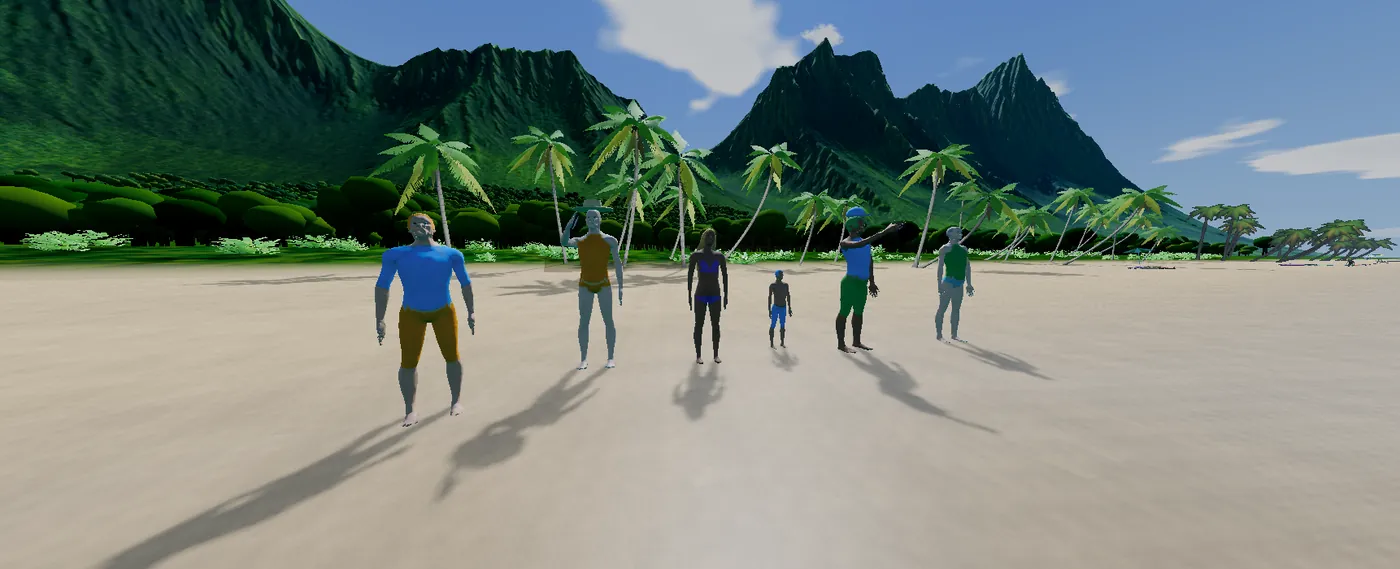
WindRush is built with Godot 4 and written in C# (.NET), the same language I use for my web projects. The riders and the beach crowd come from MakeHuman, a free program for creating 3D people. And I have a copilot: Claude Code (Opus 5.5), which works directly inside the project:
- it writes and refactors the C# scripts: board and sail physics, rival AI, career and menus;
- it builds test scenes to tune one piece without launching the whole game (the sail, the rider's poses, the audio);
- it checks its own work with screenshots and measurements: gap between foot and strap, knee angles, rival times race after race;
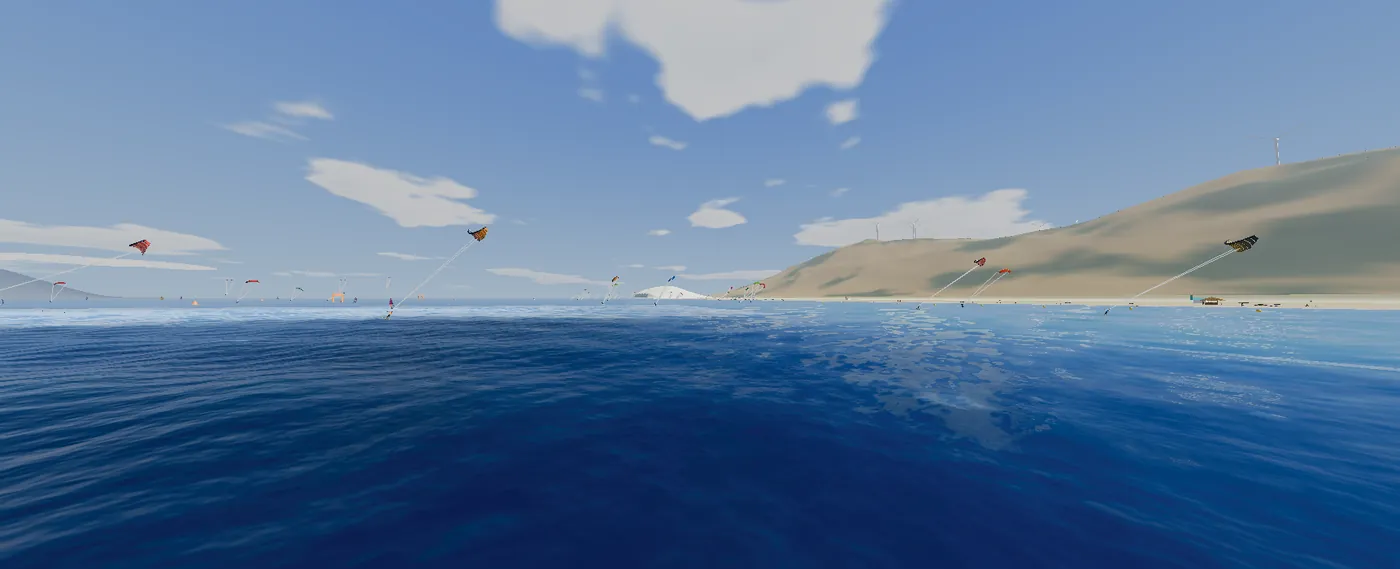
- it hunts down memory problems: slalom in Tarifa (a whole town, 70 kites, hundreds of houses) crashed for lack of memory. Textures compressed for the graphics card, shaders shared instead of duplicated and houses grouped together: texture memory dropped from 431 to 91 MB and the game's peak memory fell by 18 to 25 % depending on the spot. That's what keeps it smooth even on a modest PC.
I decide the gameplay, test and tune the feel: whether riding feels right is judged by someone who rides, not by an AI. But the pace of progress is nothing like coding alone.
What's next?
WindRush is now a free download for Windows PC at jstephan.itch.io/windrush. Next steps: new gear modelled from real photos, more manoeuvres and a real race atmosphere. If you try it, tell me what you think, and follow the project at www.windrush.fr.
I use the same approach (C#, .NET and AI as a copilot) on client projects: applications, platforms and games. See my custom software development service, or the case study of the FamiQuiz multiplayer game in .NET (in Spanish).
Got an app, platform or game project?
Let's talk: I'll propose the architecture, the timeline and a clear price.
Get my free quoteMessage me on WhatsApp