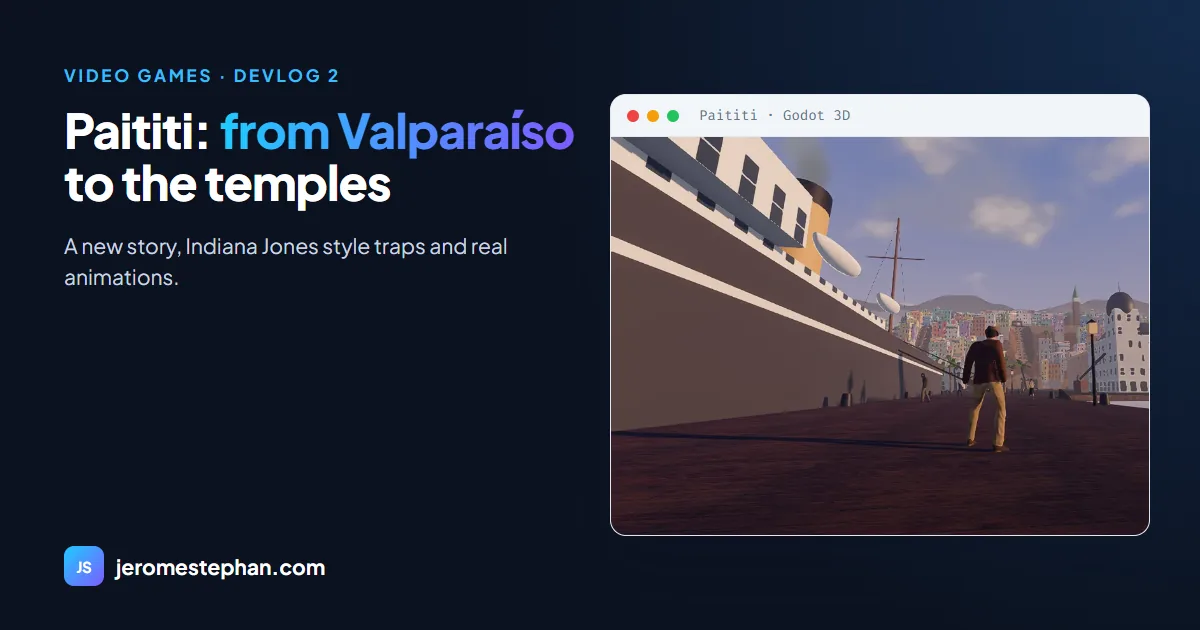
A week ago I introduced Paititi, the adventure game I dreamed of as a kid, inspired by The Mysterious Cities of Gold and Indiana Jones. Since then the game has changed a lot: a new story that starts in Valparaíso, real animations, temples full of traps and far more realistic landscapes. This is the second development diary, with screenshots of where it stands today.
A rewritten story
The plot is now more believable and more Chilean. Tomás Varela is no longer an archaeologist: he's 28 and teaches history at a high school in Valparaíso, a former student of Professor Hartmann. In 1936 he receives a parcel with the notebook of his missing mentor. According to legend, the Condor medallion was broken in two in 1572: one half is in Patagonia, the other in the Temple of the Jaguar, deep in the Amazon. Viktor Strand, head of the Hermandad del Oro, lets Tomás do the work... and holds Hartmann hostage.
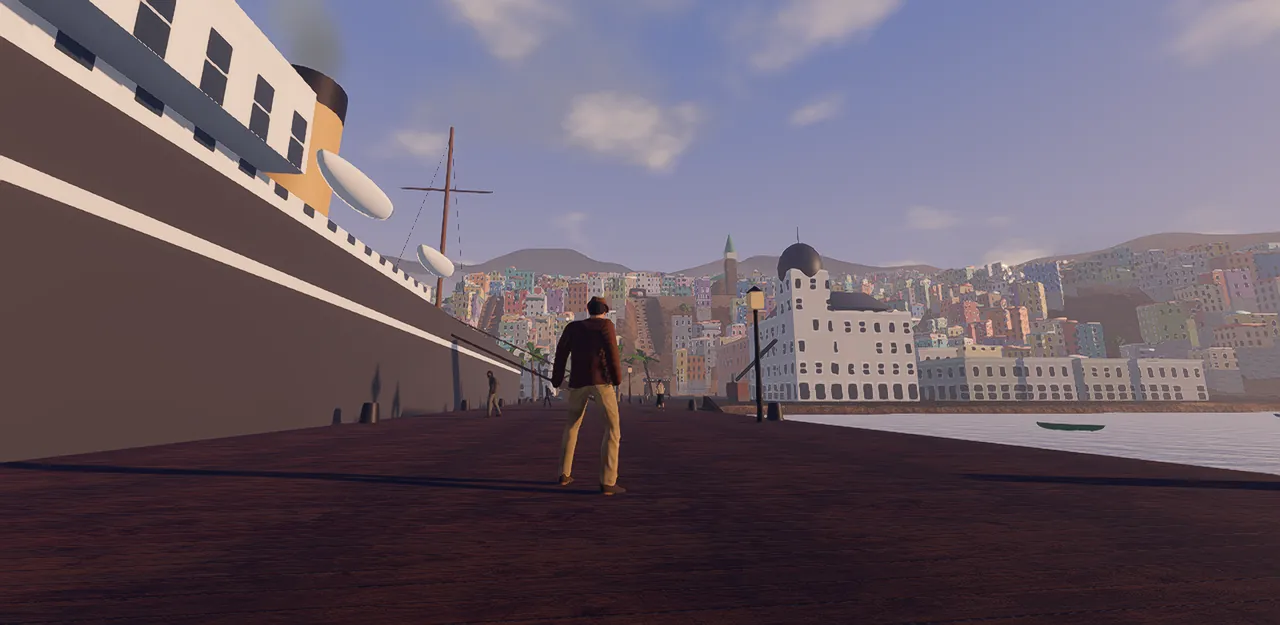
The journey respects real distances: over 5,000 km, by steamer from Puerto Natales to Mollendo, then on the Southern railway via Arequipa and Puno to Cuzco, where the seaplane takes off. The game now has two prologues before the four chapters: Valparaíso and Patagonia.
Prologue: escaping Valparaíso
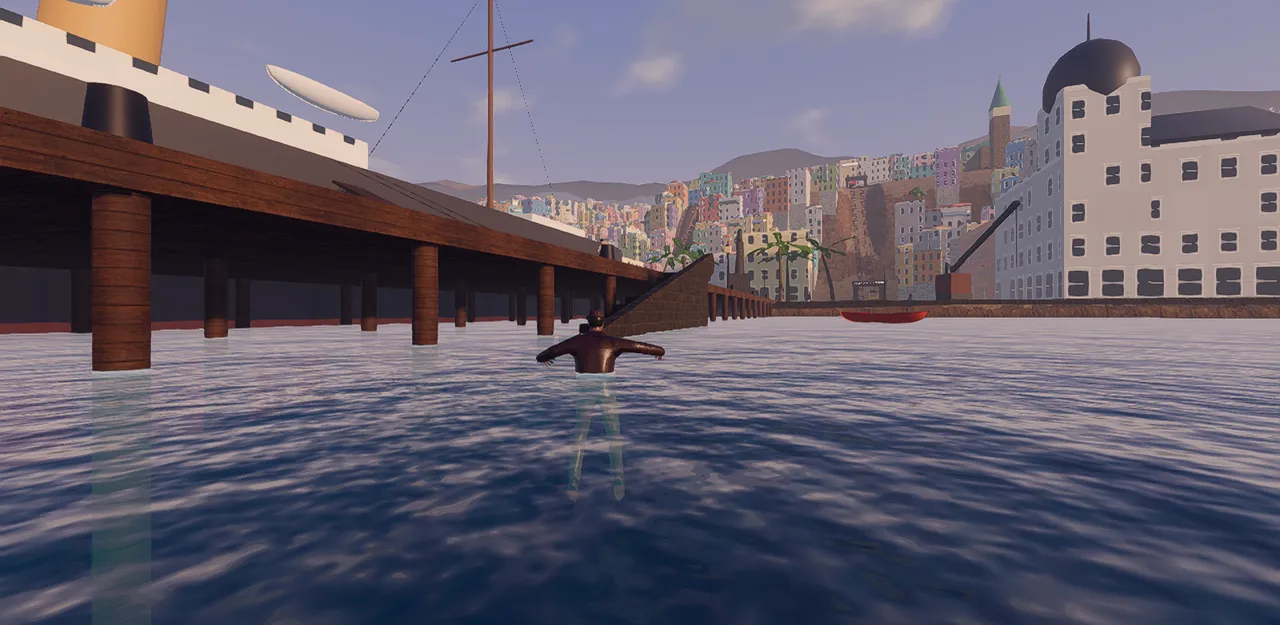
It's my favourite chapter. The city has about 1,300 corrugated-iron houses on the hills, the Concepción funicular, Plaza Sotomayor, the Navy building and the Prat pier. The first version didn't look like Valparaíso at all: we rebuilt it from nine photos of the city.
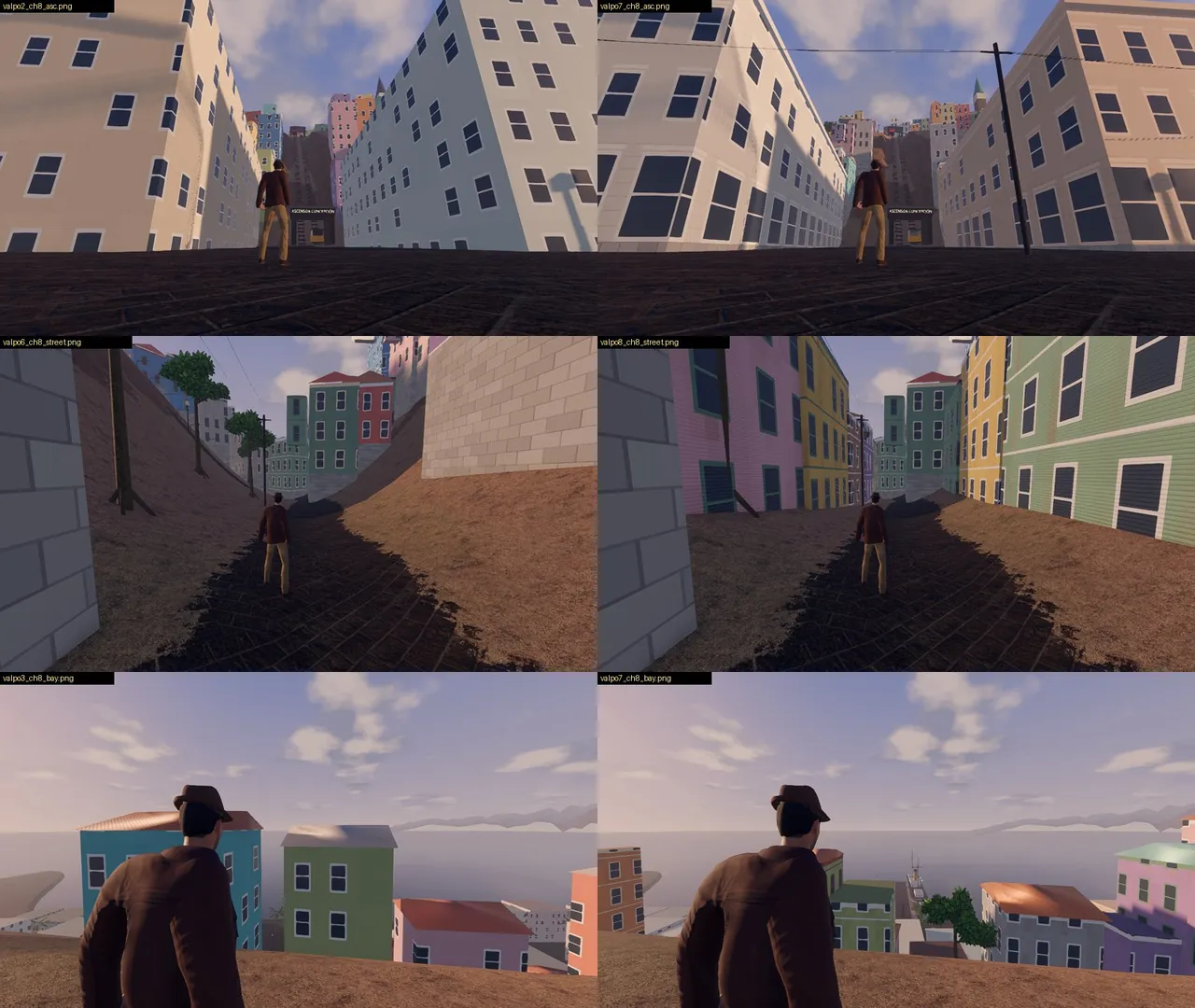
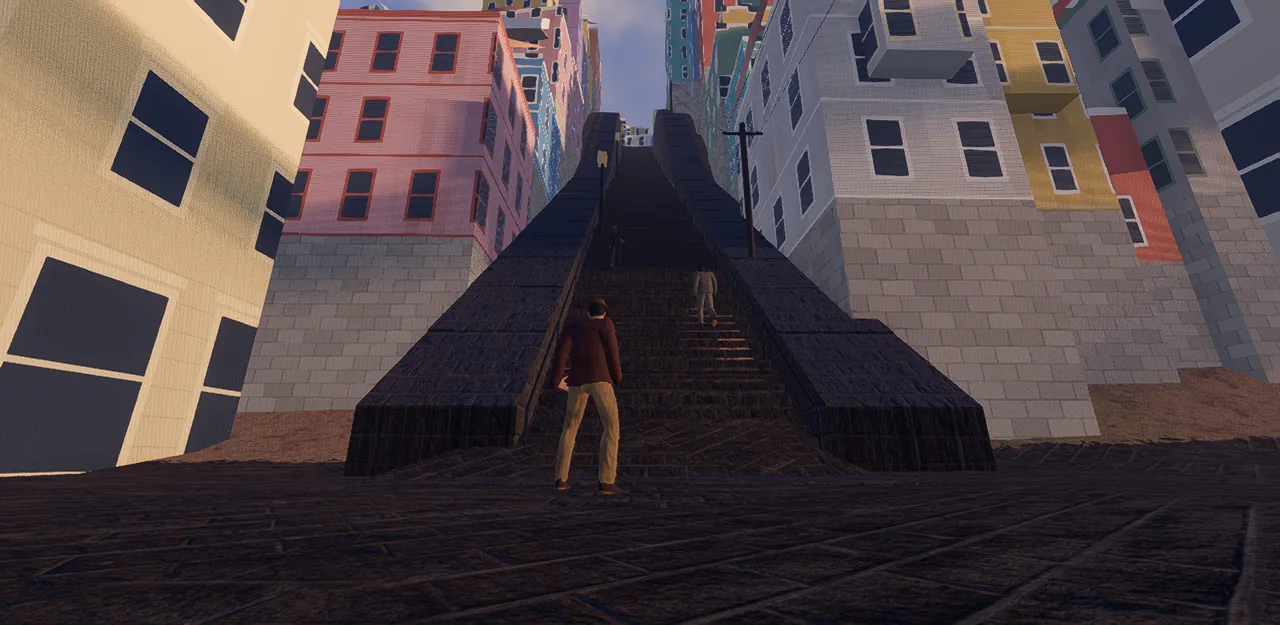
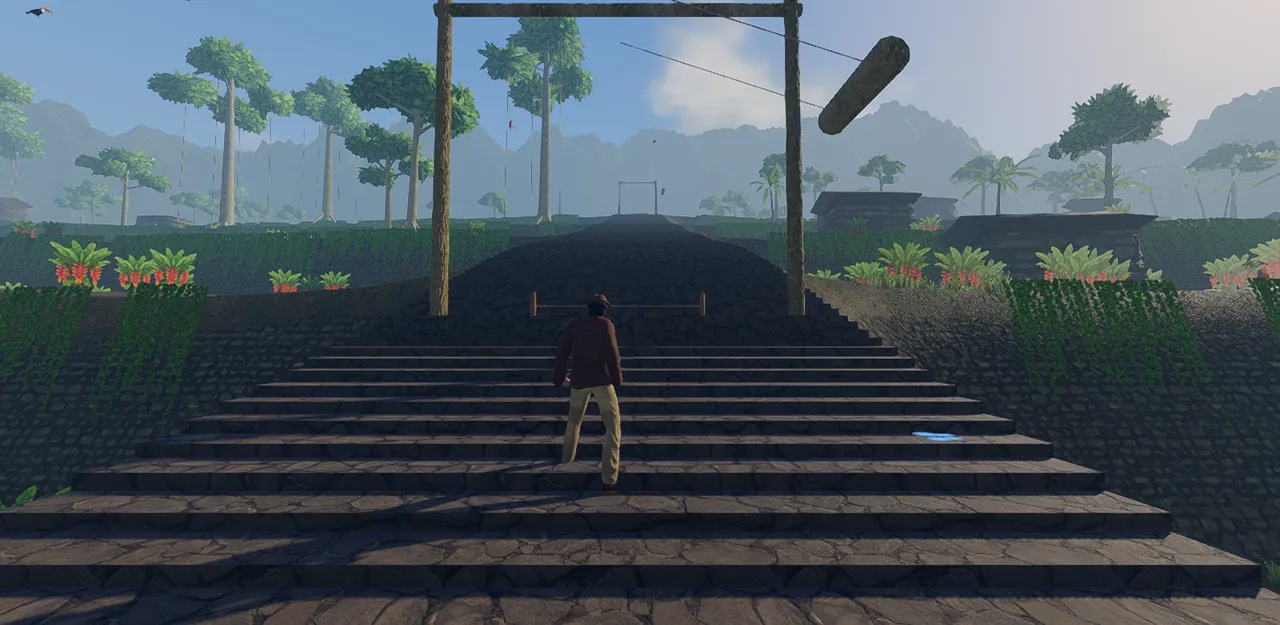
The goal: reach the steamer Cabo de Hornos before it sails, within five minutes, as the sun sets. Two of Strand's men are on Tomás's trail; blending into the 25 passers-by helps, because the guards spot him from less far away, and the funicular lets him shake them off. There's a 158-step staircase and, if the steamer's gangway goes up, you have to swim.
Patagonia, now part of the story
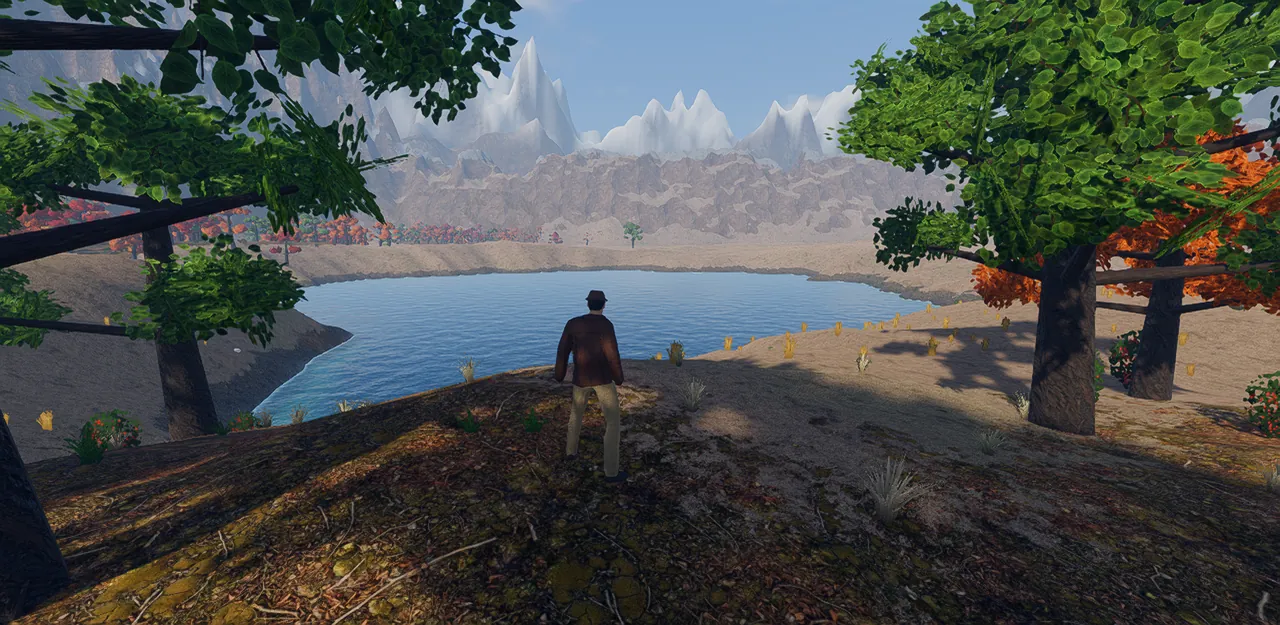
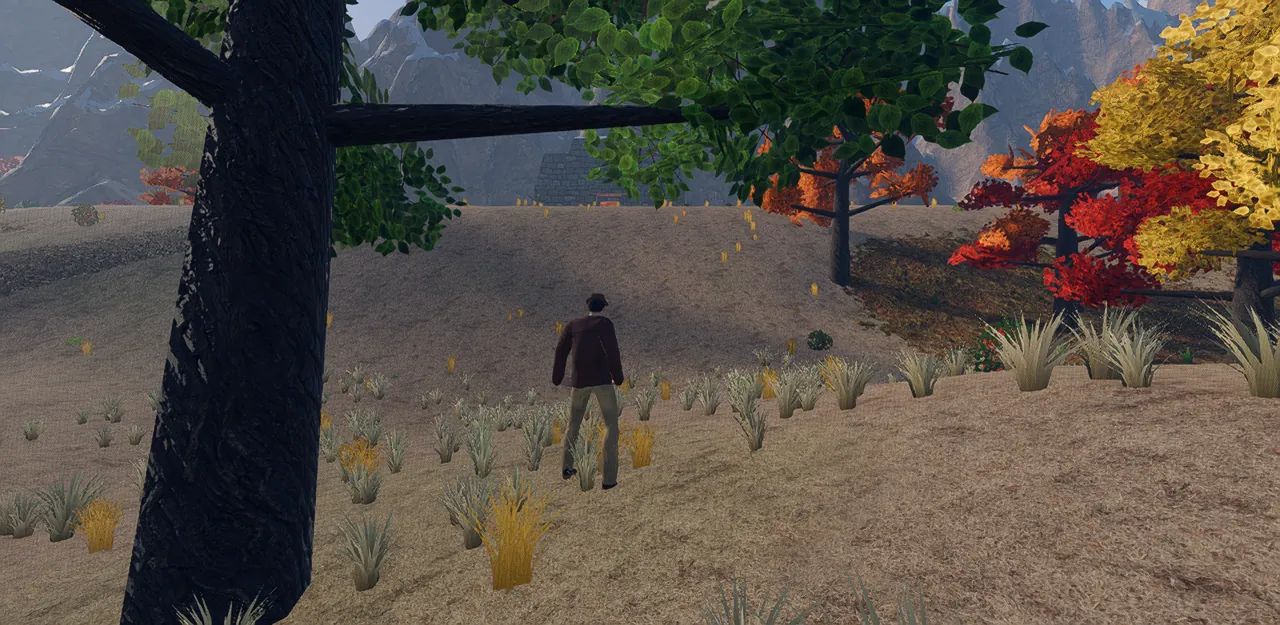
Patagonia is no longer a bonus chapter: it's the second prologue: his small plane crashes in a storm near the Paine towers, and Tomás looks for the first half of the medallion in the temple of the City of the Caesars. Lenga forests in autumn colours, thousands of tufts of coirón, the steppe grass, guanacos, condors and pumas.
Trapped temples, Indiana Jones style
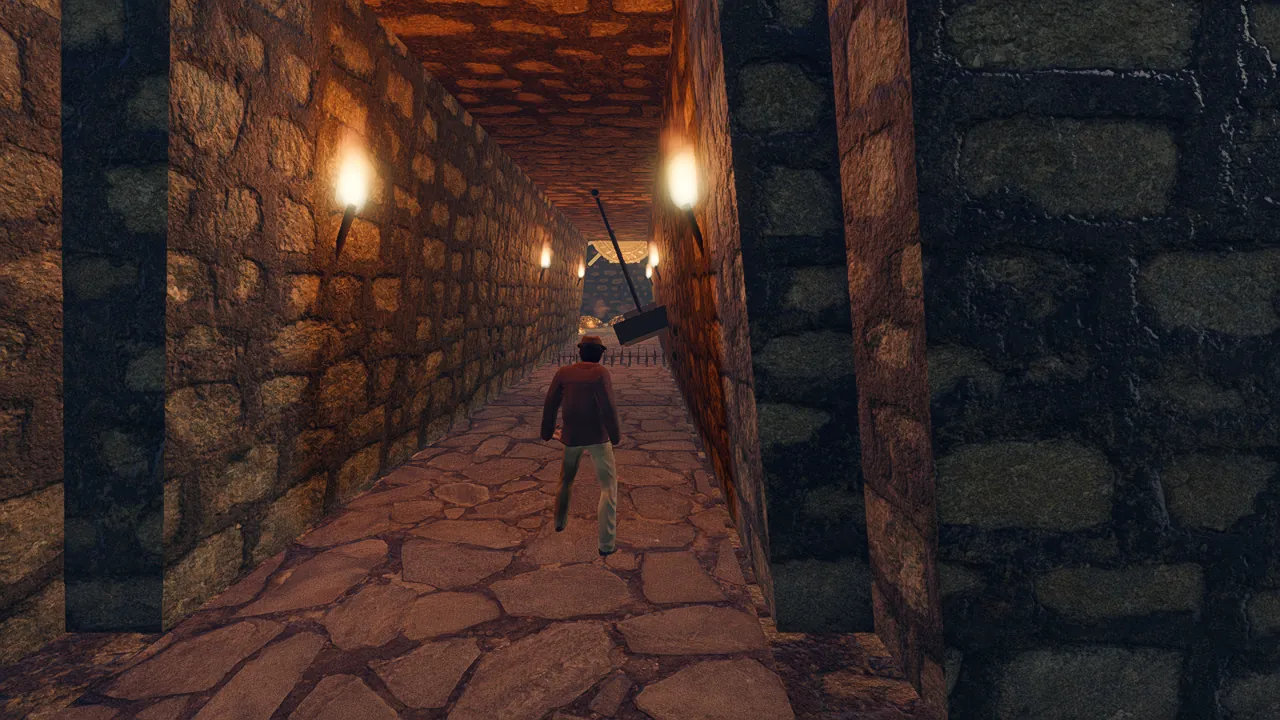
The temples now have corridors full of traps: spikes, pendulum blades, fire jets, darts, spider webs to cut with the machete, tarantulas and collapsing slabs. After the treasure, of course, comes the rolling boulder. The trails have spike pits and battering logs, and three chapters each hide six golden idols for the curious.
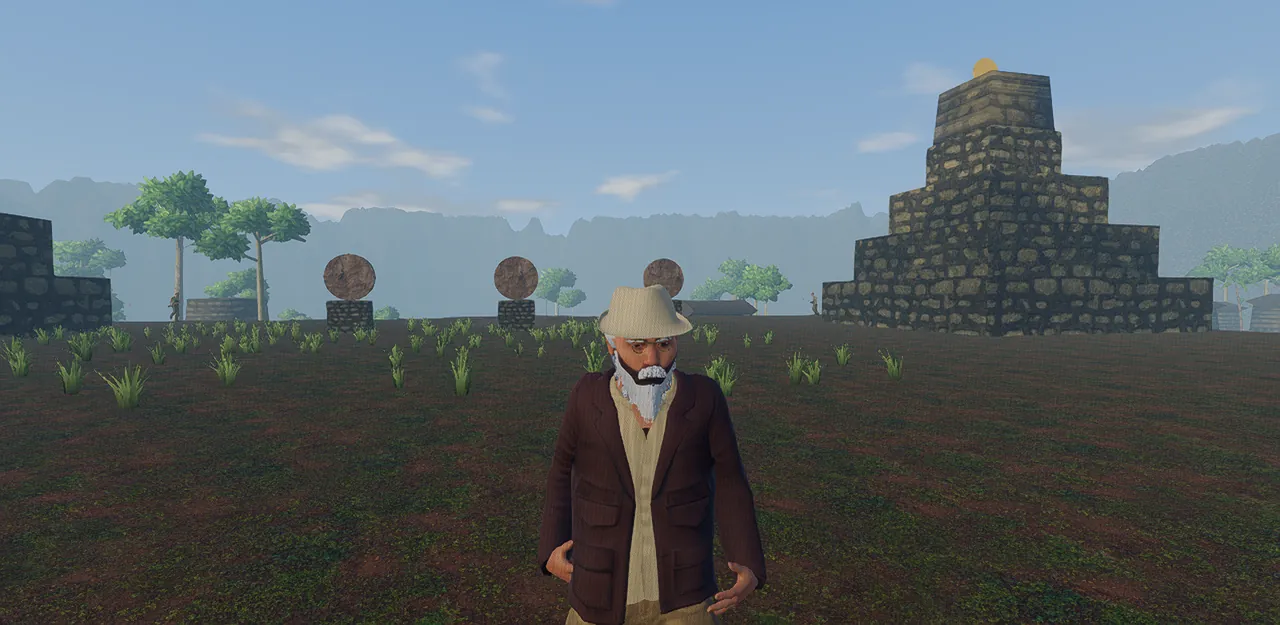
The Hermandad del Oro's mercenaries patrol, shoot with rifles and can be knocked out. Crouching, Tomás is spotted from less far away. Professor Hartmann finally appears, with his white beard and panama hat.
Real animations
In the first devlog, characters moved with animations written in code. They now use 46 motion-capture animations from Quaternius's Universal Animation Library, free and in the public domain: walking, running, crouching, swimming, swinging the machete, sitting by the fire. And a new move: the dodge roll, which lets arrows and bullets pass by.
More realistic landscapes
- Free photo textures (Poly Haven, ambientCG) and scanned plants, rocks and stumps.
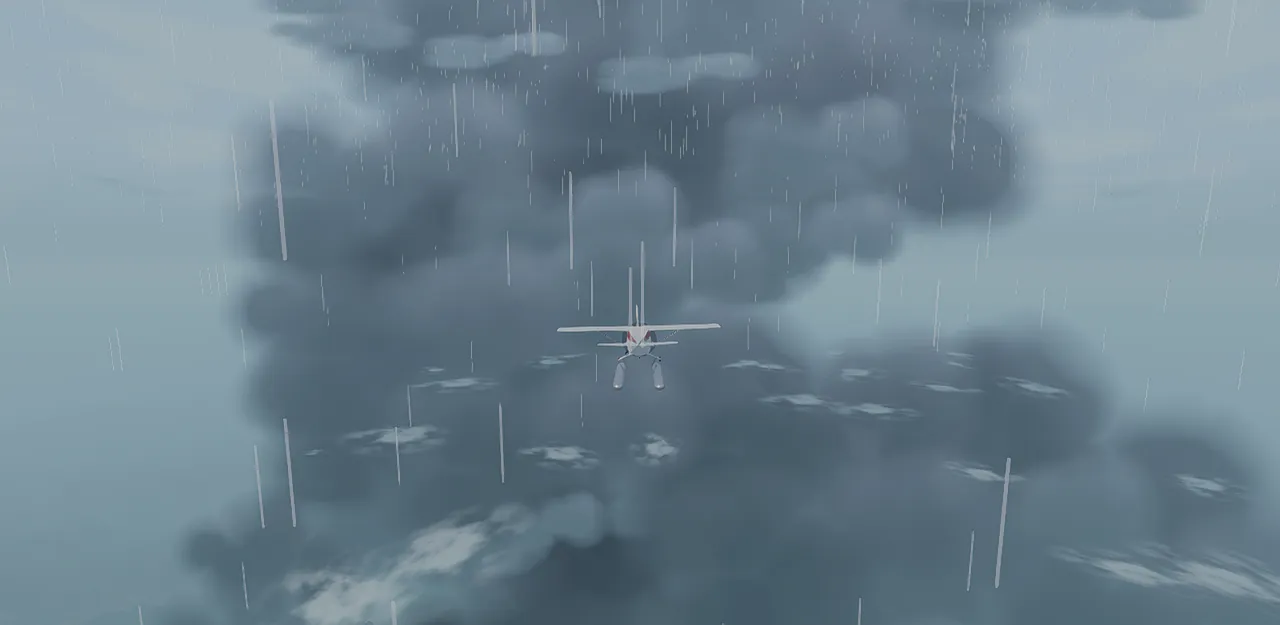
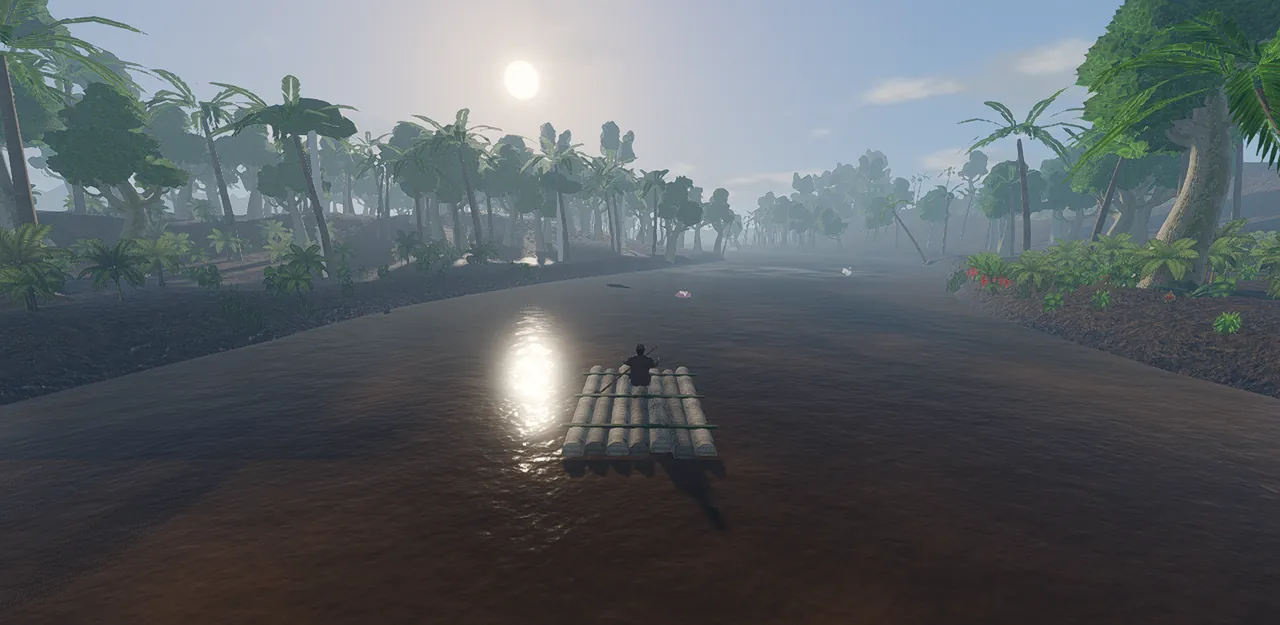
- Weather: showers in the jungle and on the river (rain quenches thirst and enemies see less), and a storm turned into a proper cumulonimbus.
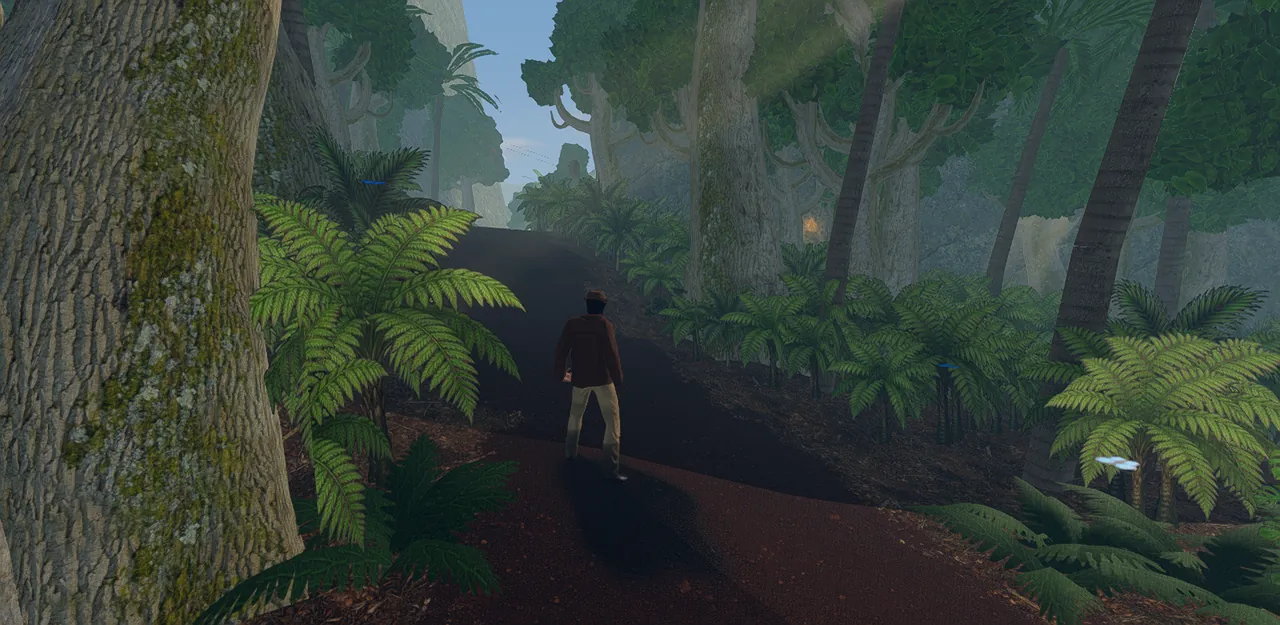
- Night: a torch, 260 fireflies and blue morpho butterflies in the jungle, and sun rays under the canopy by day.
- Wildlife: pink river dolphins, parrots and anacondas on the river, a macaw clay lick; pumas and jaguars animated with a skeleton the game builds in code.
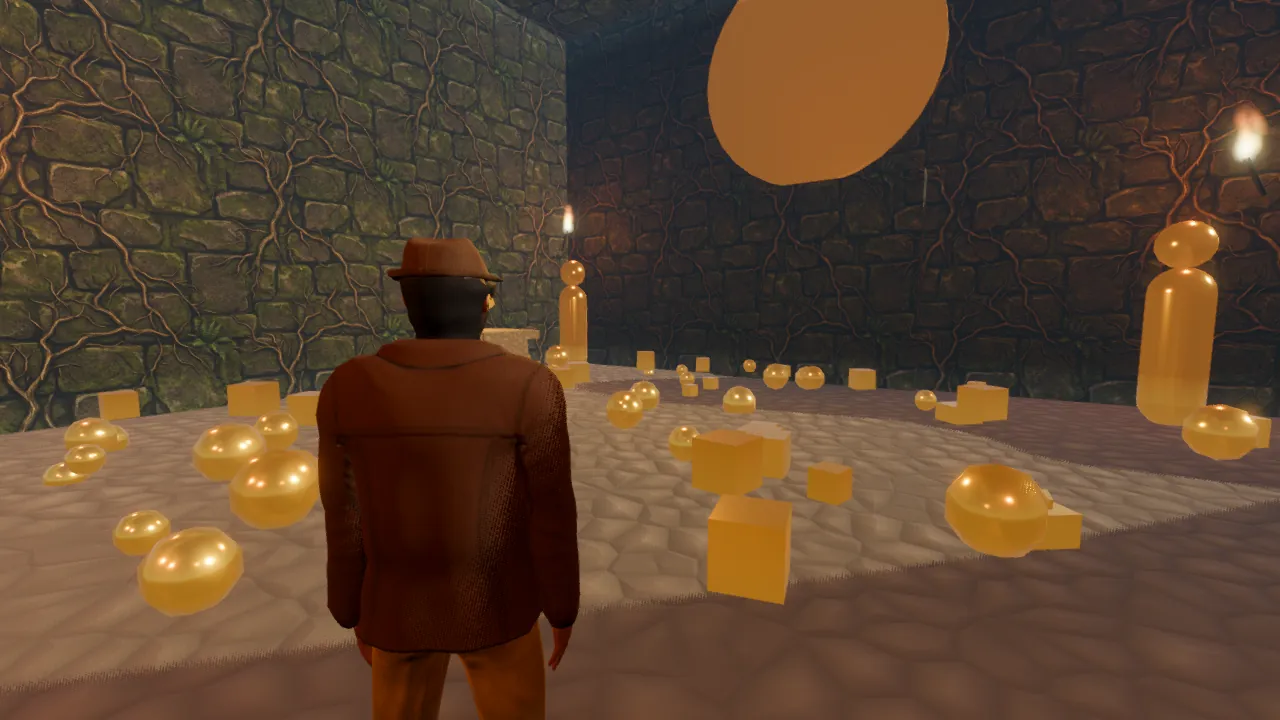
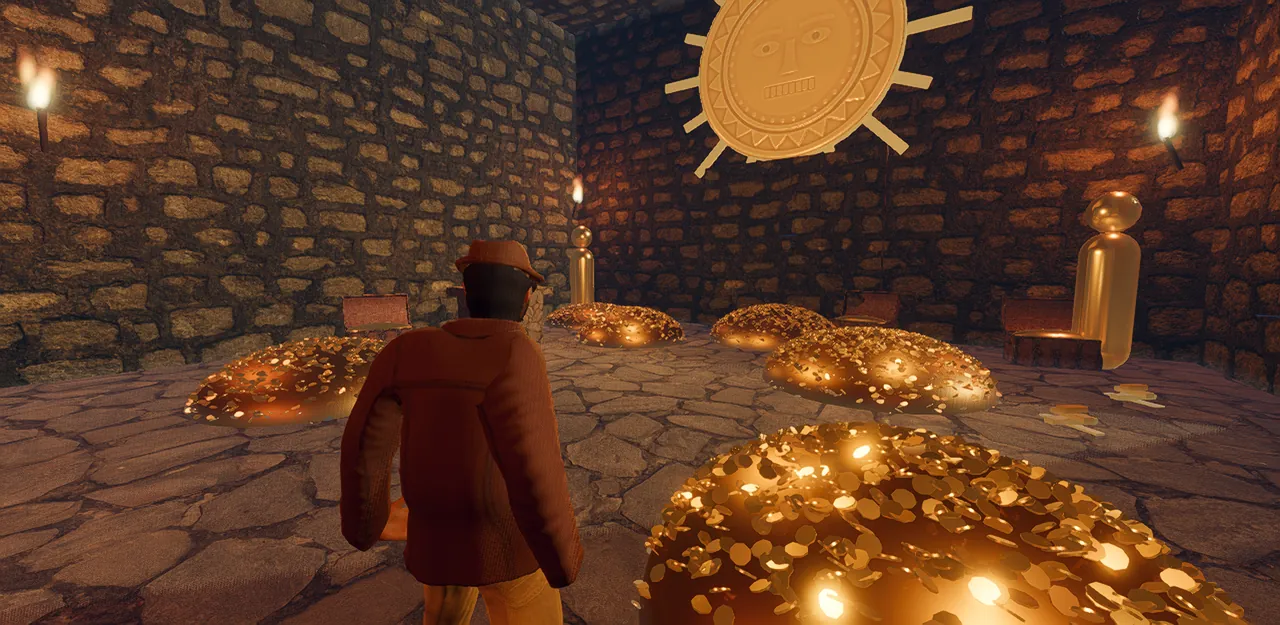
- Paititi: 421 steps, Inca houses and a reworked treasure, with the mask of Inti.
A robot that plays
On top of more than a hundred automated checks, the game now has a probe: a robot player that goes through the chapters like a human. It found six bugs the tests couldn't see, such as a pier impossible to climb or a blocked way out of the water. On 2 November I played a full game myself for the first time, and that produced its own list of fixes.
The full story (warning: spoilers)
- The legend: when Vilcabamba falls in 1572, the priests break the Condor medallion, the key to Paititi, in two. One half travels south with fleeing Incas, to the legendary City of the Caesars; the other stays in the jungle, in the Temple of the Jaguar.
- Prologue I, Valparaíso (June 1936): at his boarding house on Cerro Concepción, Tomás receives the notebook of Professor Ernst Hartmann, a German-Chilean archaeologist who vanished in 1935 on the Madre de Dios river. That same night, two of Strand's men search his room: Tomás flees through the hills and jumps aboard the steamer to Punta Arenas.
- Prologue II, Patagonia: his plane crashes near the Paine towers. Under the seat of the pilot, who bailed out by parachute, lies a note signed V. S.: "Let him find the piece. Then take it." Tomás survives the cold and the pumas and comes out of the temple of the City of the Caesars with the first piece. Then the long journey north: steamer to Mollendo and the Southern railway to Cuzco.
- Chapter 1, the flight: in Cuzco a telegram awaits: "The professor is our guest. Bring the medallion." Hartmann is alive and Strand holds him. Tomás crosses the mountains in an old seaplane, lightning sets the engine on fire and he parachutes over the jungle.
- Chapter 2, the jungle: guardians, anacondas, a Hermandad camp, the trapped corridor and the second piece in the Temple of the Jaguar.
- Chapter 3, the river: the raft, the guardians' village, the swamp, the Pongo rapids and, at the end, the lagoon, the lost city... and Strand's camp.
- Chapter 4, Paititi: Tomás opens the Gate of the Sun, crosses the last trapped corridor and joins the medallion on the altar: the treasure appears, and the giant boulder chases him to the forecourt. Strand is waiting there: "Bravo, Professor Varela. You opened the door for me." Then the drums: the guardians surround the forecourt and Strand flees into the jungle empty-handed. The guardians' chief tells Tomás they freed the old man from the camp that night, and that the gold and the medallion stay in Paititi.
- The ending: Hartmann appears, thin but alive ("Tomás... I knew you'd come"). He stays with the guardians to write their history. Tomás goes back down the Madre de Dios by canoe, and in Puerto Maldonado his report fits in two words: "Nothing found".
Decisions and what's next
Two changes since the first devlog: Paititi will be a PC-only game, and climbing the Andes has been dropped. On a laptop with Intel graphics it runs at about 30 to 40 frames per second at medium quality; to get there I cut the jungle's draw calls from 1,610 to 661. Still to do: fix a few spots where you can get stuck, tune the difficulty and create the Valparaíso comic panels.
If you're curious about how I work with Godot, read making a game with Godot, and if you like PC games, have a look at WindRush. For a project of your own, see my custom software service.
3D model credits (CC BY 3.0, Poly Pizza): «Small Airplane» seaplane by Vojtěch Balák; jaguar, caiman, macaw, capybara, dolphin, parrot and cougar by Poly by Google; toucan by an anonymous author (Poly); eagle turned condor by Robert Mirabelle. Animations: Universal Animation Library by Quaternius (CC0). Textures: Poly Haven and ambientCG (CC0).
Got a game or app project?
Let's talk: I'll propose the architecture, the timeline and a clear price.
Get my free quoteMessage me on WhatsApp