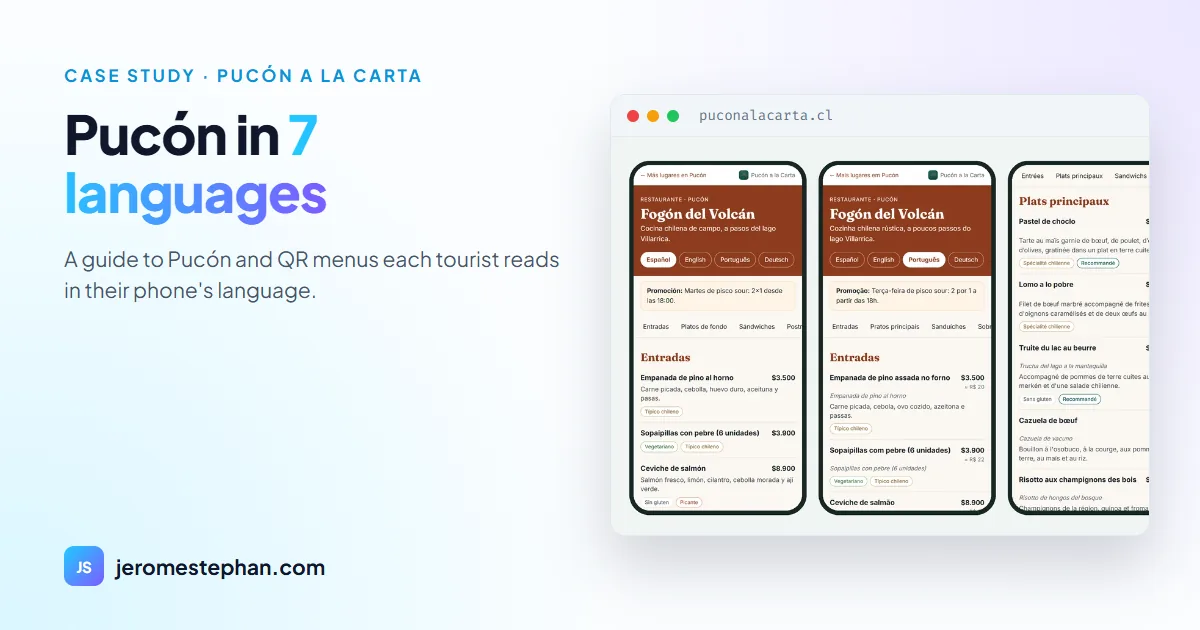
On 12 November 2026 I put Pucón a la Carta online. It's my own project: a guide to Pucón, in southern Chile, in four languages, built around one simple idea. A restaurant pastes its menu once, prints a QR code, and every tourist reads it in their phone's language. This article covers the idea, how it works and what's behind it.
The problem: the menu only exists in Spanish
Pucón gets visitors from all over the world: Brazilians, Europeans, North Americans, Israelis. The menu, though, almost always exists in one language. Explaining with gestures what a pastel de choclo or a chacarero is takes up the waiter's time, and the tourist often ends up ordering what they recognise: a pizza or a burger. The house dishes, the very thing they came to try, stay in the kitchen.
Translating the menu by hand isn't a fix either: every language has to be paid for, and the first price change makes the whole print run out of date.
The idea: a menu that speaks the phone's language
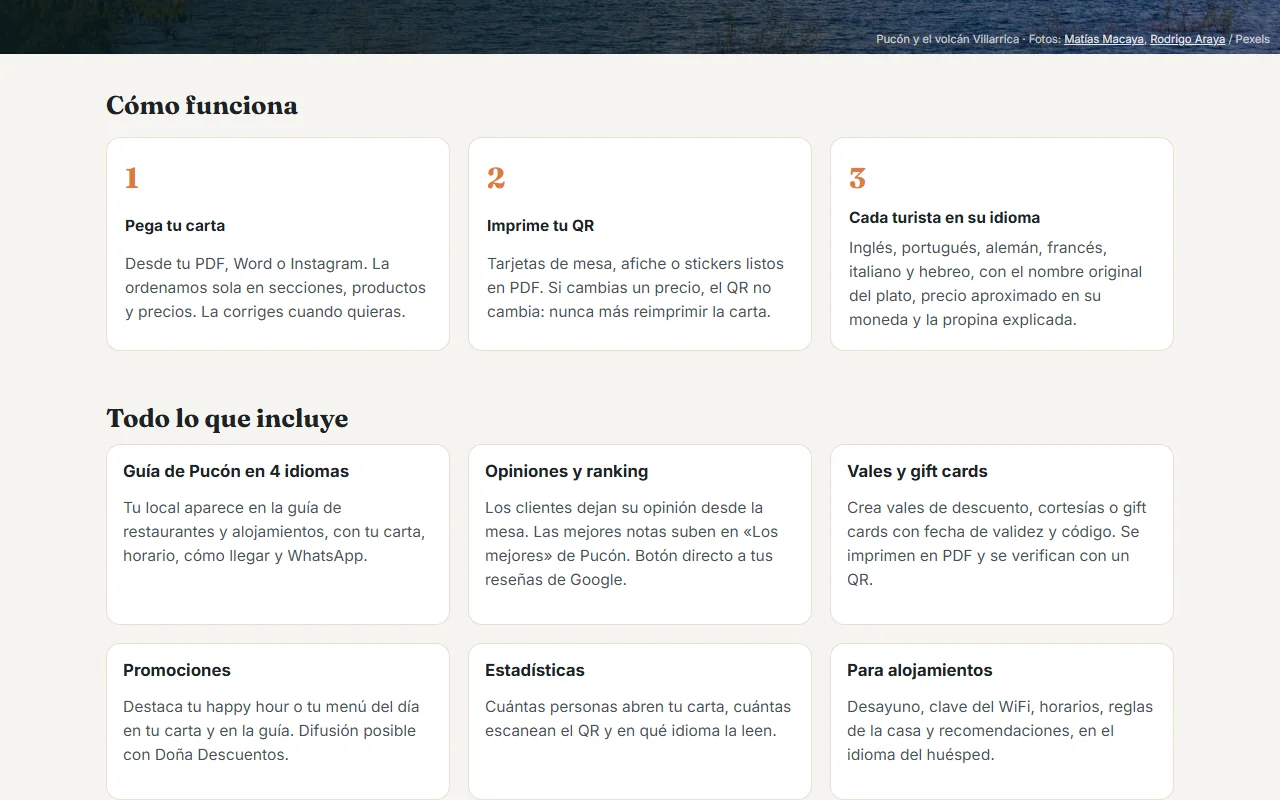
- Paste the menu. The business copies its menu from a PDF, a Word file or Instagram. The site sorts it into sections, items and prices by itself, and shows a preview before saving.
- Print the QR code. Table cards, a poster or stickers, ready as PDFs. If a price changes tomorrow, the QR code stays the same: nothing gets reprinted.
- Each tourist in their language. On scanning, the menu opens in the phone's language, with no app to install.
What the tourist sees
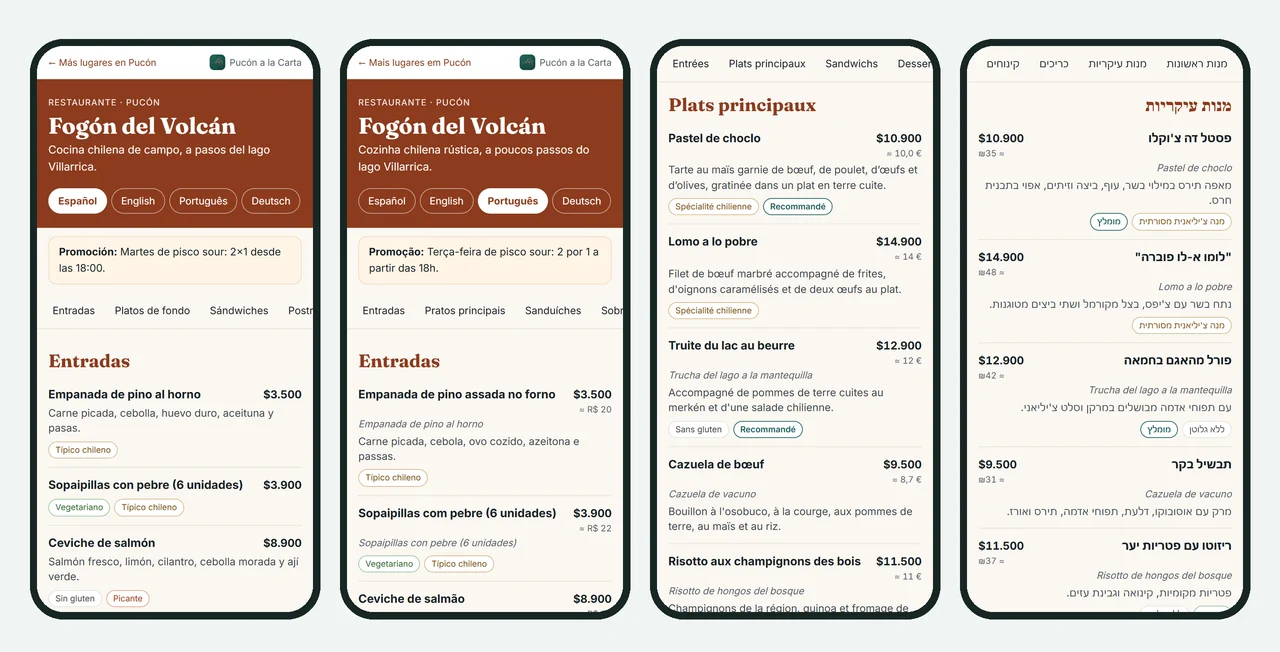
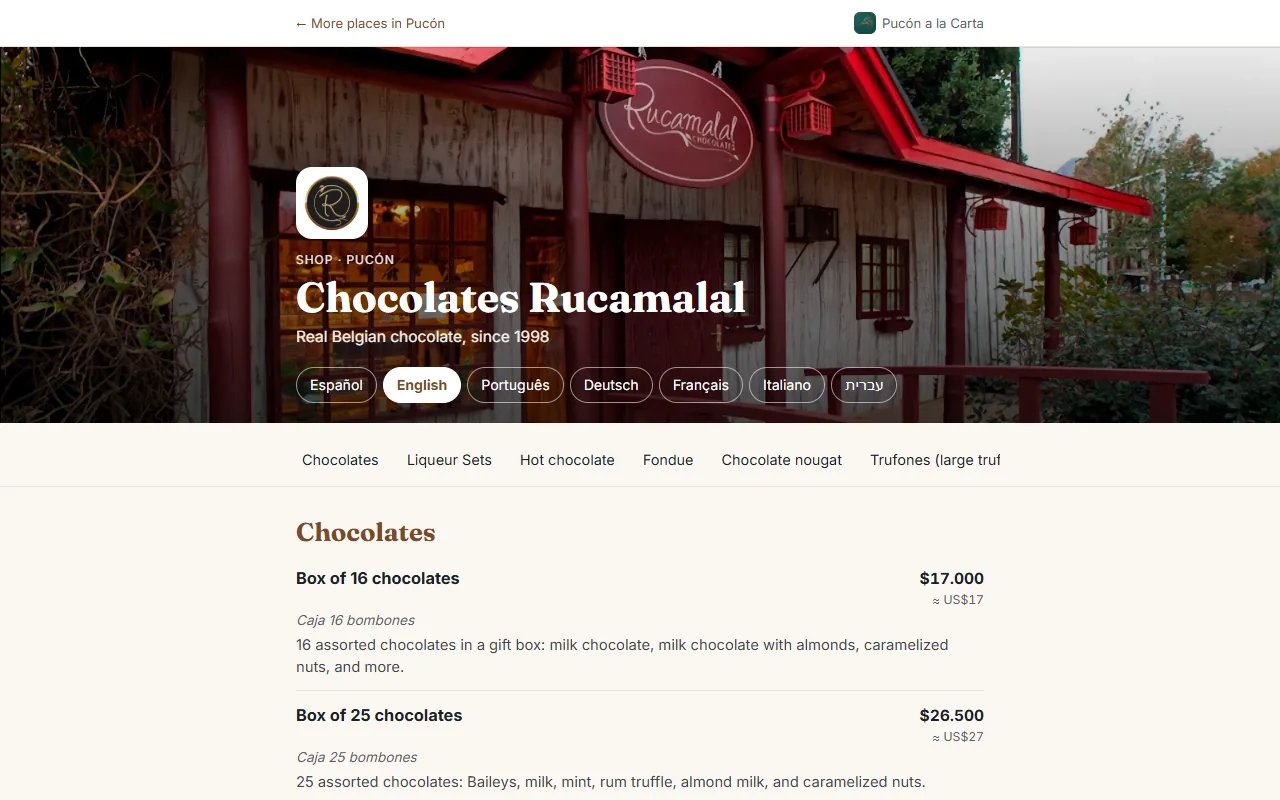
- Seven languages: Spanish, English, Portuguese, German, French, Italian and Hebrew (which reads right to left, and the whole page flips with it).
- The dish's original name under the translation, so they can order it exactly as written.
- The approximate price in their currency: dollars, reais, euros or shekels, next to the price in pesos.
- Clear labels: Chilean classic, chef's pick, vegetarian, vegan, gluten-free, spicy.
- The practical bits: tipping explained (suggested, not included), opening hours, the wifi password and how to get there.
You can try it with the sample menu, from a restaurant invented for the demo.
From the menu to a guide to Pucón
Once the menus are translated, bringing them together in one place makes sense. Around them I built a guide to Pucón in Spanish, English, Portuguese and German, with six sections: where to eat, what to eat, where to stay, things to do, shops and the best.
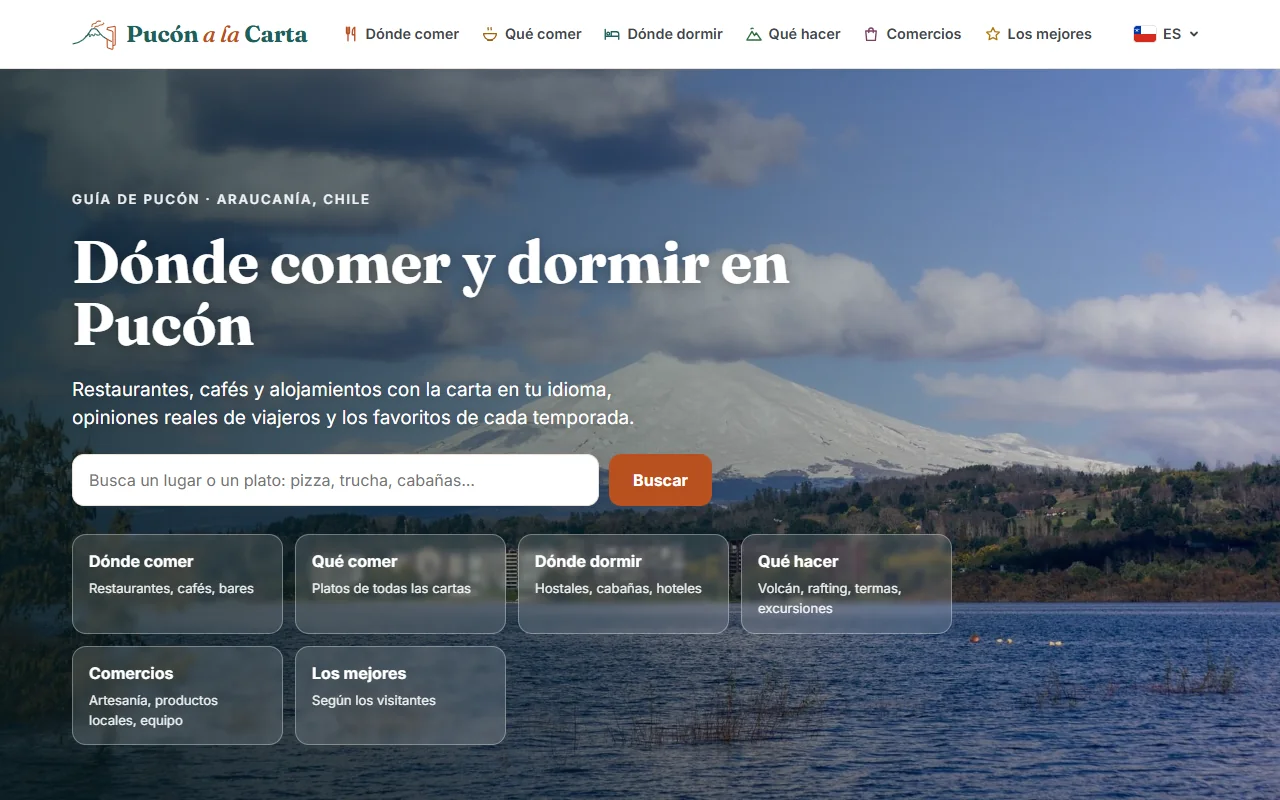
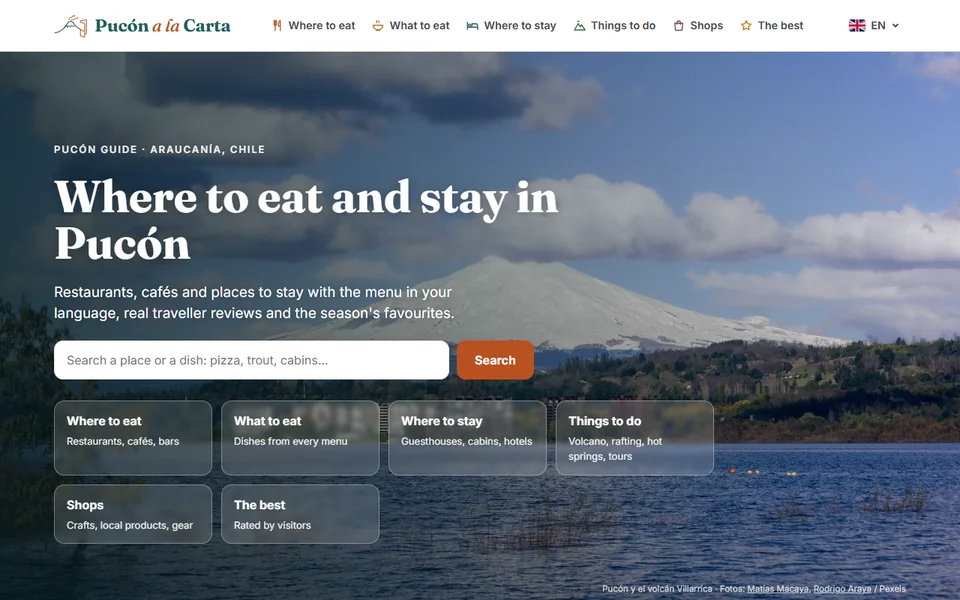
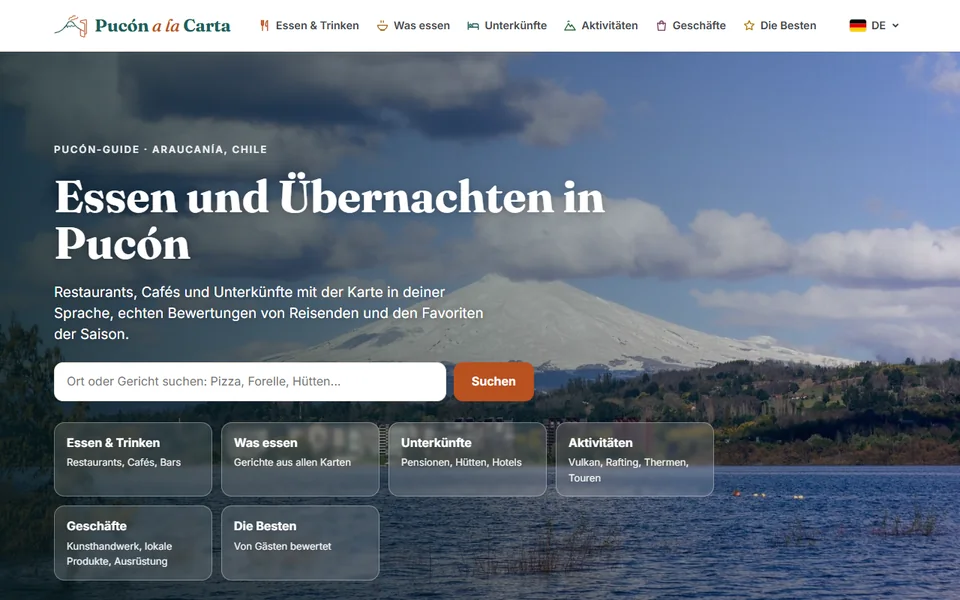
- What to eat searches every menu at once, in any language: "trucha" and "trout" lead to the same dish.
- Reviews are left from the table, with a second QR code. They're checked before going live, and the best ratings make up "The best" ranking.
- Vouchers and gift cards with an expiry date, printed as PDFs and verified with a QR code.
- Not just restaurants: a guesthouse explains breakfast, wifi and house rules; an agency lists its tours with price and duration; a shop shows its catalogue.
What machine translation doesn't know
The translations come from DeepL, and they work well for almost everything. But Chilean dishes have traps. In the first tests, "empanada de pino" came out in English as "pine empanada": the machine read the tree, not the minced beef filling.
That's why each business can correct any translation by hand, and its correction is never overwritten. The site also keeps a memory per business: when a price or a dish changes, only what changed gets translated again.
Under the hood
- ASP.NET Core (.NET 10) with Razor Pages and SQL Server, like my other projects.
- Light pages: the home page is about 17 KB of HTML. That matters a lot on a roaming phone signal.
- PDFs generated on the server: table cards, poster, stickers, vouchers and the full menu per language, Hebrew included.
- A stable QR code: the printed code doesn't change even if the business changes its name or web address.
- Structured data for Google on every listing, and a separate address per language.
A guide designed for people arriving from abroad
Many local guides are written in Spanish and add English later. Here it's the other way round: the visitor's language is the starting point. On a first visit the home page opens in their language, prices are also shown in their currency, and dishes keep their original name.
The guide has only just opened, with its first listings: cabins, a chocolate shop and a mountain school. The next step is bringing in Pucón's restaurants and cafés before high season. And since the town's name is just a setting, the same engine could serve another tourist destination tomorrow.
Do you run a tourism business?
For businesses in Pucón, the Spanish menu, the QR code, the listing and the reviews are free. Languages are part of the paid plan, with a 30-day trial. It's all explained on the page for businesses (in Spanish).
If you're in another destination or another trade, this project shows what I do: custom software, direct booking for cabins and local SEO. The rest is in my portfolio.
Want a guide like this for your destination or business?
Tourist portal, multilingual menus, bookings or CRM: I'll propose the architecture, the timeline and a clear price.
Get my free quoteMessage me on WhatsApp