When someone types "cabins in Pucón", "landscaping Villarrica" or "inheritance lawyer Temuco", Google first shows a map with three businesses, then the websites. Being in that map and on that first page is what brings in local customers. Here is how I work on it, with real cases from businesses in southern Chile.
1. The Google Business Profile: the most important piece
Google's map comes from Google Business Profile listings, not from websites. A well-built profile has:
- the exact primary category (the single biggest factor);
- name, address, phone and opening hours identical on the profile, the website and social media;
- a service area listing the real towns (Pucón, Villarrica, Caburgua, Licán Ray…);
- real, regularly refreshed photos of the place and the work;
- one post a week, as if it were a social network.
2. Reviews: the factor that weighs most
In the map, at equal distance, the business with more reviews, more recent ones and better replies wins. The key isn't waiting for them to come: it's asking, every time, at the moment the customer is happy.
- A direct link that opens the review window, sent by WhatsApp or email as soon as the job is done. I use mine: g.page/r/…/review.
- Automate it: in the CRM I built for a law firm, the review request is a ready-made email template with the client's name already filled in.
- Reply to every review, good and bad, mentioning the service and the town ("thank you for trusting us with your garden in Villarrica").
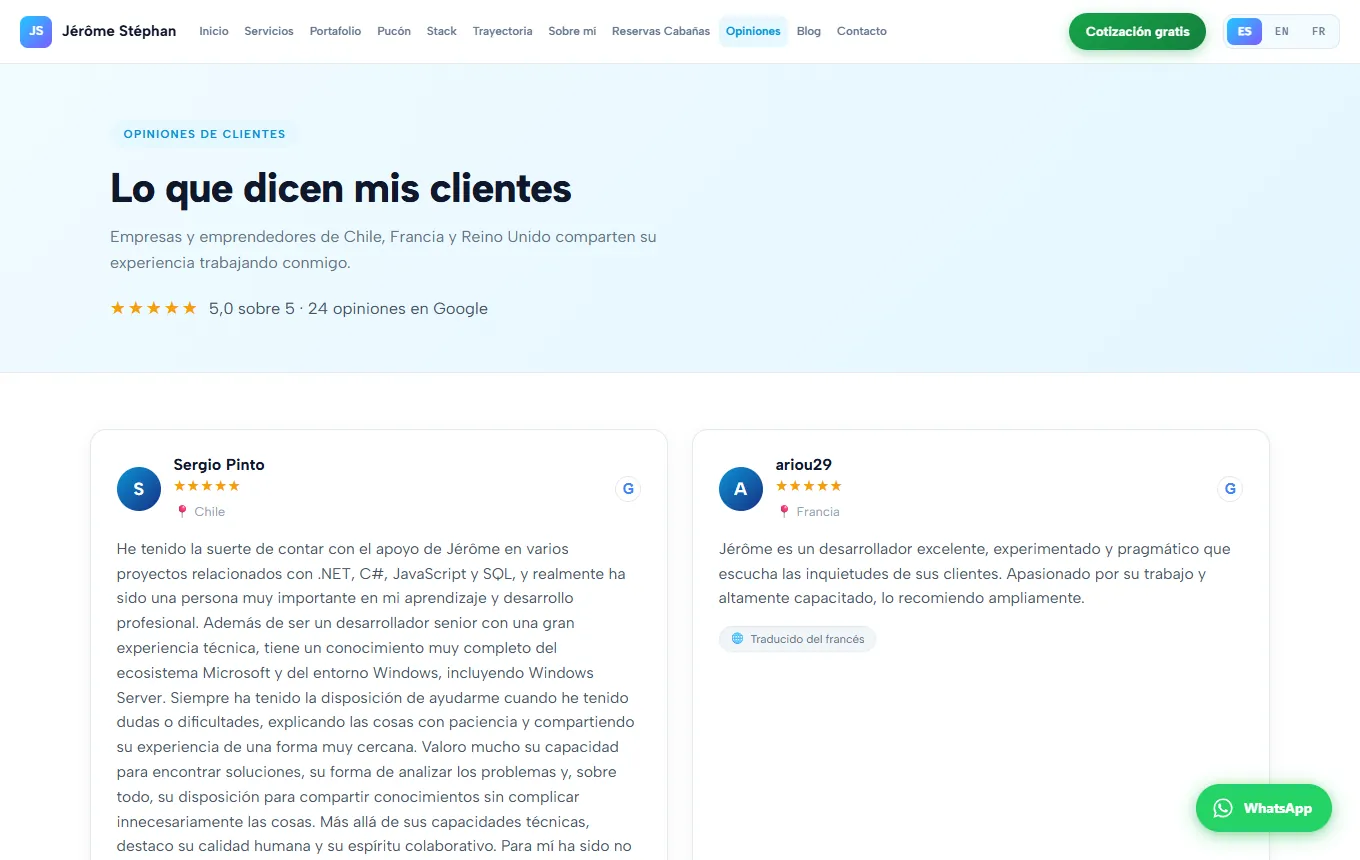
- Show them on the website: a reviews page convinces visitors coming from Google.
3. Case: Bosques de Loncotraro, cabins in Pucón
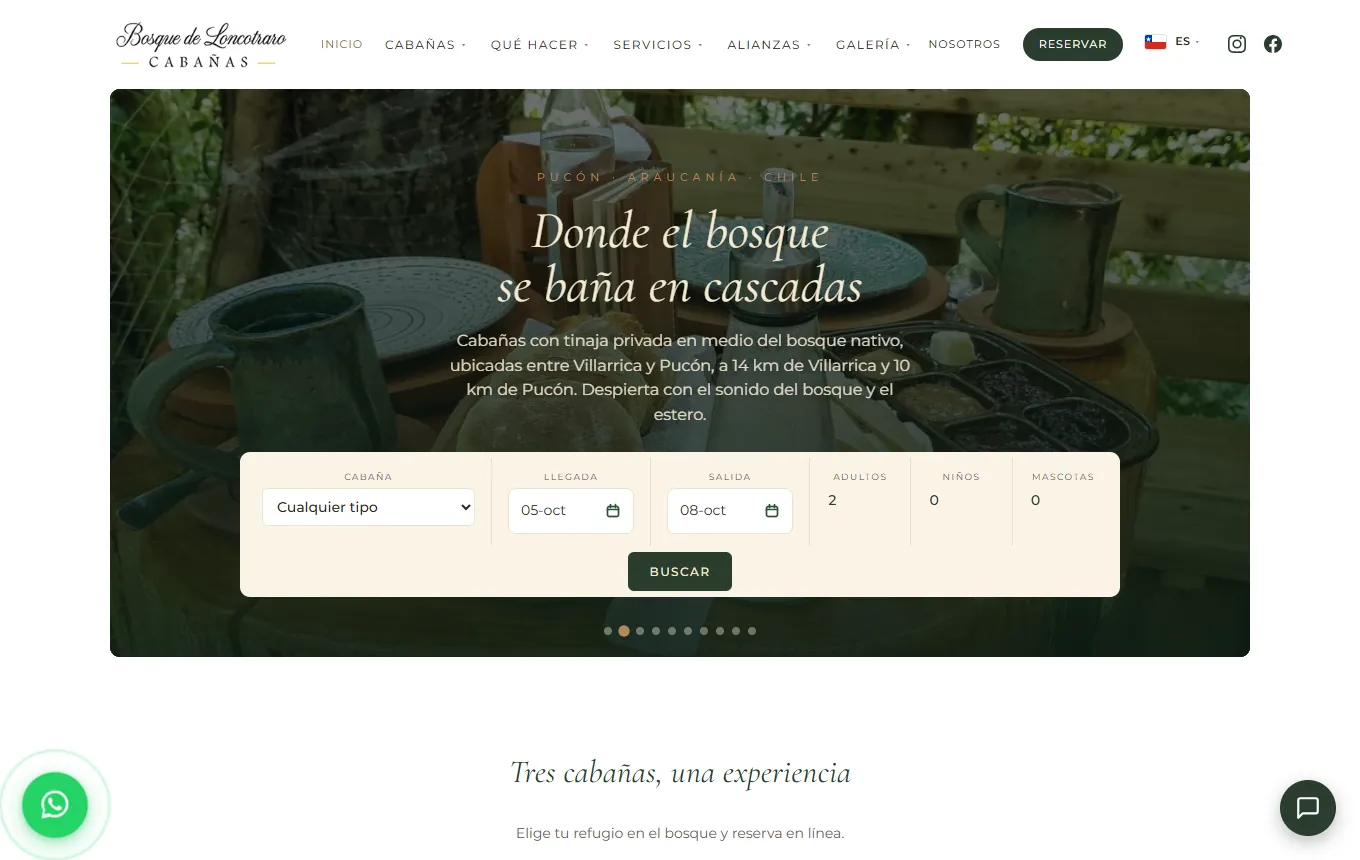
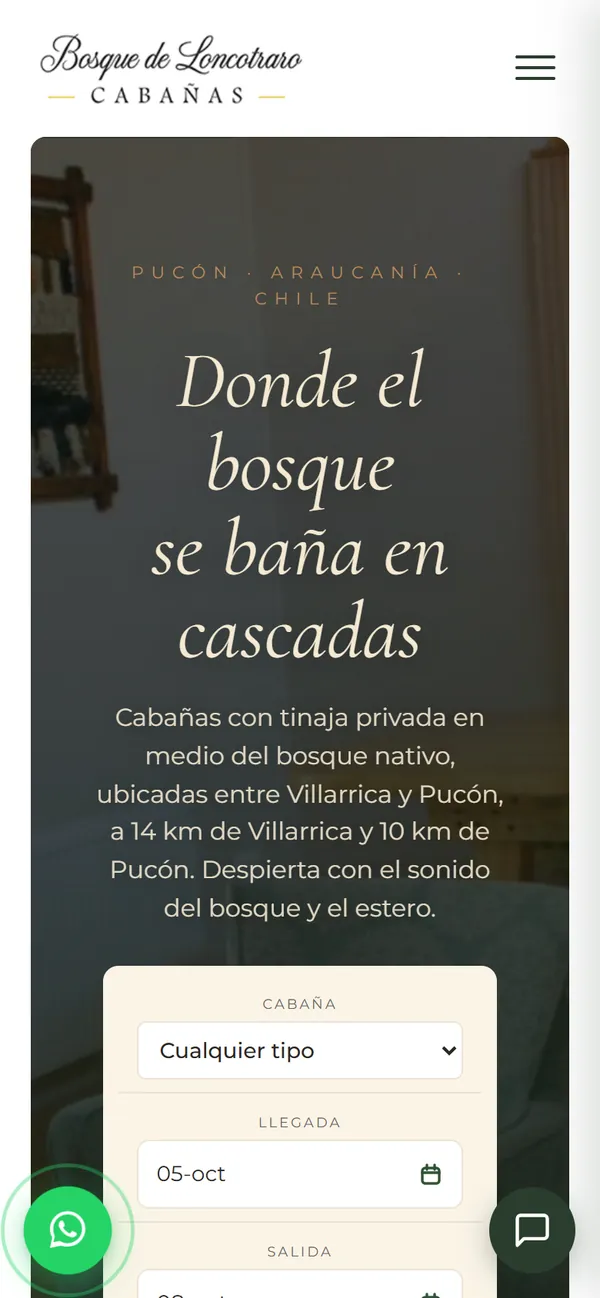
A cabin complex with hot tubs between Villarrica and Pucón. What the website does for local SEO:
- the location in the first sentence: "between Villarrica and Pucón, 14 km from Villarrica and 10 km from Pucón";
- lodging structured data with GPS coordinates and service area (Pucón, Villarrica), so Google understands what it is and where;
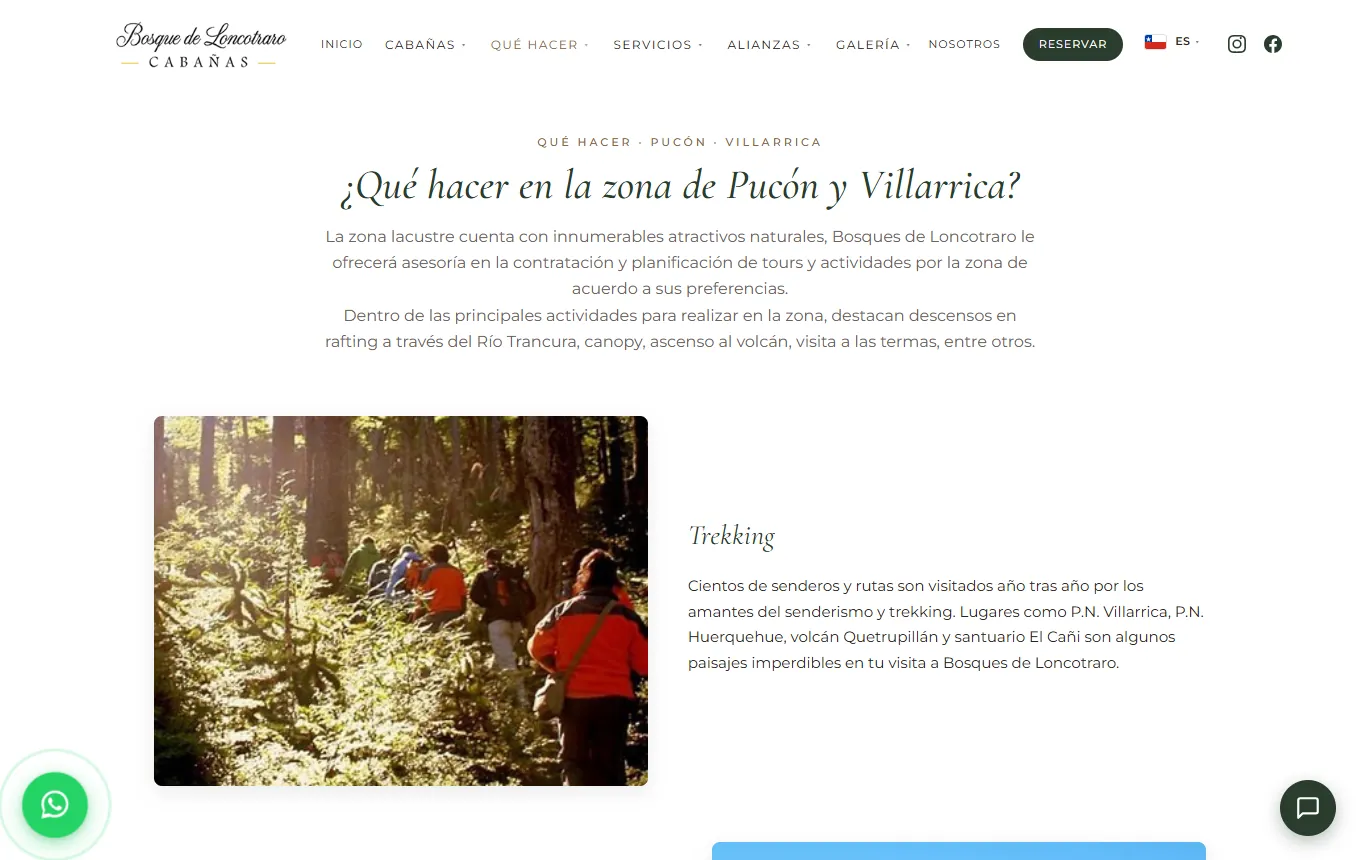
- a "Things to do in Pucón and Villarrica" page (trekking, hot springs, volcano, rafting): content tourists search for before booking;
- one page per cabin, rates and direct booking with Webpay;
- three languages (Spanish, English and French) to reach foreign tourists, who search in their own language.
4. Case: Paisajismo Botánica, a service across the Lake District
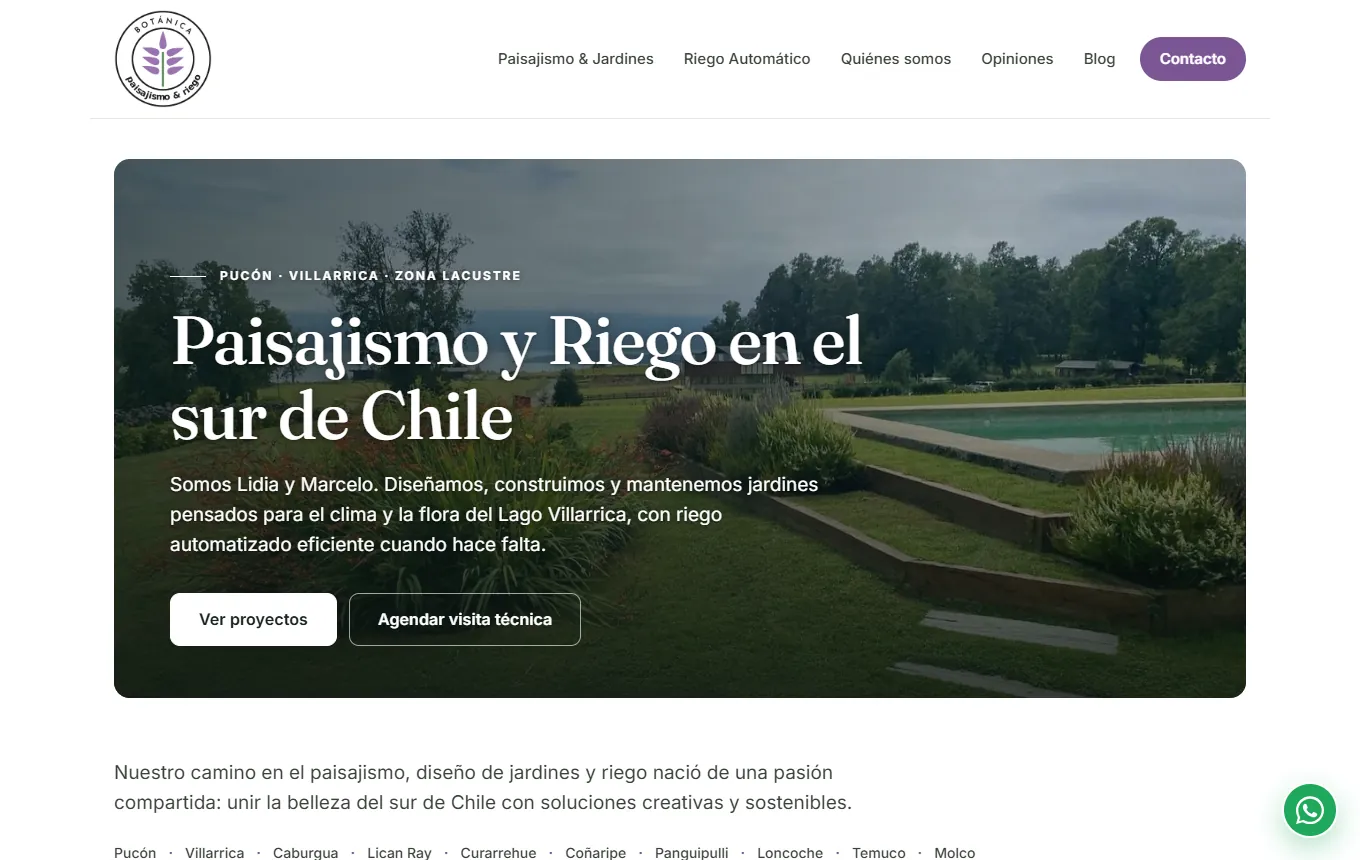
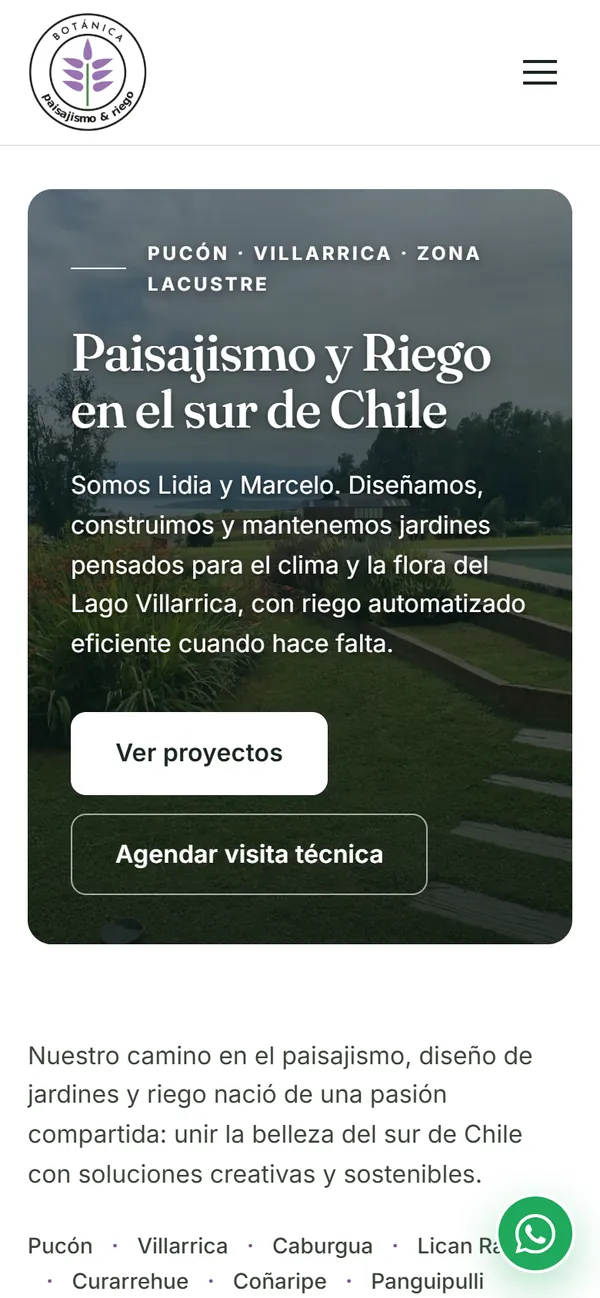
A landscaping and irrigation company doesn't serve customers in a shop: it goes where the customer is. So the website insists on the territory:
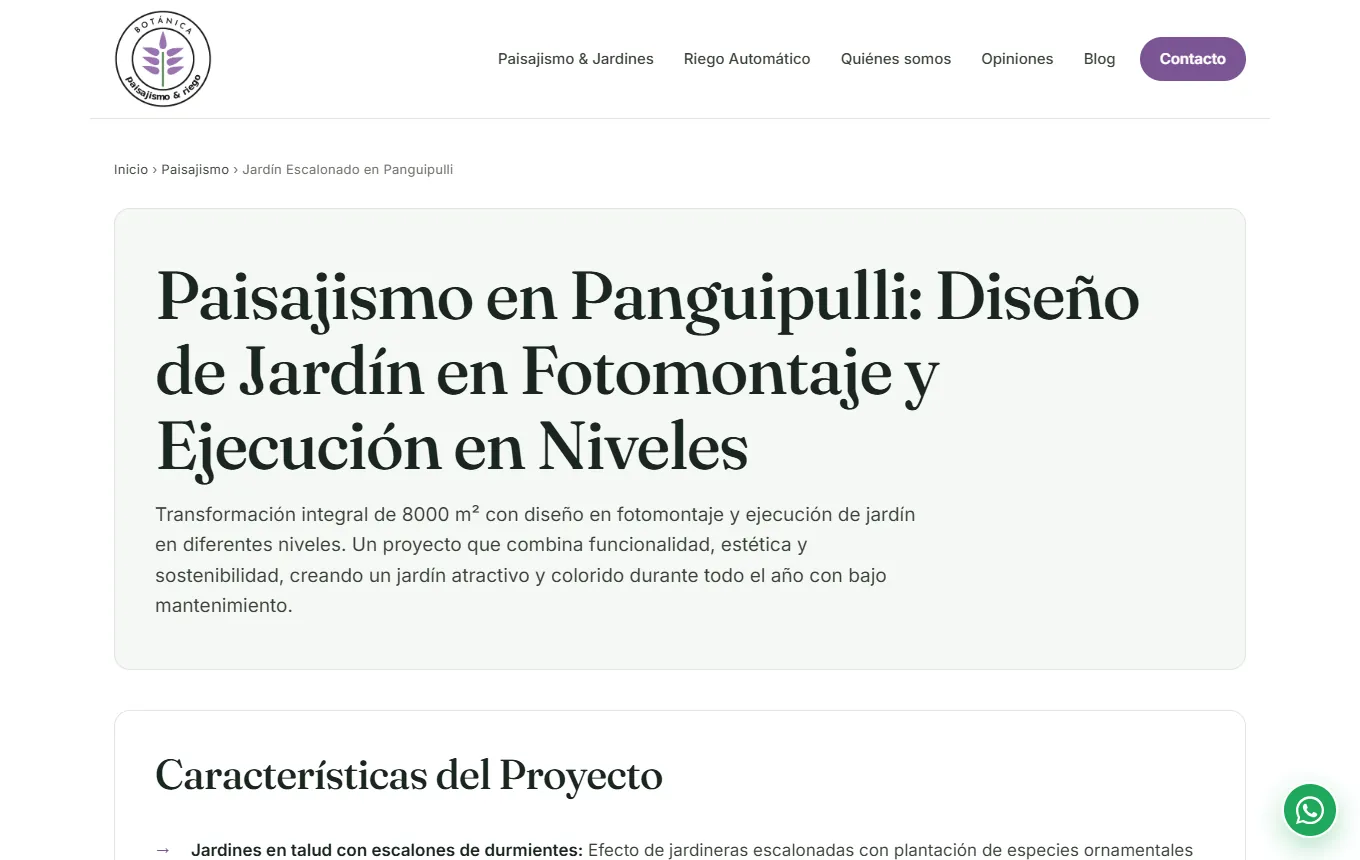
- the page title says "Landscaping and Irrigation in Pucón and Villarrica", what people actually type into Google;
- the list of towns served: Pucón, Villarrica, Caburgua, Licán Ray, Curarrehue, Coñaripe, Panguipulli…, also in the structured data;
- one page per service (landscaping and gardens, automatic irrigation);
- each project is a page named after the place: a terraced garden in Panguipulli, a renovation with irrigation in Villarrica… Each one is proof and an entry point from Google;
- a local blog: native plants for gardens in Pucón and Villarrica, landscaping in the Lake District.
5. Local pages: one per city, never copied
To show up in several cities you need one page per city. The trap: copying the same page and only changing the name. Google spots it and penalises it. Each page must bring something specific to that town.
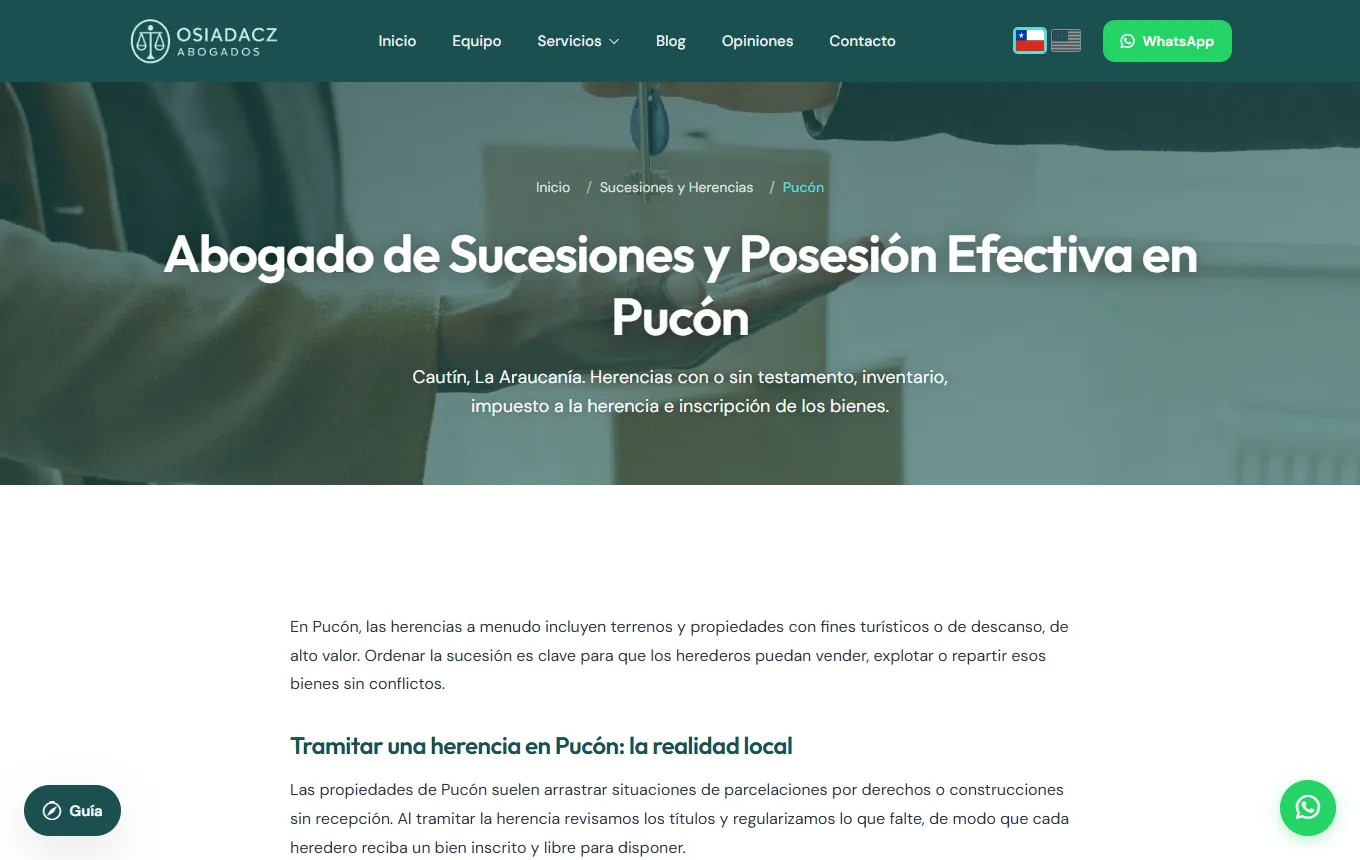
- Osiadacz Abogados: 20 inheritance pages by city, 14 land-regularisation pages by town and 14 insurance-claim pages. Each one explains the local reality: inheritances including tourist land in Pucón, the relevant land registry office, the 2026 storm in the south.
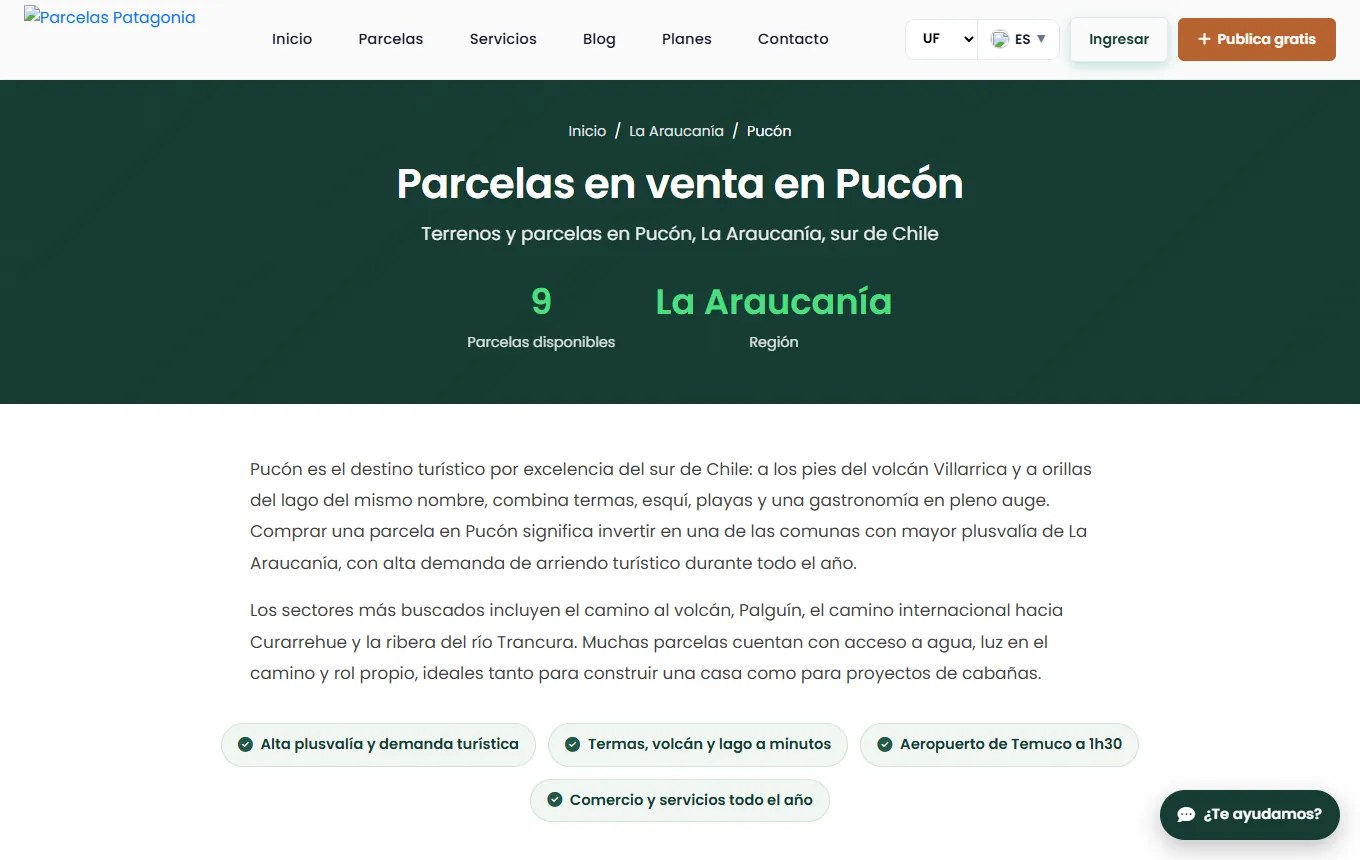
- Parcelas Patagonia: 34 city pages and 6 region pages, with available listings and the context of each place.
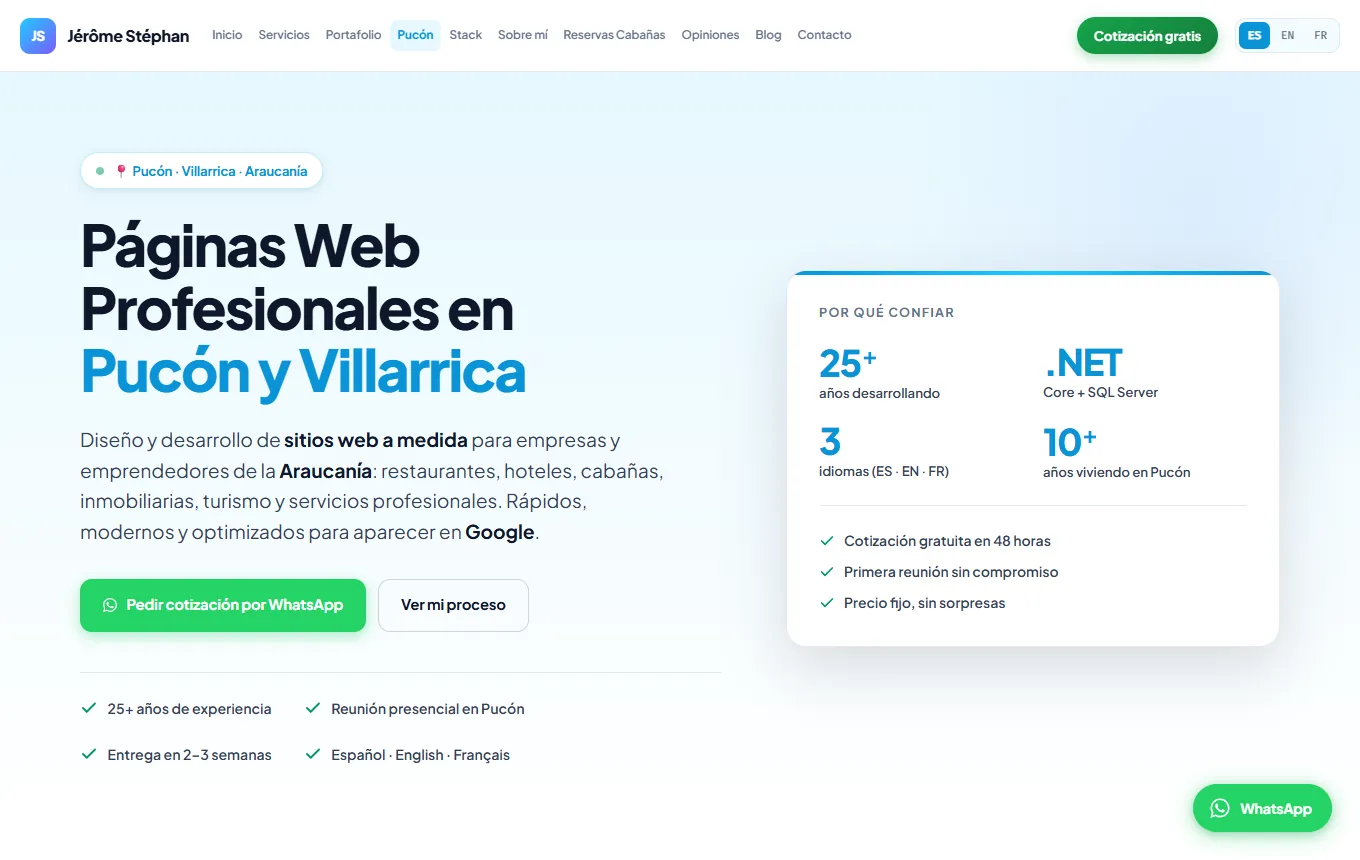
- My own site: a page dedicated to websites in Pucón and Villarrica, and a Spanish homepage focused on the Araucanía region.
6. Articles with a local target
A generic blog doesn't bring local customers. An article answering a local question does: "which native plants survive a Pucón winter", "what to do if my insurer won't pay for storm damage", "how much a website costs in Chile". Each article links to the matching service page and to the Google profile.
7. Local links
Google trusts businesses that other local websites mention. Every site I build carries a footer link with descriptive text ("web development in Pucón") pointing to the relevant page. Local directories, tourism chambers and partnerships with other local businesses add up too.
Local SEO checklist
- A complete Google Business Profile with the exact category and weekly posts.
- A direct review link sent to every happy customer, and every review answered.
- The city and area in the title, the first sentence and the site's structured data.
- One page per service and one per city, each with its own content.
- Projects and cases named after the place.
- Articles that answer local questions.
- A fast, mobile-friendly site with one-tap WhatsApp.
Want to show up on Google in your area?
I'll review your Google profile and website for free and tell you what to change to win local customers.
Get my free auditMessage me on WhatsApp